
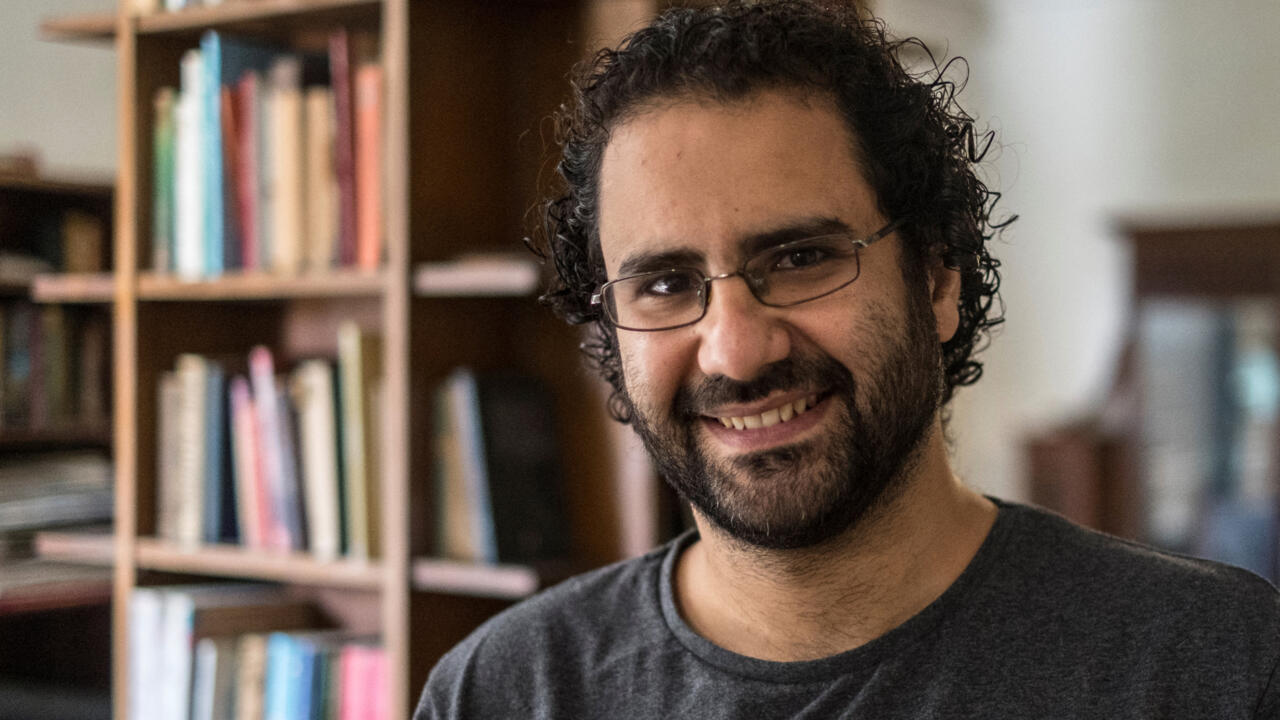
Egypt: the president grants presidential pardon to activist Alaa Abdel Fattah
Egyptian President Abdel Fattah Al-Sissi announced on Monday September 22, the release of Alaa Abdel Fattah, an emblematic figure of the 2011 revolution. Blogger and Egyptian-British activist, he had been detained since 2021 after being sentenced to five years in prison for “Diffusion of false information”.
Abdel Fattah, 43, had to be released in September 2024, but he remained incarcerated. His release comes after more than ten years of successive detentions, often denounced by international human rights organizations. The decision was made public by the Al-Qahera News channel, which said that the Head of State had taken the necessary constitutional and legal measures.
This outcome marks the culmination of an intense campaign. At the beginning of September, the National Council for Human Rights urged the president to consider grace “For humanitarian reasons”with the support of families and NGOs. The case of Abdel Fattah, considered the most emblematic political prisoner in Egypt, had been put forward.
Born in 1981 and a training computer scientist, Abdel Fattah had established himself in the 2000s as a pioneer of the Bloggers Movement. Active during the uprising against Hosni Mubarak, he became a central figure in the protest and a regular target of the authorities. Arrested for the first time in 2013, he had acquired British citizenship in 2021, strengthening diplomatic pressure for his release. Her mother, activist Leila Souef, even led a hunger strike to denounce her conditions of detention.
A political gesture
The presidential grace also concerns other detainees, including Saeed Magli al-Diw Aliwa, Karam Abdel-Samie Ismail Al-Saadani and Mohamed Awad Abdo Mohamed. It intervenes that President Al-Sissi recently asked Parliament to re-examine a project to reform the criminal procedure, including better protection of privacy and the expansion of alternatives to pre-trial detention.
For many observers, the release of Alaa Abdel Fattah constitutes a signal addressed to the international community, while Egypt seeks to treat its image in terms of human rights, while retaining close control over the domestic political scene.
