
Conaped reaffirms its position May 24, 2026
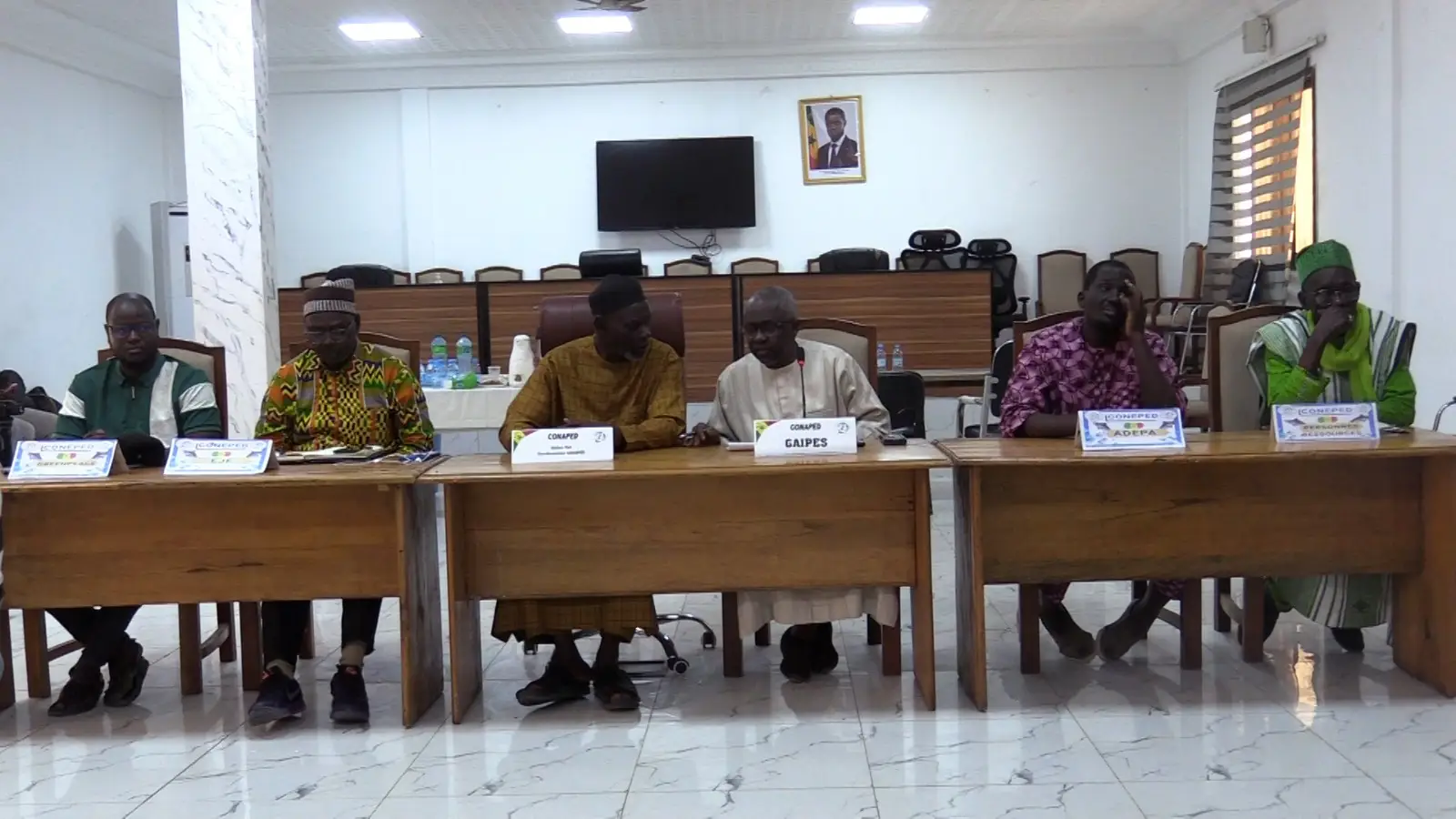
Following the justifications put forward by the Ministry of Fisheries and Maritime Economy at the start of the week, the National Coalition for Sustainable Fishing (Conaped) provided a response this Saturday, May 23, during a press briefing. According to her, several concerns remain and call for an urgent re-evaluation of this decision.
The details provided by the ministry on coastal demersal fishing licenses are far from satisfying Conaped. In front of the press, the Coalition reaffirms that food sovereignty and economic development of the fisheries sector cannot be built to the detriment of the sustainability of marine resources. Conaped requests an urgent re-evaluation of the decision to grant four coastal demersal fishing licenses. According to the president of the Coalition, Malick Fall, several concerns persist.
In relation to the ministry’s argument, according to which the Dakar-Thiaroye Oceanographic Research Center (CRODT) would have identified an exploitable potential justifying the granting of new licenses, Conaped speaks of a partial and selective interpretation of the CRODT opinions. “The scientific report explicitly emphasizes the need for extreme caution in the exploitation of these resources,” specifies Malick Fall, who adds that CRODT also recommends strict scientific monitoring, rigorous control of landings and reinforced support measures.
Conaped considers the justification based on food security to call into question the freeze on licenses introduced since 2006 to be unconvincing. “The volumes mentioned remain relatively low (2,921 tonnes), in view of the country’s real needs and the quantities already landed by artisanal fishing (300,000 tonnes)”, underlines Malick Fall. According to Conaped members, Senegal’s food security is mainly based on small pelagics and not on the demersal species targeted by these licenses. In addition, the Coalition fears that the introduction of new trawlers into the fishery will increase pressure on several already overexploited species, such as grouper (Thiof), octopus or certain species of shrimp and coastal demersal fish.
Faced with the absence of sufficient guarantees (quotas by species, mechanisms for closing fisheries in the event of exceeding the recommended thresholds) to prevent overexploitation, Conaped reaffirms that this measure constitutes a contradiction with commitments in favor of sustainability.
