
Cotton sector: potential to be highlighted
Despite a campaign strewn with pitfalls, the cotton sector in Senegal is confirming its recovery, driven by increasing yields and structuring support.
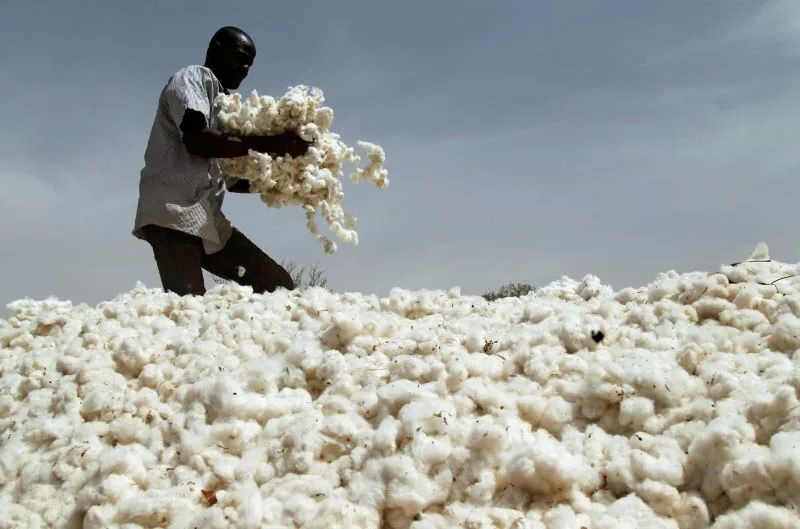
Despite a 2025-2026 campaign marked by real constraints, notably delays in the provision of inputs and the irregularity of rains, with pockets of drought, several factors augur bright prospects. Indeed, on 21,000 hectares planted, the production already collected in mid-April exceeds 25,000 tonnes of seed cotton, or more than 60% of the level of the previous campaign. This progression is based first of all on real agronomic potential.
Yields, clearly improving, increased from 800 kg to more than 1.2 tonnes per hectare, now positioning Senegal at the level of certain regional leaders. This performance testifies to the quality of the land, but also to better control of the technical routes. Another determining lever: the role of Sodefitex. Through strengthened supervision of producers, more rigorous selection of farmers and improvement of farming practices, the company has contributed to structuring more efficient and more resilient production. Added to these efforts is strong support from the State.
The injection of 3 billion CFA francs into the current campaign made it possible to facilitate access to inputs and increase the purchase price for producers to 350 CFA francs/kg thanks to a targeted subsidy. This strong signal helped to restore the confidence of cotton growers and stimulate plantings. In the regional context, marked by the rise in power of countries like Benin or Mali, Senegal has differentiating advantages, according to a document from the Regional Program for Integrated Cotton Production in Africa (Pr-Pica), which reports encouraging figures.
For example, on the 21,000 hectares sown, the production already collected as of April 18, 2026 amounts to 25,072 tonnes of seed cotton, or more than 60% of the level of the previous campaign. Between improved yields, structuring of stakeholders and public support, the country seems committed to a sustainable growth trajectory. A dynamic which, if confirmed, could sustainably reposition Senegal as a credible and competitive player in the African cotton landscape, indicates the report.
An urgent need for agricultural equipment
According to Abdou Traoré, director of agricultural production at Sodefitex, the cotton sector in Senegal has recorded positive dynamics for several seasons, but remains faced with major constraints linked to the lack of equipment. Since 2022, production has shown continuous improvement, reaching today around 25,100 tonnes, with an ambitious target of 35,000 tonnes for the next campaign. A progression considered encouraging, but which requires reinforced support.
The main challenge, he says, remains the lack of agricultural equipment, particularly seeders. Needs are estimated at 2,000 units, while only half are currently available. However, the success of the campaign strongly depends on respecting the agricultural calendar. “To obtain good yields, you must sow from June, as soon as the first rains come. Sowing in July carries risks of reduced yield,” he explains.
With this in mind, having a sufficient number of seeders would make it possible to cover up to 90% of the 30,000 hectares from June, an essential condition for meeting the production challenge. Otherwise, there is a risk of only being able to sow part of the surface areas in time, which would directly impact yields. Furthermore, the question of renewing the tractor fleet arises acutely. “Since 2017, the park has been dilapidated,” underlines Abdou Traoré, recalling that farmers, particularly those cultivating nearly 50 hectares, need efficient equipment to improve their productivity.
Beyond production, the cotton sector represents an important lever for job creation. The establishment of a small spinning mill could generate up to 1,000 jobs, illustrating the industrial potential of the sector if the State supports more investments.
Also vice-president of the regional integrated cotton production program in Africa, bringing together eight countries, Abdou Traoré highlights a major asset of Senegal: the quality of its fiber, recognized as being among the best in the region. He recalls that the national production record remains at 52,000 tonnes, reached in 2007, a level which could be considered again if the current constraints are lifted
Oumar Fedior
