
“Access to potato seeds will have to be encouraged” May 25, 2026
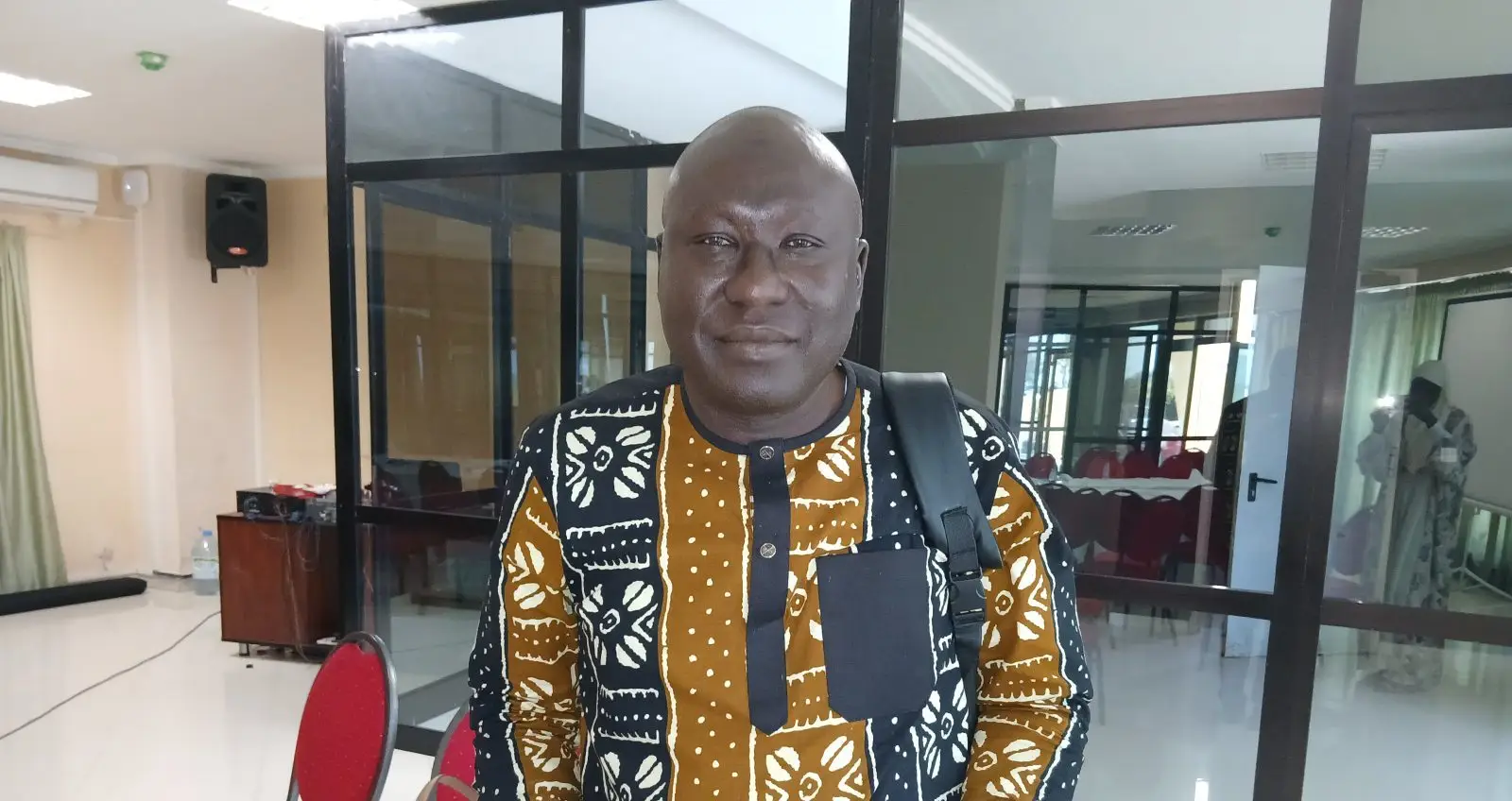
In Senegal, access to potato seeds must be encouraged. This is what Aliou Gaye, expert in financing animal and agricultural value chains from the Food System Resilience Program (FSRP), recommended. He spoke in an interview with Soleil Digital about the cost-shared financing mechanism put in place by this program.
The Food System Resilience Program (FSRP) has established cost-shared financing to support agriculture and livestock stakeholders in West Africa. Can you come back to this mechanism?
First, we must understand by shared cost financing mechanism, a financial instrument which allows co-financing of a project. That is to say that the promoter must contribute a part and also we provide a subsidy. For this, the FSRP has set up this mechanism through three windows. The first window is for small projects, amounting to 2.875 million to 5.7 million CFA francs. And for these counters, we plan a subsidy of 70%, but also with positive discrimination for young people and women of 10%. This brings the subsidy for young people and women to 80%. To benefit from it, there are criteria that must be met, namely one year of experience for any farmer or breeder.
This mechanism also targets those leaving training schools, who have a link with agricultural or livestock activity. So these are the people who are targeted, both men and women. And so, these are the conditions that are being asked of us. And those who can submit the project can be individuals, an economic interest group (EIG), a company, a small and medium-sized enterprise (SME). These are people who can really, under the legal status they have, submit a project for window 1.
What about window 2?
These subsidies range from 5.7 million to 28.5 million CFA francs. And for this window 2, the subsidy is 50%. So you bring half, we give you a 50% subsidy. And I remind you that the grant is not refundable. It’s money that is given to encourage promising people to move forward. And for this second window, we need at least two years of experience. That’s the only condition, you need two years of experience in agriculture or livestock. And there too, there is no discrimination between men and women. So everyone, both men and women, is governed by the same conditions.
What does the FRSP provide for large projects?
We have window 3 which is reserved for large projects, these are projects which range from 28.5 million to 285 million CFA francs. There, the subsidy is 30%. But for this subsidy, it should be noted that we cannot exceed the amount of 85.5 million. Even if you have a project worth 1 billion, we can only subsidize 85.5 million maximum. This is important to note, because there are often people who are a little confused. They think that when we start from 30%, if they have a project worth 1 billion, we must give them 300 million. Whereas for us, the subsidy cannot exceed 85.5 million CFA francs. So here too, you need two years of experience.
Everyone can subscribe at window 3, except individuals. Individuals are not allowed to submit the project for window 3. But for window 2 and window 1, individuals can submit the project.
So with this mechanism, the financing of the project is shared between the promoter and the lessor?
The lessor is us, and the project leader is the producer. Anyone who wants a project, in relation to the size of their project, there are conditions which are clearly defined. And before giving the grant, you must make your contribution first, before we make the contribution. We wouldn’t want to make the contribution, then you disappear with it. And this contribution varies depending on the size of the window amount. Because the windows are calibrated. So if you are in a window, we call the window conditions. There is a grant limit of 285 million, regardless of the amount of the project.
“We do not finance just any value chain. »
And what value chains do you finance?
We do not finance just any value chain. For the sectors that are targeted, for cereals, there is millet, sorghum, corn and fonio. As for horticulture or market gardening, there are onions, potatoes and bananas. For breeding, there are all cattle fattening, all meat production, goats, sheep, pigs. For poultry farming, there is the production of broilers and eggs. There is also dairy production.
And why did you focus only on these sectors?
And fact, where there are already actors who intervene to support these value chains, therefore these value chains are excluded from our targets. So today, we have identified value chains which are important but which are not supported by other projects. This is to really avoid double interventions on the value chains. We operate in the 14 regions of Senegal. We support producers in the production, processing and marketing of their crops.
And in Senegal, what are the challenges to overcome for the expansion of these sectors?
In fact, for each value chain, there are challenges that are identified by the actors and the authorities. If we take the case of the union, the major challenges that arise today for the value chain are conservation and storage. We know that today for production, we are starting to have production levels which exceed Senegal’s annual needs. But yet we are always confronted with pockets, with deficits at certain times. Which means there is a storage problem. So we said to ourselves that for the onion value chain, our priority is really to finance everything that involves storage and marketing projects.
If we take the case of potatoes, the major challenge that arises is conservation. Because it must be said that in recent years, there has been an increase in production and the problem is that there are losses. Today, what we must encourage is the installation of cold rooms for conservation.
Also read: Climate-smart agricultural practices: 200,000 producers supported in Senegal
But also, the other important aspect is the availability of seeds. Because the seeds come from outside the suppliers, each supplier brings their seeds. Which ultimately means that we have seeds that can resist conservation, others that cannot. Others can be transformed, others cannot. Whereas that’s not how we develop the sector. Access to potato seeds will have to be encouraged through production or through significant and then targeted imports.
In the case of bananas, the problem that arises today, we see that each time there are increases in banana production. This year, we even saw that there were freezes to promote the marketing of local bananas. But there is a problem that arises, which is that the plant material used is aging and the banana industry needs to renew this plant material, so that production can keep up, so that yields can be increased. After this stage, it is also necessary to ensure the transport of production to the marketing areas.
And often there is equipment and logistics that are quite suitable which sometimes even make it possible on the farm to transport the bunches of bananas from the harvesting areas to the stores and then to process them. So all these aspects are segments of the value chain that deserve to be supported so that the Senegalese can really progress.
What are the challenges for livestock breeding and poultry farming?
For the livestock sector, it is dependence on the outside to supply the local market. The solution is to develop a system internally that allows us to produce enough sheep. On this point, we encourage those who are ready to do sheep breeding to have enough sheep for the next Tabaski festivals.
Compared to poultry farming, today, there is not too much of a deficit in broiler chickens. The only difficulty producers have is access to chicks. We encourage those who set up brooding chicken units. We are working to install hatching egg units and also, this is what hatcheries are, to really allow each time someone needs chicks that they can have them on time.
Mariama DIEME
