
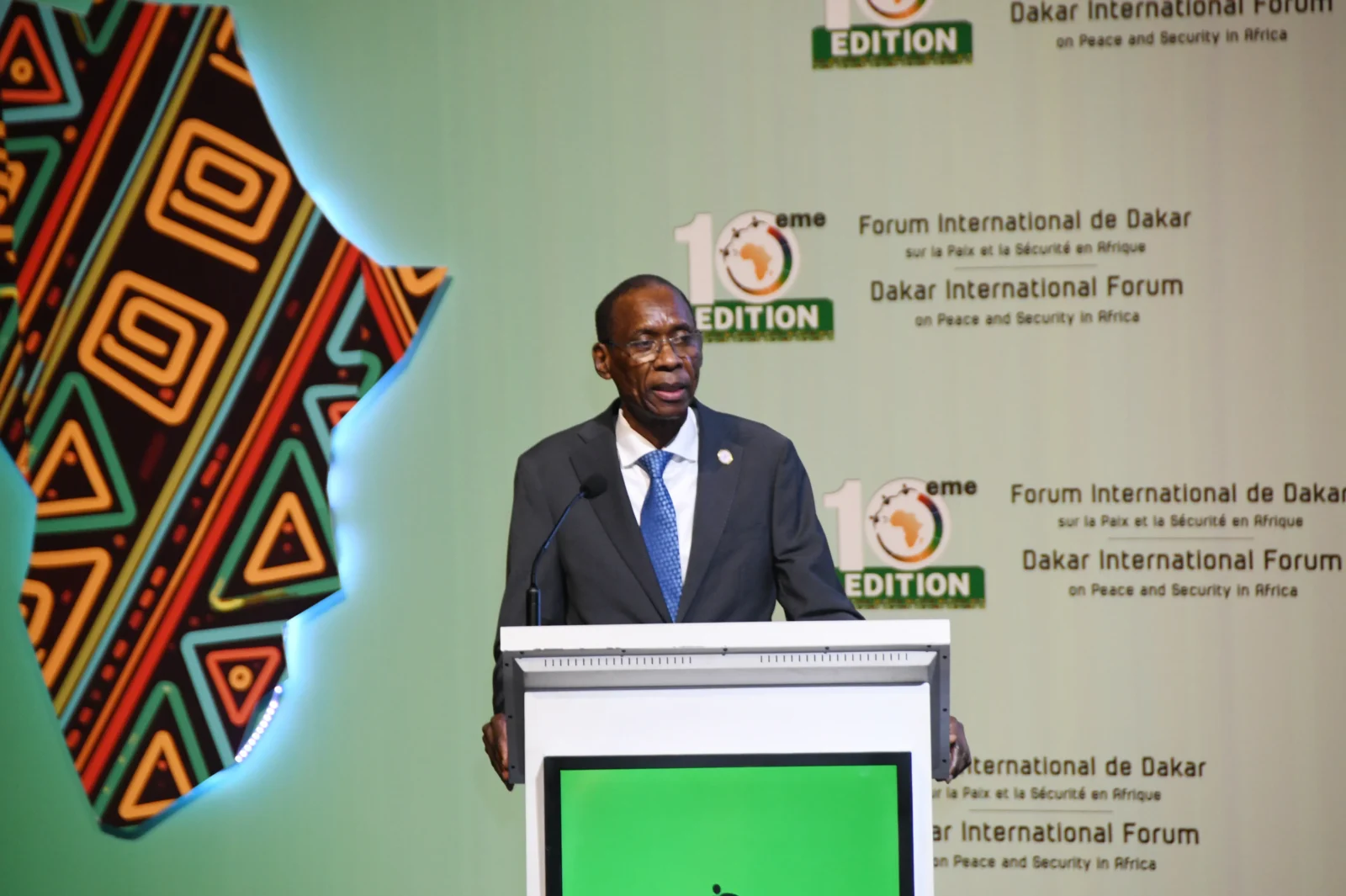
Cheikh Niang: “Peace in Africa cannot be imported, delegated or improvised” April 22, 2026
The Minister of African Integration, Foreign Affairs and Senegalese Abroad, Cheikh Niang, chaired this Tuesday, April 21, 2026, the closing ceremony of the 10th edition of the Dakar International Forum on Peace and Security in Africa. During his speech, he indicated that stability cannot be decreed, but that it must be earned.
End clap for the 10th edition of the Dakar International Forum on Peace and Security. The closing ceremony of this major event was chaired by the Minister of African Integration, Foreign Affairs and Senegalese Abroad, Cheikh Niang. In his speech, he recalled that this edition, which marks the maturity of the forum, was a moment of truth, where the participants examined the fragilities of the continent without complacency. The minister indicated that “the conviction that has emerged is that peace in Africa can neither be imported, nor delegated, nor improvised. It must be built by legitimate institutions, resilient economies and inclusive societies.” The head of Senegalese diplomacy added that there cannot be lasting security where trust between the State and the citizen has been eroded. “Stability cannot be decreed, it is earned by addressing root causes such as precariousness, exclusion and radicalization, particularly among young people and women,” he declared.
Returning to the sovereignty and economic integration highlighted during this forum, the minister maintained that the requirement for economic sovereignty is essential. However, according to him, it is necessary to transform natural resources on site in order to create value chains and jobs.
“We must get out of the paradox of a continent rich in resources, but lagging behind development standards. This sovereignty (political, strategic, food and digital) does not mean isolation, but the choice of “win-win” partnerships based on mutual respect,” he explained.
Furthermore, he indicated that regional integration, particularly via the African Continental Free Trade Area, is no longer an abstract ideal, but an absolute necessity to respond to cross-border threats (terrorism, trafficking, cyber threats, climate crises) that no State can face alone.
According to Cheikh Niang, African states must collaborate to face these challenges. In his eyes, unity must be embodied in strong institutions and well-funded mechanisms. As such, he underlined, “the proposal for a “Dakar doctrine” on conflict prevention takes on its full meaning in anticipating crises rather than simply responding to them. Africa is entering a decisive moment and can be a key to stability in a world in restructuring.”
Aliou DIOUF
