
Political merits: sowing the seeds of a better tomorrow
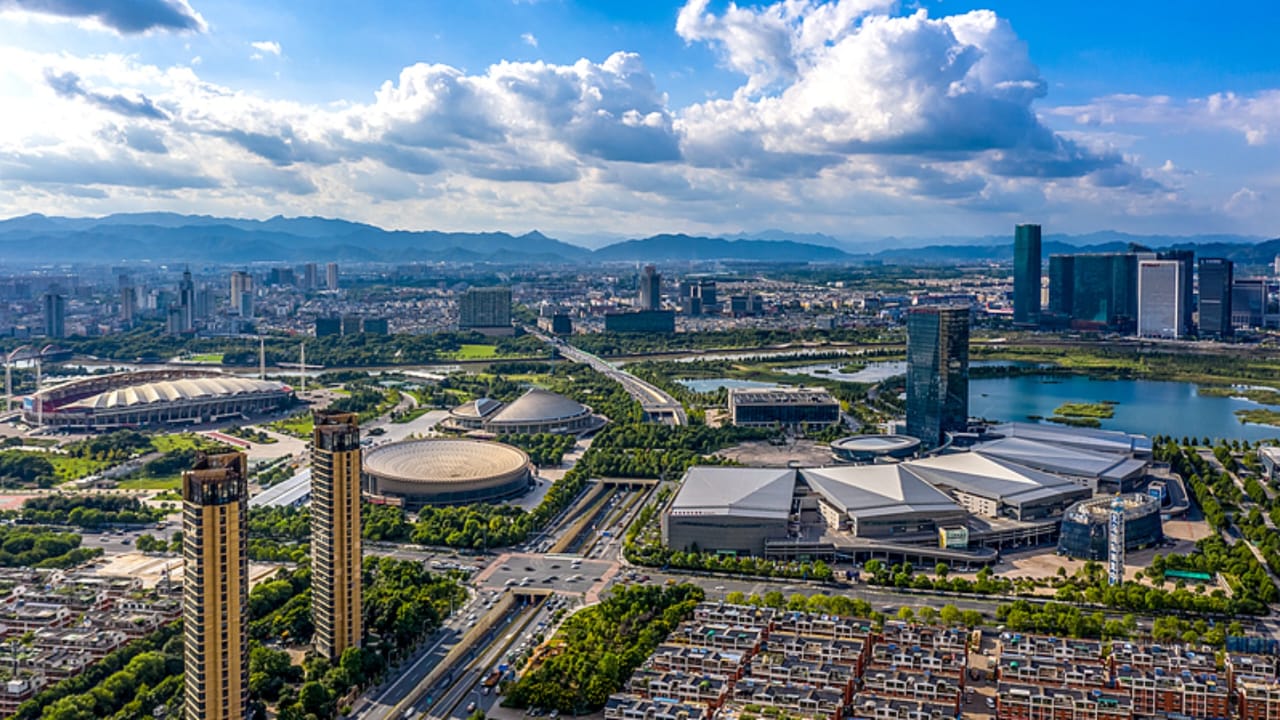
During a recent stay in Yiwu, a city at the crossroads of world trade, located in the Chinese province of Zhejiang, a Senegalese businessman told us about what built the reputation of the locality. A privileged witness to the economic miracle of Yiwu, he has lived there for more than twenty years, he summarized the city’s success story in these terms: The local leaders of Yiwu have demonstrated remarkable leadership in realizing a noble vision which was to make their city an international trade hub. They gave their best to attract investors, which significantly transformed the city. They created opportunities for everyone without distinction. Foreigners have largely taken advantage of this vision to make their activities profitable. The long-term vision of local leaders has paid off and continues to solidify Yiwu’s reputation as a major economic hub in China. This testimony reflects the scope of the awareness campaign launched by the Chinese Communist Party (CCP) at the end of February 2026 in order to guide its members, particularly its officials, in acquiring and putting into practice a fair vision of political merits. But what do we mean by political merits?
The concept could be understood as a principle that calls for relying on reality, acting in accordance with the laws and producing results that stand the test of practice and history, truly benefit the people and win public recognition through sound decision-making and hard work. He invites the political leader, whatever his level of responsibility, to be irreproachable in the conduct of public affairs. The campaign, which will continue until July this year, is fully justified, especially as transitions will be made within local management teams at different levels. To this, he specifies that 2026 is the first year of implementation of the 15th five-year national development plan (2026-2030) and it is important to better equip management teams to achieve the ambitions of this important roadmap. The political merits stipulate the imperative to prioritize the welfare of the people and value tangible long-term results, which may not be immediately visible, but are achieved through sound decision-making and concrete actions. Once again, the example of the spectacular development of Yiwu, which today rhymes with prosperity, confirms the idea of actions thought out over the long term.
Achieving the objectives of economic development and the well-being of the people relies on leadership that is distinguished by exemplarity, competence and efficiency. The integrity of senior executives constitutes the fundamental guarantee of their political merits. As Chinese President Xi Jinping so eloquently mentioned, the ever-increasing effectiveness of Party self-management is the ultimate guarantee of economic and social development. Clearly, political leaders are called upon to demonstrate responsibility, act in accordance with the law and rely on reality to plan decisions. They are expected to know how to confront the challenges faced by populations in order to improve their living conditions.
In this case, the example of Jiao, secretary of the Party committee for the little-known rural district of Lankao, in Henan province (central), in the early 1960s is very telling. Indeed, the latter mobilized the population to counter sandstorms, floods and widespread salinization of soils by erecting forest barriers to combat the advance of sand and floods. His spirit of initiative and his dedication to the people bore fruit and consequently improved the living conditions of his community. This is the type of leadership that political leaders should embody in order to successfully implement the 15th five-year plan.
Far from being an opportunity to boast of one’s privileges, assuming political responsibility means working tirelessly to meet the expectations of the population. In other words, small calculations and personal ambitions must take a back seat to the general interest. The pursuit of common prosperity for all and the construction of a great modern socialist country by 2050 need leaders who dare to shape the future based on reality. It is important for them to avoid falling into the habit of wanting to replicate successful development experiences in unsuitable localities, trait for trait. Certainly, the best examples can be sources of inspiration, but they cannot be recipes that would apply everywhere. Successful development initiatives are those that are based on the realities where they must be implemented. Virtuous governance is that which seeks an adequacy between solutions and priorities and local realities. China has made prowess in terms of ecological transition and is aiming for peak carbon dioxide emissions before 2030 and carbon neutrality before 2060 based on a good diagnosis of reality.
Far from being a speed race, political commitment in the service of development is a long-term relay race. Achieving development is also not a ride towards immediate results. It is a process that requires rigor, method and perseverance. Leadership is also demonstrated in the ability to plan for the future.
It is against the long-term vision that we can truly measure political merits. In his vision, Xi Jinping said adhering to high-quality development must be an essential part of officials’ vision of policy merits. Hence his call to implement the new vision throughout the process of economic and social development, and to improve performance evaluation mechanisms. In a word, political merits come down to showing discipline, rigor, being aware of realities and daring to face challenges to sow the seeds of a bright future.
By Karim Badolo from CGTN
(Photo: VCG)
