
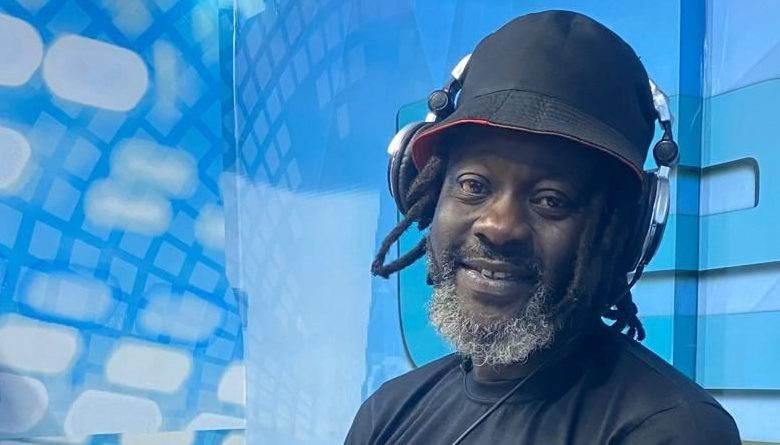
Cheikh Boucounta Coly known as Daddy Bibson: The day Fass is silent (by Seck Dieng)
This Wednesday, April 8, 2026, while the land of Yoff opens to welcome Cheikh Boucounta Coly, I am unable to act as if it were an ordinary day. I couldn’t do it. Not today. Because today we are burying part of what we were.
I was a little over fifteen years old. The Prytanée Militaire, my high school, was less a place of learning than a field of existence, and I rapped there with the quiet arrogance of someone who believes he has something to say before even knowing what. It was in this space of adolescent uncertainty that Bibson’s voice emerged. Not gently. Like an obvious fact that we were waiting for without knowing it.
There are years that decide. They separate a before from an after with a brutality that historians never quite finish explaining. 1968 was one of those years for a generation of rebels around the world. In Paris, in Dakar, in Mexico, young people collectively decided that the world inherited from their parents deserved to be challenged, shaken up, reinvented. This impulse never faded. It was transmitted, metamorphosed, bided its time.
Twenty years later, in 1988, Senegal went through another shock.
The White Year paralyzed the school system and threw young people onto the streets that President Abdou Diouf deemed sufficiently threatening to label them as unhealthy youth. The word shocked, hurt, crystallized something that nothing could erase. This youth refused the immobility and silence of the resigned, and it would demonstrate in the years that followed that its vitality was precisely what the country needed to move.
It was in this breeding ground of 1988, in the suburbs of Rufisque and the courtyards of Dakar, that Cheikh Boucouta Coly heard rap for the first time and decided to make it his language. A boy who grew up between Thiès, Tambacounda, Diourbel and Dakar, who absorbed several realities of deep Senegal before becoming an adult, did not choose rap by chance at the precise moment when his country was in turmoil.
He chooses the weapon that corresponds to his anger and his lucidity.
The irony of the story deserves attention. This youth that the authorities described as unhealthy, nourished by the sharp texts of Bibson and his brothers from Rap’Adio, was one of the driving forces behind the citizen awakening which precipitated the first Senegalese democratic change in 2000. It took barely ten years. Rap had named things, educated consciences, refused the collective amnesia that was readily distributed to poor people.
Bruno Cheikh Boucounta Coly put down roots in Fass after carrying several terroirs of Senegal in his soles. This popular district of Dakar became his sounding board. He was the most faithful son and the most uncompromising griot, the one who spoke the truth to his own people without seeking their indulgence.
His meeting with Xuman gave birth to Pee Froiss, and these two strong temperaments laid the first stones of a building of which we are still the heirs. Pee Froiss was the birth certificate of adult Senegalese rap, the one who decided to speak the Wolof of working-class neighborhoods, to speak Dakar, to speak here rather than sing there. This choice was in itself a political act, even if no one at the time yet gave it that word.
But it was when Bibson joined Keyti and Deug Iba to form Rap’Adio that something bigger happened. This moment was the beginning of a new era in the history of committed rap in Senegal. The movement ceased to be a promise and became a power.
It was no longer music for young people in the neighborhoods. It was a look at the country, a demand for truth, a refusal to accept injustices as inevitable. The 1998 album, Ku weet xam sa bopp, remains a seminal work for those who listened to it as teenagers. We didn’t listen to him. We received him. Like we receive a slap of truth that we were expecting without knowing it.
Thirteen solo albums. I arrange them mentally and I see that each of them corresponds to a period of our collective life, to a presidency, to a crisis, to a hope, to a disillusionment. Ku weet xam sa bopp, SDF, Jassbu, Ay Jundiou, Sant Rek, Miza jour. Bibson was the unofficial chronicler of real Senegal, that of the homeless and those without nets. The slightest of his lyrics in Ku weet xam sa bopp still resonates as a program that any sensible government could have included in its development plan. Know yourself. Everything else follows from that. He was crowned best solo rapper in 2007 without ever denying himself to deserve this distinction.
History, as my specialist discipline, has taught me to be wary of rapid categorizations, to look behind the works for the questions that artists ask in their time rather than the answers they claim to provide.
Bibson was not an activist in the classical sense. He did not join a party, did not seek office. He did something more subtle and more lasting. He used his art as a tool of truth and himself called this posture activism, a notion he embodied long before it became a fashionable concept in cultural conferences. Denounce injustices without transforming the scene into a partisan platform. Remain an artist while refusing the innocence of art for art’s sake. It’s a rare balance, difficult to maintain over three decades, and he maintained it.
The Minister of Culture said that he was not only an artist but a conscience. More precisely, he was an embodied consciousness. He did not theorize from a living room. He was speaking from Fass, from the reality of people that no one was going to interview in the morning papers.
There is something that we keep silent in the official tributes, because we prefer smooth trajectories to holey biographies. Bibson suffered. He fought against illness with the same obstinacy that he put into his texts, and he came back. True to himself, refusing compromises and ephemeral fashions. Standing up when everything calls for capitulation, and continuing to sing the truth when comfort would advise silence, is also an art form. An art form that he practiced until the end.
Over the years, he adopted the pseudonym Tidiani 733 and dedicated his album Insa Ibn Mariam, released in 2020, to his inner quest. Seven titles of voluntary counting, in homage to the Khadriya brotherhood from which he comes and to Fayda Tijania. Those who saw in this turn a contradiction with the anti-establishment Bibson of before did not read carefully enough. There is no break in this trajectory. There is a deep continuity. The same man who denounced injustices with controlled rage is the same who sought in spirituality the foundation of everything he had affirmed. He believed that without spiritual roots, any political or social discourse remains fragile like sand.
This morning, at the Muslim cemetery of Yoff, a body was buried. We buried fifty-two years of life, thirty-eight years of music, and one of the most honest voices this country has produced. The Malamine Senghor city in Thies, the Doudou Bakassa square in HLM 2 will be too small to contain all the sorrow of those whom Bibson nourished with his words.
But we don’t bury a work. You don’t bury a conscience.
In 1988, President Abdou Diouf saw this youth as a threat. History answered him with cruel elegance. The unhealthy youth that we wanted to correct had more of a moral compass than many of the elites trained in the great schools. Bibson was one of the clearest faces. And today, it is this same youth who has become an adult, who has become an executive, who has become a father and mother, who cries in Yoff and realizes what she is losing.
I who rapped in the corridors of a high school imitating his intonations without even realizing it, I who today direct a fund supposed to protect what men like him built, I say this. Daddy Bibson belongs to the intangible heritage of Senegal. This is not a rhetorical metaphor for funeral tribute. It’s an obligation.
Inna lillahi wa inna ilayhi raji’oun.
Rest in peace, big brother. The pain is immense and we are only beginning to understand its extent.
By Seck DIENG, CEO of the Urban Cultures and Creative Industries Development Fund (FDCUIC)
