
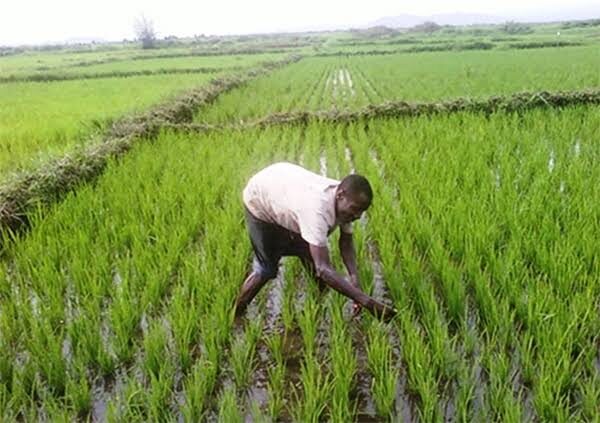
Reasonable fertilization: Triple superphosphate at the heart of the strategy to boost rice production in the Valley
Gathered in Saint-Louis at the initiative of OCP Senegal, producers, researchers and public decision-makers highlighted Triple Superphosphate (TSP) fertilizer as a major lever to restore soil fertility, improve agricultural yields and accelerate self-sufficiency in rice in the Senegal River Valley. If the agronomic results are considered convincing, the question of price and accessibility remains central.
Faced with the progressive degradation of agricultural soils in the Senegal River Valley, marked by a deficiency of nutrients, a low organic matter content and phenomena of acidity and salinization, stakeholders in the agricultural world are calling for a paradigm shift in terms of fertilization. It is in this context that OCP Senegal organized, at the AfricaRice center in Saint-Louis, a workshop dedicated to the adoption of Triple Superphosphate (TSP) and its prospects in irrigated farming systems. For rice producers, simple phosphate fertilizer today appears to be a credible alternative to the compound fertilizers traditionally used. Ousseynou Ndiaye, president of the Interprofessional Rice Industry Committee (CIRIZ), welcomed the results obtained after several experimental campaigns.
“TSP is a background fertilizer that we have been using for more than three years. Field trials have shown a clear improvement in yields and better control of agricultural practices,” he said. He recalls that producers had benefited, a few years ago, from a significant donation of TSP from OCP Senegal, entirely subsidized by the State, allowing massive adoption of the product. “We were completely satisfied. The problem today remains access to the product and especially its price,” he stressed, calling for additional efforts to reduce production costs.
According to the president of CIRIZ, the competitiveness of local rice compared to imports necessarily requires a reduction in costs linked to inputs. “If we manage to have TSP at an accessible price, this will boost production and allow us to move much more quickly towards food self-sufficiency,” he insisted, announcing an upcoming plea to the authorities for a better subsidy of phosphate fertilizers.
On the research side, Dr. Omar Ndao Faye, director of the ISRA Agricultural Research Center (CRA) in Saint-Louis, highlighted the scientific importance of TSP in reasoned fertilization. “Rice needs a balanced fertilizer package, including nitrogen, phosphorus and potassium. However, our soil analyzes show significant deficits, particularly in phosphorus,” he explained. According to the researcher, TSP, with its high phosphorus content, plays a determining role in the development of the root system and grain loading. “
It is a fertilizer that must be added at the bottom, at the right time. When it is available late, its effectiveness decreases sharply,” he said, pleading for simple fertilizers at competitive prices in order to optimize yields while reducing costs. The workshop also highlighted the importance of better organization of markets and distribution circuits, as well as the integration of the TSP into national fertilization strategies and the subsidy catalog. For OCP Senegal and its partners, the promotion of TSP in the Valley is fully in line with the food sovereignty objectives defined by the Senegalese authorities.
