
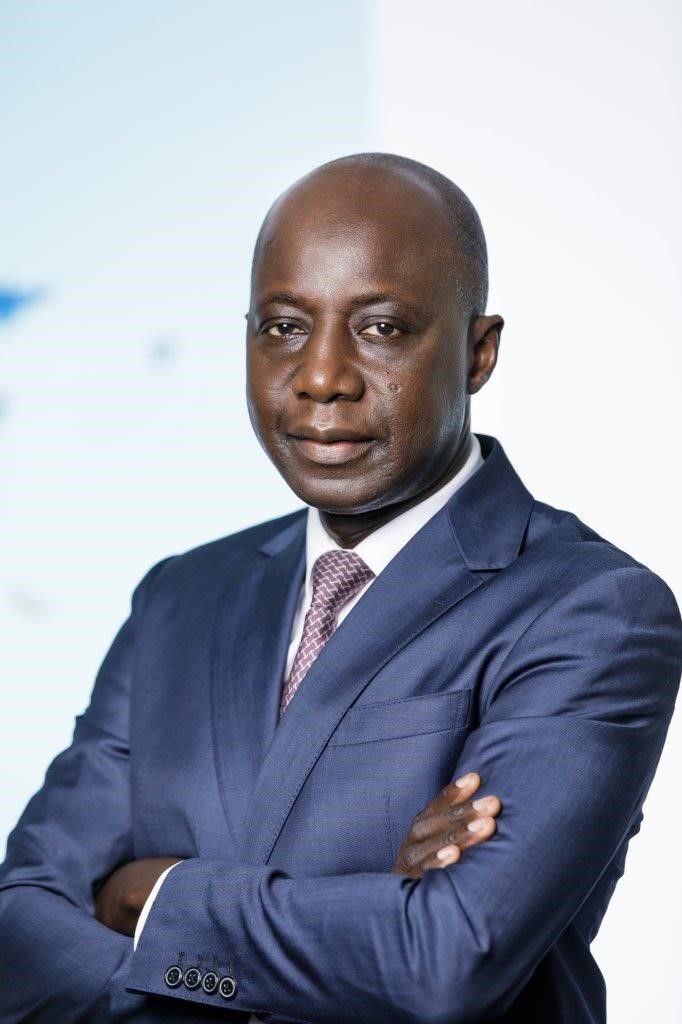
Meissa Tall: “With all its assets, Senegal can make a remarkable journey” January 16, 2026
In this interview, Meissa Tall, partner and head of KPMG’s activities in French-speaking Africa, analyzes the economic environment in Senegal and Africa in general. According to him, the continent has the opportunity for an economy of growth and catch-up.
You are a partner and responsible for KPMG’s activities in French-speaking Africa. What is the core business of this structure?
KPMG is a global consulting and auditing giant. It is one of the four major international firms commonly referred to as the Big Four. The network today brings together more than 200,000 professionals around the world and achieves an annual turnover of around $40 billion. KPMG is present in nearly 140 countries, with a strong presence in the United States, Europe, Asia and Africa.
Historically of Anglo-Saxon origin and with more than a hundred years of existence, KPMG is now an organization with deep local roots. Each firm is fully integrated into its environment: in Senegal, we are Senegalese; in France, French; in the United States, American. This local approach, combined with the strength of a global network, is one of the pillars of our model.
In Africa, KPMG covers the entire continent, from Morocco to South Africa, and from Senegal to Djibouti, with an established presence in around forty countries. Our activities revolve around three main businesses. First, auditing and statutory auditing, a regulated profession of trusted third party, which consists of certifying financial information and supporting both private sector actors and public institutions.
Then, consulting, through which we support States, multinationals, donors and investors in defining their strategies, evaluating and structuring projects, mobilizing financing, as well as implementing transformation and digitalization programs. Finally, legal and tax, with KPMG Avocats, to support States and Companies on business law and taxation throughout the world. We have been present in Senegal for 30 years and in 40 countries in Africa.
What general view do you have on the economic and financial environment of the African continent?
My reading is that Africa has the opportunity today to achieve what we call a catch-up growth economy. Indeed, Africa represents around 20% of the world population and produces less than 5% of wealth because its GDP represents less than 5% of world GDP.
Internationally, countries are generally compared according to their level of wealth, measured by a key indicator: GDP per capita, that is to say the wealth created per person.
As an illustration, GDP per capita is around $48,000 in France, around $89,000 in the United States, while it is around $5,000 in Morocco, and around $1,700 in Senegal. Cape Verde, for its part, is today close to $5,000 per capita.
This level of GDP per capita very concretely determines the stage of development of a country. When a country exceeds $20,000 or $30,000 per capita, the fundamental issues are generally already addressed: infrastructure is in place, populations have access to decent housing, electricity, water, and questions of subsistence are no longer central. The effort then focuses more on well-being and quality of life. This is typically the case in Western countries. Conversely, the lower the GDP per capita, the greater the challenges related to access to essential services, sanitation and basic infrastructure.
The challenge, for all countries, is therefore to enable their populations to gradually emerge from poverty and gradually join rich countries with a suitable GDP per capita. The good news is that this goal is achievable. Countries, like Singapore, have also managed to make a remarkable journey. Today, Singapore has a GDP per capita which exceeds $70,000/inhabitant. Whereas after the Second World War, it was like Senegal.
Still in this wake, in the 70s and 80s, Cape Verde, a neighbor of Senegal, had a GDP per capita lower than that of Senegal. They were around $500. Today, Cape Verde has a GDP per capita that is almost three times that of Senegal. So the challenge in Africa is to give ourselves the means to enable countries to move from a less advanced situation to developed countries and it is possible. Thus, we support countries in charting the path that allows them to move towards their true development. But beyond charting the route, we assist countries in being able to execute the road map.
You have supported countries like Benin and Ivory Coast. Now, how does KPMG support Senegal?
Senegal is an extraordinary, remarkable country with enormous potential and we are very confident about its development trajectory. Senegal’s assets are multiple: its strategic geographic positioning, its solid democratic tradition, its quality human capital and its plural resources. We are confident that by using all these assets, Senegal can make a remarkable journey. That said, Senegal has a plan that is being implemented and we are confident that the execution of this plan can produce convincing results.
In general, what analysis do you do on the business climate in Africa?
Generally speaking, the business climate in Africa is characterized by a very clear combination of opportunities and risks.
Africa, today, once again, is a continent which represents a significant demographic, almost 1.2 billion people. And in 2050, it will be 2 billion. So a high proportion in terms of population 20%. On the other hand, Africa, in terms of contribution to the creation of global wealth, represents less than 5%. Today, the GDP of the 55 countries in Africa is equivalent to the GDP of a single country, France. The good news is that Africa has strong growth. It is the continent that is growing the most compared to other countries. Europe, for example, has fairly low growth, of 1 to 2%, while in Africa, we have an average growth of 5%. This dynamic opens up significant prospects in terms of investment and economic development.
Added to this is another strategic lever: Africa is one of the world’s main reservoirs of raw materials and natural resources. The continent concentrates a significant share of the world’s reserves of critical minerals and strategic resources. I’m thinking of minerals like cobalt, oil, gold, etc.
With more than 50% of reserves located in Africa, this wealth also constitutes a risk factor. Indeed, in a global context of energy and industrial transition, these resources arouse increasing desire and place Africa at the heart of strong economic and geopolitical rivalries. The challenge for African governments is therefore major: to put in place solid governance frameworks in order to manage these resources in a responsible and sustainable manner. Otherwise, the risk is that the value created will be captured outside the continent, without fully benefiting local economies and populations.
How can this wealth generate more economic and social impacts?
The economic and social impact of this wealth depends above all on Africa’s capacity to locally transform its raw materials. When the continent limits itself to exporting raw resources, it essentially creates value for other economies.
For example, if you take a mineral like bauxite. This material, sold in its raw state, is worth $60 per ton. Transformed into alumina, its value increases to nearly $600 per ton. And when we go as far as aluminum production, we reach around $2,500 per ton.
The difference is enormous. If we sell the raw bauxite, we lose 10 times the value, or even more, approaching 50 times the value.
The reasoning is identical for gold: between raw gold and refined gold, the creation of value can be multiplied by ten. The same goes for cotton: by exporting finished products, like clothing, instead of exporting raw cotton, you multiply the value by more than 10.
You see all this wealth that we lose by sending raw materials outside. Which means that the others are rich and we remain with a GDP of less than 2000 dollars.
So the major challenge for Africa is to pull itself together and transform these raw materials. To create wealth at the local level, it is possible and several countries have done it like Benin. They managed to create a textile industry with their cotton. Senegal is making efforts on the phosphate part by transforming it into phosphoric acid and fertilizer.
We must take advantage of the youth of our population and make greater use of our raw materials. For example, countries like Morocco have taken note. They used all the levers I spoke to you about to escape poverty and resolutely get on the path to development.
Demba DIENG
