
Louga: the Sow family perpetuates the legacy of bird breeders
As the patriarch Cheikh Sow is no longer there, it is his son, Alassane Sow who arranges to meet us. On the outskirts of Louga. To discuss his passion which has become a real business: the sale of birds.
Exactly eight years ago, it was Patriarch Cheikh Sow who welcomed the “Sun” team to his home on the outskirts of Louga. This time, the official birdkeeper of “Diallo Pithie” is no longer on site. “Our dad died four years ago, leaving behind a great void. Pray for him,” says Alassane Sow, plunging us into immense sadness. A few more courteous exchanges before getting to the heart of the matter.
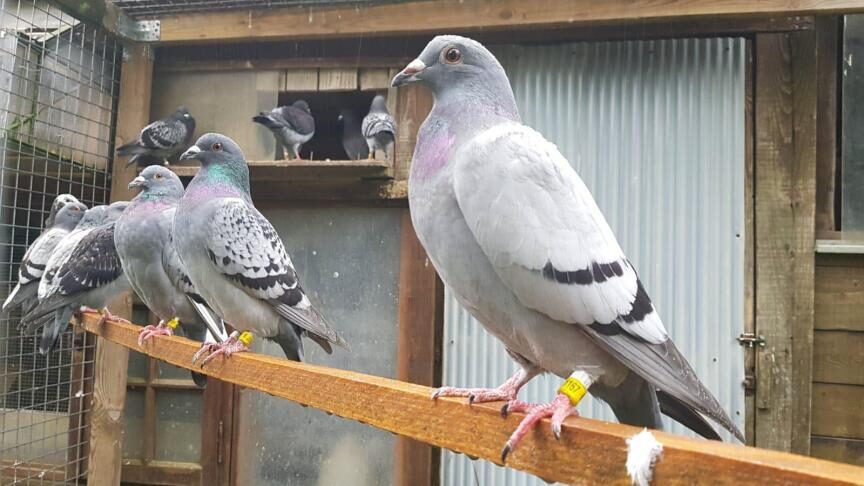
The interview begins. The atmosphere is cordial. Sitting on a mat, the Sow brothers chat around a pot of tea. The courtyard of the house has not really changed. The decor remained almost the same: two buildings, several huts. Only one big change has been noted: the small shelter made of wood, which served as a bird hut, is no longer there. In its place, a small van. We can see five families of “pitakh” (bush pigeons). All in all, there are less than a hundred subjects, large and small, some of whom come from the Maghreb. “I plan to go back to the bush very soon,” says Alassane, who says he has two orders from people based in Dakar.
Like his late father, Alassane claims to have abandoned everything to devote himself to selling birds. This business, he says, presents a real advantage. “I currently have three wives and around ten children whom I feed thanks to income from the sale of birds,” says the birdmaker. And how does he catch them? It’s simple. Alassane has a bird trap that he installs around backwaters and rivers. And that’s it. He never goes home empty-handed. “I sometimes come back with 150, 200 and even 300 birds,” he says.
Once at home, the captured birds are sold to several dealers who, in turn, transport them to Dakar, Saint-Louis, Touba, Kaolack and Thiès. A family affair For the Sow, catching and selling birds is above all a family affair. A business that is passed down from father to son. “I inherited my dad’s job. And tomorrow, my children will do the same business. It’s a family affair,” says Alassane. For many years, his father, Cheikh Sow, was the official birdkeeper of Amadou Diallo, better known under the name “Diallo Pithie”.
The deceased received orders directly from the latter. Today, Alassane is only following in his father’s footsteps. “But I have to admit, I don’t have the same gifts as him. It must also be said that the resource is becoming scarce and that business no longer works as before,” he admits, sometimes content to buy a few pairs of “pitakh” (pigeons) on site. However, the demand for bush pigeons is growing. Alassane Sow also benefits from the indirect support of health stakeholders, who strongly recommend the consumption of “pitakh” for its nutritional virtues.
Today, restaurateurs, ordinary people and patients suffering from anemia come to get their supplies from his bird shop. And when he can no longer satisfy demand, Alassane Sow, who benefits from his late father’s rich address book, calls on his children and brothers, thus perpetuating a promising business inherited from his ancestors.
Abdoulaye DIALLO
