
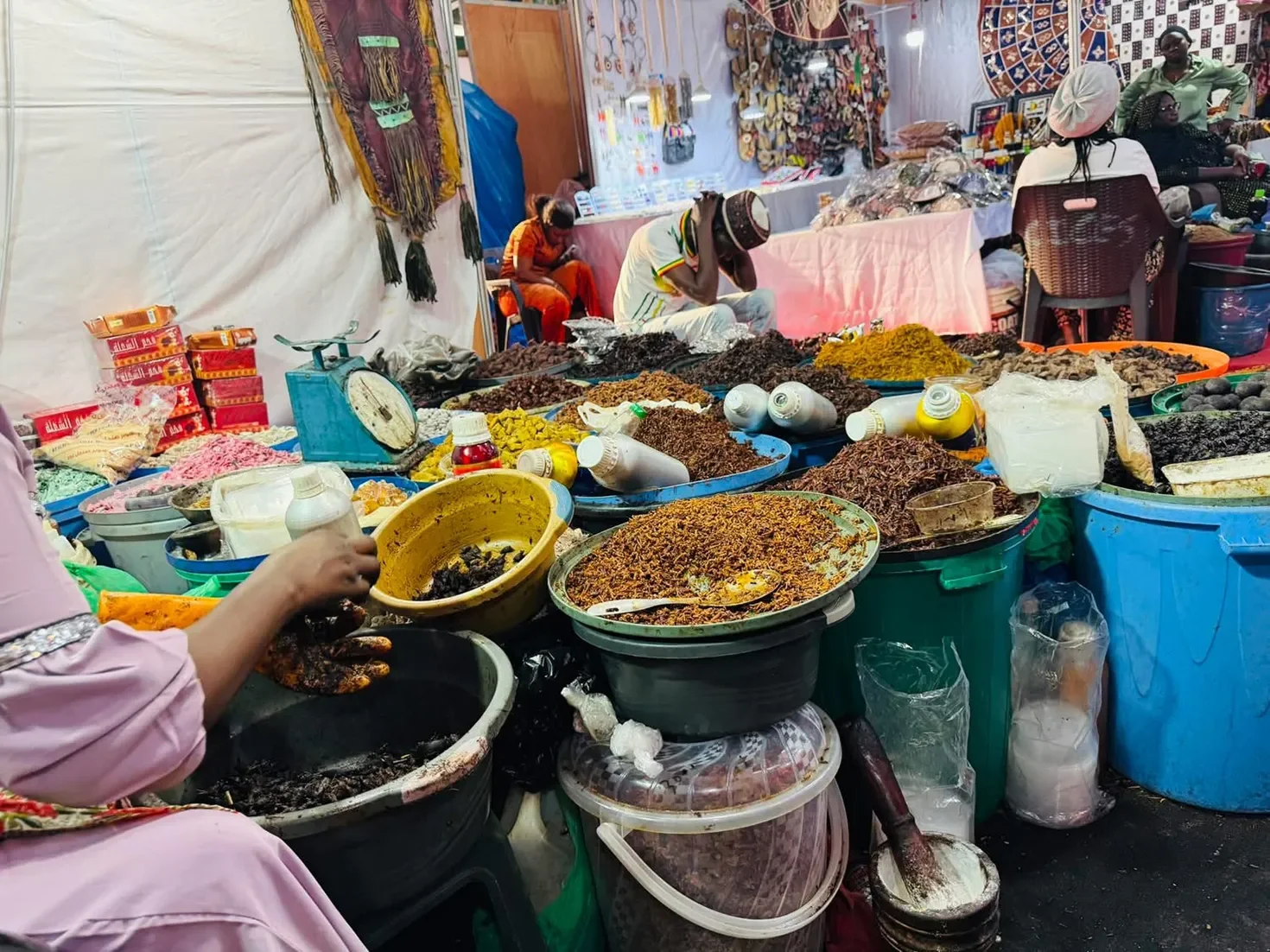
Incense business: A revival over time
The freshness is causing sales of incense to soar, reactivating this trade anchored in everyday life. From popular markets to homes, this fragrant ritual punctuates the evenings and supports a local economy. But, faced with this well-established tradition, health concerns are beginning to outline the limits of a market which must deal with changing demand.
Leaning against a stack of wooden crates, Aïssatou watches her brazier with a watchful eye. The bluish smoke rises slowly, dissipating in the dry air of the Grand Yoff market. It’s a little after 6 p.m. The day is fading, the fruit stalls are beginning to empty, but around the incense, the movement intensifies. This causes some people to instinctively stop to take a brief sniff before continuing on their way or taking out some bills.
“Come and smell it, it’s a very strong thiouraye, ideal for evenings,” says the saleswoman, pinching a few grains between her fingers. Fatou Ndiaye has been selling incense for over a decade. Her face calm, she remains on the lookout for potential customers who flock at this precise hour while the traffic intensifies.
In cooler periods, she explains, sales increase significantly, driven by stronger demand. “Since the start of this period, I have noticed, as usual, that my business has become much more profitable than the rest of the year. People are more fond of incense,” confides the lady.
There are various ranges, she continues, and prices vary depending on the quality, the intensity of the scents or the composition of the mixtures. “The good smell revives homes during cool evenings,” observes Fatou who adjusts her dosages according to customer demand and preferences. At this time of year, incense becomes an almost daily consumption product for certain households, fully integrated into current household expenses.
Next to the stand, Khady, a scarf tied around her head, leans forward slightly, inhaling short puffs. She chooses a woody blend at 1500 FCfa. “When it’s cool, we add more,” she explains, tickets in hand. For her, as for many, purchasing is as much a matter of habit as it is a desired comfort.
Khady does not skimp on means, because she bought a box of incense for 10,000 FCfa on which is affixed a dapper name: dof lo sa Dieukeur (to enchant your husband in Wolof). “I am used to praising my house. I can’t get enough of the good smell anymore. I don’t spend less than 20,000 FCfa to praise my house,” she says with a beatific smile, revealing a diastema.
An informal market punctuated by the seasons
A little further on, in the bustling corridors of the market, Abdoulaye, the owner of a shop selling exotic products, is crouching near a small Malagasy stove on which incense burns. He gently blows on a glowing coal before depositing a few grains on it. Thick smoke bursts out and a few curious looks converge.
“It’s the Senegalese thiouraye,” he says, raising his head. His face, slightly wrinkled, reflects quiet pride. Indeed, he talks about family recipes, mixtures adjusted according to the season. “At the moment, customers want it to last a long time,” he adds, justifying sometimes higher prices.
According to Abdoulaye, prices vary depending on the origin and composition. Small sachets sell for around 500 FCfa, while imported incense can reach 5000 FCfa. He gestures with his chin to a row of neater bags. “These mainly go for ceremonies,” he explains. The cool period and the wintering period constitute structuring consumption peaks for turnover.
Sitting behind her stall, legs folded on a mat, Fanta Diop observes the comings and goings. She counts her sales in a low voice. “In the cold season, we sell almost every day,” she says.
For this mother of four children, this business represents a regular source of income integrated into an informal but relatively stable economy. “I sold, at the very least, five sachets for 1000 FCfa. I cannot make such profits during the heat,” explains the lady.
By Pathé NIANG
