
History Sundays| When a match awakens a memory: the Mali Federation
Tangier, January 9, 2026.
On the field, Senegal and Mali face each other in the quarter-finals of the African Cup of Nations. The stands vibrate with the songs, the flags flutter, the anthems clash. The challenge is sporting, Senegal emerged victorious. But behind this rivalry lies an older, more fragile memory: there was a time when these two nations were one. Less than sixty-six years ago, Dakar and Bamako shared the same flag, the same ambition, the same dream.
At the end of the 1950s, French-speaking Africa stood on the threshold of its destiny. Independence is approaching, but with it, a worry: how to exist alone in a world already structured by other powers? From Dakar to Bamako, an idea emerges, bold and simple: to exist, we must unite.
Modibo Keïta, future Malian president, believes in the strength of a federal African state, capable of influencing the international concert. Mamadou Dia, Senegalese Prime Minister, is thinking about united and balanced economic development. Léopold Sédar Senghor, poet and committed intellectual, seeks to combine ideals and political pragmatism. They do not think in the same way, but share a conviction: Africa must not begin its modern history in a dispersed order.
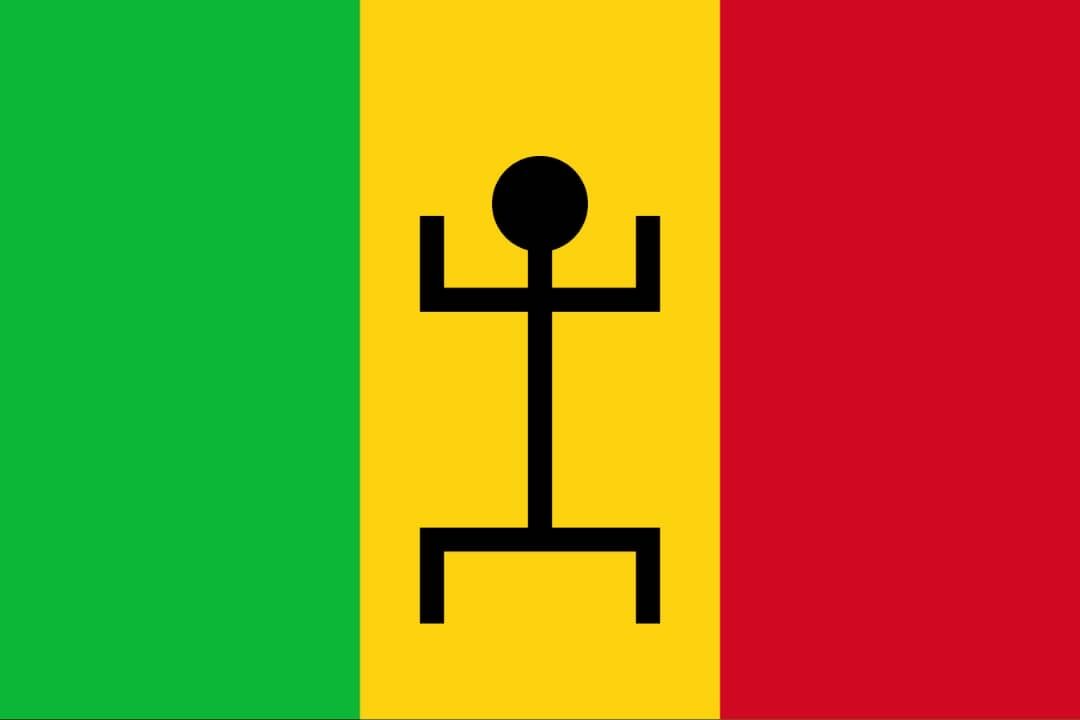
In January 1959, this vision became reality. The Federation of Mali is officially proclaimed. Dakar becomes the capital. Its symbol, a green, gold and red flag stamped with the kanaga, a Dogon mask with arms raised to the sky, embodies both cultural identity and political ambition. For the first time, Africans govern a territory beyond colonial borders, laying the foundations of a young state but one with an immense dream.
The Federation is moving forward with caution and hope. It acquired institutions, a federal government, and an executive where Modibo Keïta was elected president and Mamadou Dia vice-president. The ministers, drawn equally from the two countries, are working to build a common administration, in a context where each decision is fraught with meaning: who will control the army? Where will the key ministries be? How to share resources?
On the night of June 20, 1960, independence was proclaimed in Dakar. The French flag comes down, that of the Federation rises. The moment is solemn and serious: we are not only celebrating a newfound freedom, but the immense responsibility of a new State. However, behind the official smiles, the tension is palpable. Two political cultures, two symbolic capitals, two visions of power must now coexist.
The summer of 1960 was one of cracks. Ministerial meetings turn into dialogues of the deaf. The disagreements concern the organization of the army, the distribution of ministries, and the control of institutions. Distrust sets in: in Bamako, there is a fear of Senegalese domination; in Dakar, there is fear of Malian control. Individual and national ambitions transform the federal dream into a field of silent but persistent tensions.
On August 20, Senegal proclaimed its secession. Two weeks later, on September 22, Mali in turn became a sovereign state. The Mali Federation ends after seventeen months of existence. The separation is frank, without fanfare, almost without farewell. But this experience, brief and fragile, leaves a trace in history: it shows that for an instant, a pan-African dream had taken shape, carried by the will of visionary leaders and by the hope of people linked by history and culture.
Only seventeen months, but enough to mark memories. The Federation of Mali remains this fleeting passage where two nations believed, together, in a common future, where the borders inherited from colonization were transcended, even for a time.
