
Details from Ousmane Sonko June 23, 2026
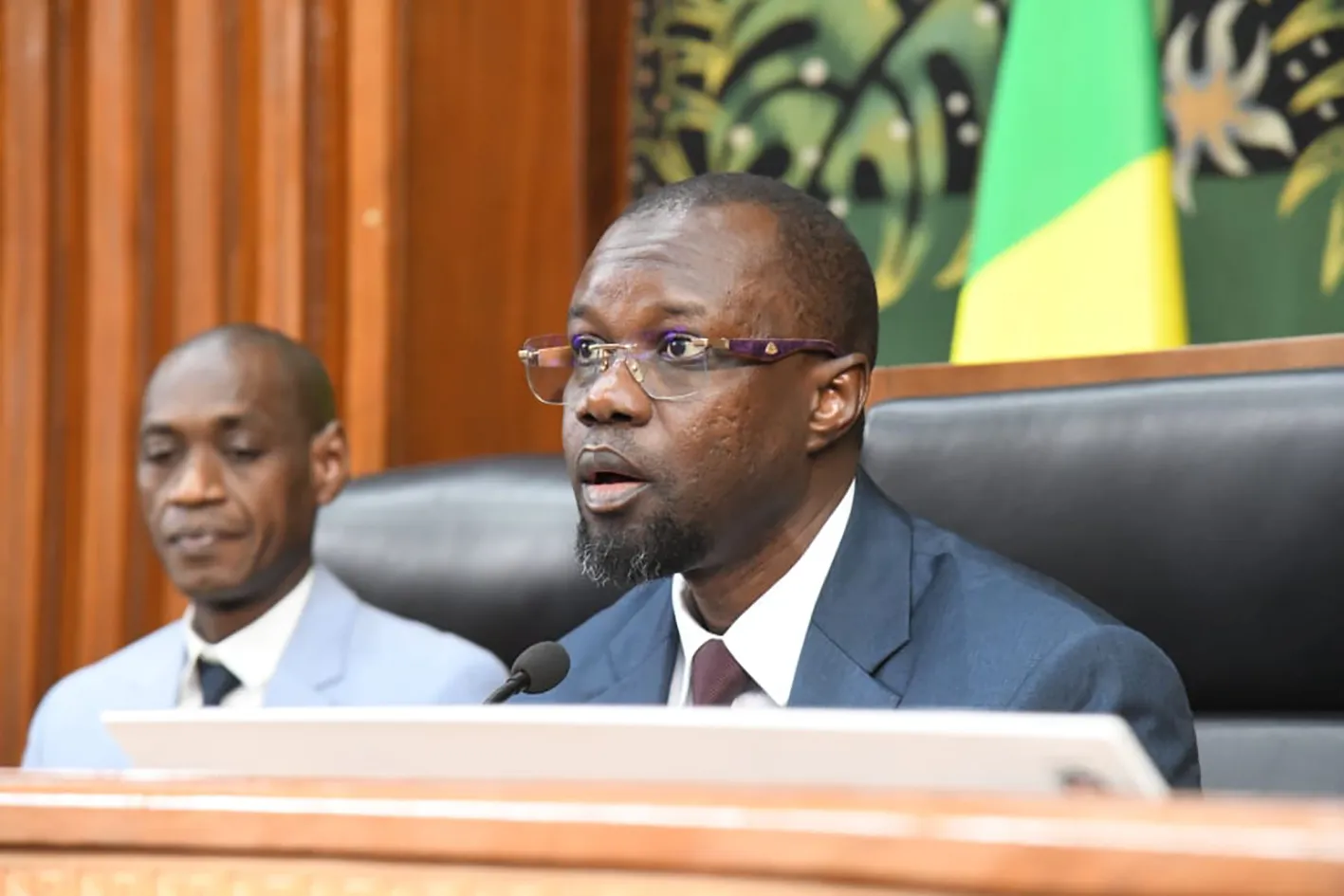
The President of the National Assembly, Ousmane Sonko, yesterday provided details on the constitutional revision, recalling that the National Assembly acts within the framework of the mandate given by the people. During the plenary session, the National Assembly registered four new deputies and El Malick Ndiaye was elected first vice-president of the institution.
Taking advantage of the plenary session devoted to the vote on bills relating to the Labor Code and Social Security, the President of the National Assembly, Ousmane Sonko, provided details yesterday on the constitutional revision.
He indicated that the national representation complies with the commitment made to the sovereign people. According to him, it is up to the deputies, under the provisions of article 103 of the Constitution, to exercise the high responsibility entrusted to them by proceeding to the examination and adoption of the constitutional revision proposal according to the procedure provided for in article 79 of the fundamental law.
“The people gave us a mandate (…). Indeed, the disruptive reforms constitute the ideological basis of this contract (…). We have never given the President of the Republic an ultimatum. Everyone will limit themselves to their constitutional prerogatives,” declared Ousmane Sonko.
He recalled that the reform enterprise belongs to the Senegalese people and to the national representation, the depositary of popular legitimacy. In his opinion, the objective of the proposed revision of the Constitution has already been achieved. According to him, the parliamentary initiative aimed to create the necessary conditions for the adoption of this revision promised to the people and whose approval was slow in coming.
“In our democratic model, only two entities can claim constituent power: the people and the National Assembly. No other power can claim access to this high dignity. As a constituent power, the National Assembly has full competence to initiate, adopt and, where appropriate, approve a revision or modification of the Constitution,” argued Ousmane Sonko.
He recalled that the National Assembly has the competence to initiate and adopt constitutional revisions, in particular by a qualified majority vote of three-fifths, which constitutes both adoption and approval, in accordance with the jurisprudence of the Constitutional Council of 2006.
Four new deputies, El Malick Ndiaye first vice-president
During this plenary session, the National Assembly proceeded with the reinstatement of Amadou Ba and Momar Tall Ndao. The two officials held the positions of Minister of Culture and Secretary of State for Urban Planning and Housing respectively in the government led by Ousmane Sonko.
At the same time, Salimata Dieng and Abass Ndiaye, both members of the Pastef-Les Patriotes party, were installed as deputies.
Salimata Dieng serves as deputy to Marie Angélique Diouf, appointed minister in the new government. As for Abass Ndiaye, he replaces Lahad Ndiaye, who became Minister of Transport.
The National Assembly also proceeded with the election of the first and third vice-president of its office. El Malick Ndiaye was elected first vice-president, while Ismaïla Diallo was appointed third vice-president.
The two candidates each received 130 votes.
Aliou DIOUF
