
The long journey of fraud victims to find their identity (2/5) July 7, 2026
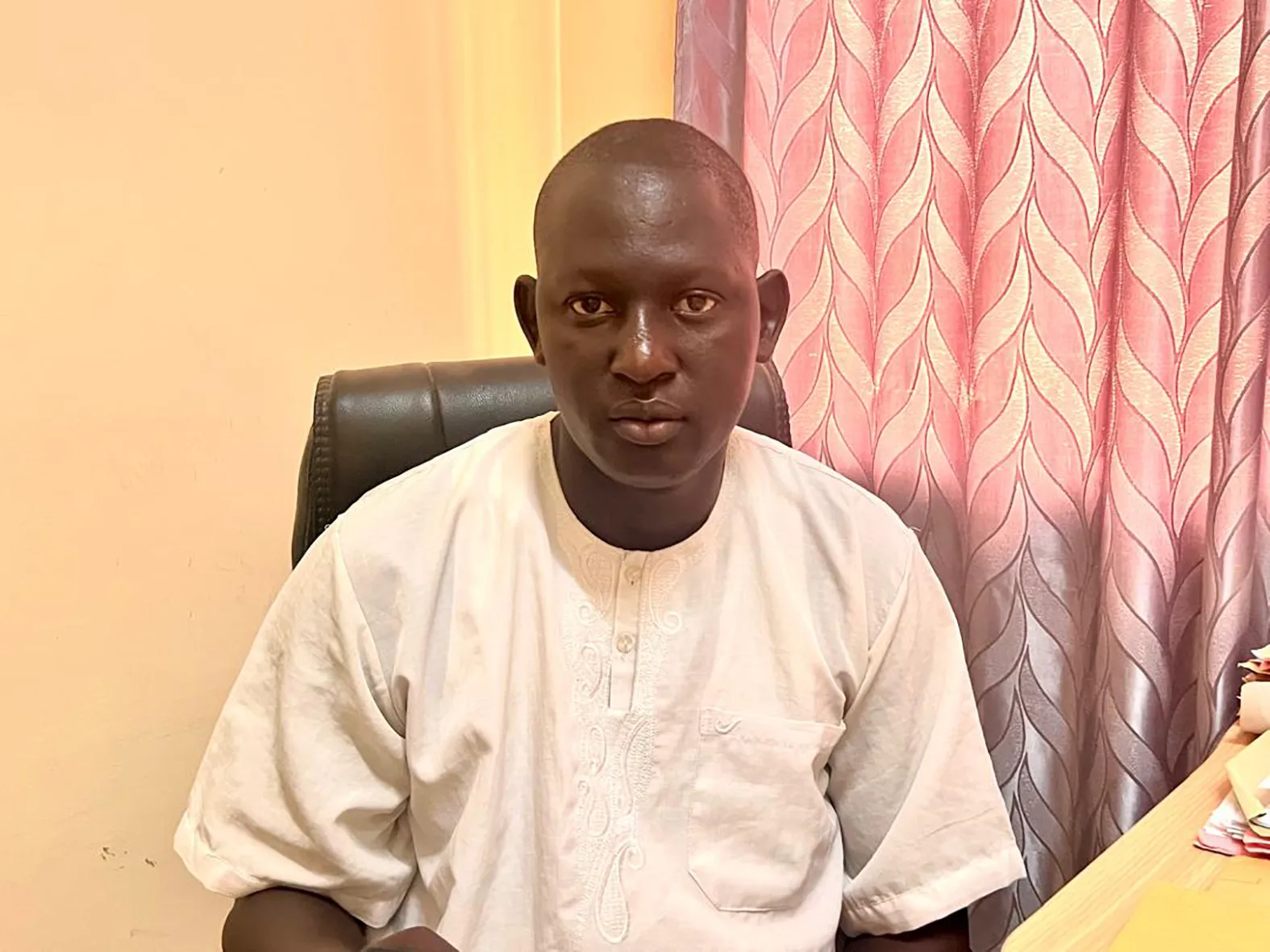
They may not know it, but their journeys come together around the same misadventure: irregularities noted on their civil status documents. Serigne Maye Seck, until then president of the Mbacké Communal Youth Council, as well as Cheikh Khadim Kâ, resident of Touba and student at the Faculty of Economics and Management (Faseg) of the Cheikh Anta Diop University of Dakar (Ucad), both discovered that they were victims of falsification on their birth certificates.
MBACKÉ – It was a calm morning in the Baol. The sun had decided to give no quarter. He is strong and tenacious on men and animals. This scorching temperature was far from discouraging everyone.
Like every day, Touba la Sainte is lively with people going about their business and visitors who come either to visit their marabout, or to explore the Great Mosque, a true architectural and spiritual work.
That morning, we had a meeting with the pair Serigne Maye Seck and Cheikh Khadim Kâ, two victims of civil status fraud. A duo who understood the beauty of “legality”.
However, nothing suggested such a situation. Both used these same documents for a good part of their lives, for their studies and various administrative procedures, before discovering that anomalies were hidden within them.
Read also: The urgency of digitizing civil status in Kaolack (3/5)
Ironically, Serigne Maye Seck, who had been engaged for two years in a fight for the installation of a Commission for the reconstitution of birth certificates in the commune of Mbacké, was still unaware that he himself was affected by this problem. At the head of a collective, he campaigned to relieve populations faced with irregularities in their civil status documents without suspecting that he would one day share the same fate.
Unlike Cheikh Khadim Kâ who discovered his problem in 2024, while he was preparing for his baccalaureate, Serigne Maye Seck noticed the irregularities on his birth certificate barely a year ago. Both learned the truth when it came time to renew their documents.
A certificate number assigned to a girl
For Cheikh Khadim Kâ, the discovery was particularly surprising. Her registration number, recorded on her birth certificate, was, in reality, attributed to a girl.
In 2024, while a first grade student at the Cheikh Ahmadou Bamba technical high school in Diourbel, the young man discovered the anomaly.
“As part of a study trip, I had to obtain a passport, but I first had to renew my birth certificate in order to have a national identity document,” he recalls.
But, when he arrived at the Touba civil status center, he was directed to the Mbacké court. This trip will mark the start of a real obstacle course which will only end four months later.
“It was in court that I was told that the number on my document belonged to a girl. I was very surprised,” says the Bachelor 1 student at the Faculty of Economics and Management (Faseg) at the Cheikh Anta Diop University of Dakar (Ucad), specifying that he had always used this same extract since his birth.
“It is with this document that I obtained my Certificate of End of Elementary Studies (Cfee) and my Certificate of End of Middle Studies (Bfem),” adds Cheikh Khadim Kâ.
To regularize his situation, the court recommends that he cancel his birth certificate in order to assign him a new register number. A long and grueling procedure, which lasted almost two months.
A costly procedure
“I left Diourbel to come and attend the hearings, but we were often sent back,” he remembers.
Added to this were travel costs and the cost of administrative documents to provide. Loads that are difficult for a student to bear.
After two months, Sheikh finally obtained a new birth certificate, then his passport two months later. But, in the meantime, the deadline for submitting your study trip application had passed. A lost opportunity.
In Mbacké, Serigne Maye Seck had a similar experience. He who had engaged in the fight to avoid this type of inconvenience finally found himself among the victims.
“I needed a new birth certificate; I went to the Mbacké civil status center and I was told that my number did not appear in the register,” he says, still perplexed.
“How can a person be declared in a civil status center without being registered? », asks Serigne.
According to him, before the establishment of the Reconstitution Commission, victims of this type of irregularity were often referred to a procedure to cancel their document. A solution that he considers unfair, because it entails additional costs for people who are not responsible for anything.
“Some could pay up to 8,000 FCfa to regularize their situation,” he explains, denouncing the slowness of the procedures and the numerous administrative consequences that this could entail.
Like Cheikh Khadim Kâ, Serigne Maye Seck emphasizes that he completed his entire school career with this same act.
“It is with this number that I obtained all my diplomas as well as my administrative documents,” he says, denouncing a lack of rigor in the management of civil status.
“We have never heard of a fire at the Mbacké civil status center. So how can records disappear overnight? », he asks himself again.
For him, the falsification of civil status documents had become a worrying reality in the Mbacké department.
He recalls that, had it not been for the intervention of the collective he led, several students were at risk of missing the baccalaureate because of these irregularities.
It is in this context that a march was organized to the prefecture to demand the establishment of a Commission for the reconstitution of birth certificates. A claim that will ultimately succeed.
Since February 2, 2024, a magistrate has been assigned to Mbacké to manage the work of this commission.
9,367 documents restored between 2024 and 2026
The head of the Civil Status Division in Mbacké, Cheikh Mbacké Fall, indicated “that between February 2, 2024 and February 17, 2026, 9,367 documents were restored”.
For Serigne Maye Seck who was the victim of fraud on her birth certificate, this progress constitutes a victory for the populations.
“It’s a right for us. This is why we fought to obtain it and we won our case,” he says, praising the diligence of the Mbacké judicial authorities.
Today, thanks to the reconstruction of his file, he was able to find a regular document.
An experience which led him to raise awareness among populations of the need to carefully preserve part 1 of their birth declaration, which he considers to be an essential document to facilitate any possible reconstitution.
In the same spirit, Serigne believes that the modernization of civil status, through new technologies, could make it possible to avoid, in the future, such situations in Mbacké.
