
The urgency of digitizing civil status in Kaolack (3/5) July 7, 2026
Obtaining a birth certificate, a marriage certificate or a supplementary judgment is sometimes an obstacle course in the capital of Saloum. Between administrative delays, degraded archives, lack of qualified personnel and circulation of false documents, the civil status services of Kaolack face numerous challenges which penalize users on a daily basis.
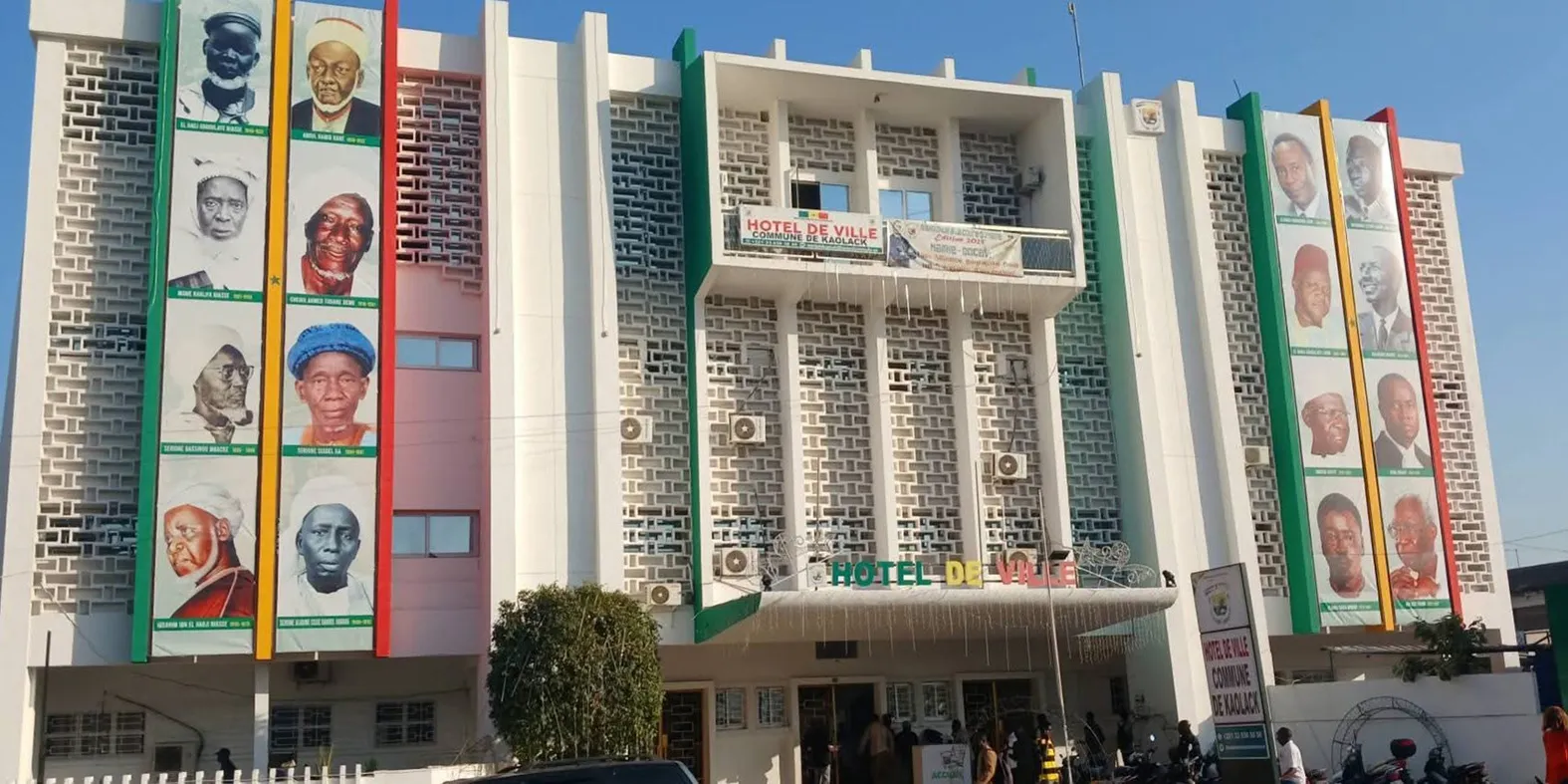
KAOLACK – In several civil status centers in the commune and department of Kaolack, long queues have become familiar. From the early hours of the morning, dozens of citizens show up to submit a file or collect an administrative document.
Read also: A journey strewn with pitfalls (4/5)
However, many leave without satisfaction, due to a lack of available forms, an unstable computer connection or due to particularly long processing times.
“Sometimes you have to come back three or four times before getting a document,” says a resident of Medina Baye met in front of a civil status center.
A situation which particularly exasperates students, candidates for administrative competitions and parents of students, often subject to strict deadlines.
The persistent threat of false documents
Beyond administrative delays, the circulation of false documents constitutes another major concern. Falsified or irregularly established birth certificates continue to fuel fraudulent networks, compromising the reliability of the system.
“In our work, we regularly encounter such cases. People show up with passports or other documents that appear authentic. But, when we check the birth certificate, the place of birth is sometimes fictitious,” explains Pape Mangoné Sarr, head of the Civil Status Service at Kaolack town hall.
To combat this phenomenon, the municipality has set up an archives office responsible for verifying the authenticity of documents when suspicious cases are reported.
According to Mr. Sarr, several factors explain the dysfunctions observed. He cites in particular the insufficiency of logistical resources, the dilapidation of archives, the overload of work, the lack of continuing training as well as the precariousness of certain agents.
“Precariousness does not spare civil status agents. The temptation is strong and you have to have a love of work and a certain amount of restraint so as not to deviate from your path,” he admits.
The degraded state of many old records also constitutes a significant obstacle. Some documents are, today, difficult to use, thus complicating administrative research and reconstruction procedures.
Digitalization as an answer
Faced with these challenges, the modernization and digitalization of civil status appear to be essential solutions.
For players in the sector, digitalization will not only secure data, but also speed up procedures and bring services closer to populations.
“It’s more than a necessity. Behind each administrative document is often access to school, justice, employment or even healthcare,” underlines the head of the Civil Status Service at Kaolack town hall.
According to him, the digital transition constitutes an effective means of combating false birth certificates, duplicates and fraudulent manipulation of registers. It will also promote better data conservation and facilitate administrative research.
“With the digitization of civil status documents, the authorities will be able to ensure better conservation of data, facilitate administrative searches and considerably reduce the risks of falsification,” he specifies.
For many citizens, this modernization is long overdue.
“It’s time to put an end to the old ways. Digitalization represents a major step towards a more modern, secure administration adapted to digital requirements. It will allow users to benefit from faster, more transparent and accessible services,” said Babacar Diouf, retired teacher.
The “Nekkal” program in support
As part of the civil status reform, the State of Senegal, through the Ministry of Urban Planning, Territorial Communities and Territorial Planning, is committed to strengthening civil status infrastructure.
Two new centers were recently inaugurated in Fass Barigo, in the department of Guinguinéo, and in Ndorong, in the commune of Kaolack.
These infrastructures are part of the “Nekkal” program intended to strengthen the civil status information system and consolidate the national biometric identity file. Funded by the European Union, this program is implemented for the benefit of the National Civil Status Agency (Anec).
“For too long, records were kept manually, leading to errors, losses and delays. From now on, thanks to “Nekkal”, Senegalese civil status is moving to computerized, centralized, secure and interconnected management with essential services such as health, education or security,” declared the Minister of Local Authorities, Moussa Bala Fofana.
Although the initiative is widely welcomed in Kaolack, local stakeholders nevertheless believe that material investments must be accompanied by a significant training effort.
“I don’t think we can resolve the problems of civil status overnight. With digitalization, Kaolack has benefited from equipment, but we must go further, by strengthening continuing training in order to have quality human resources,” argues Pape Mangoné Sarr.
The civil registrar also recommends the establishment of periodic control mechanisms to strengthen transparency and prevent abuses.
