
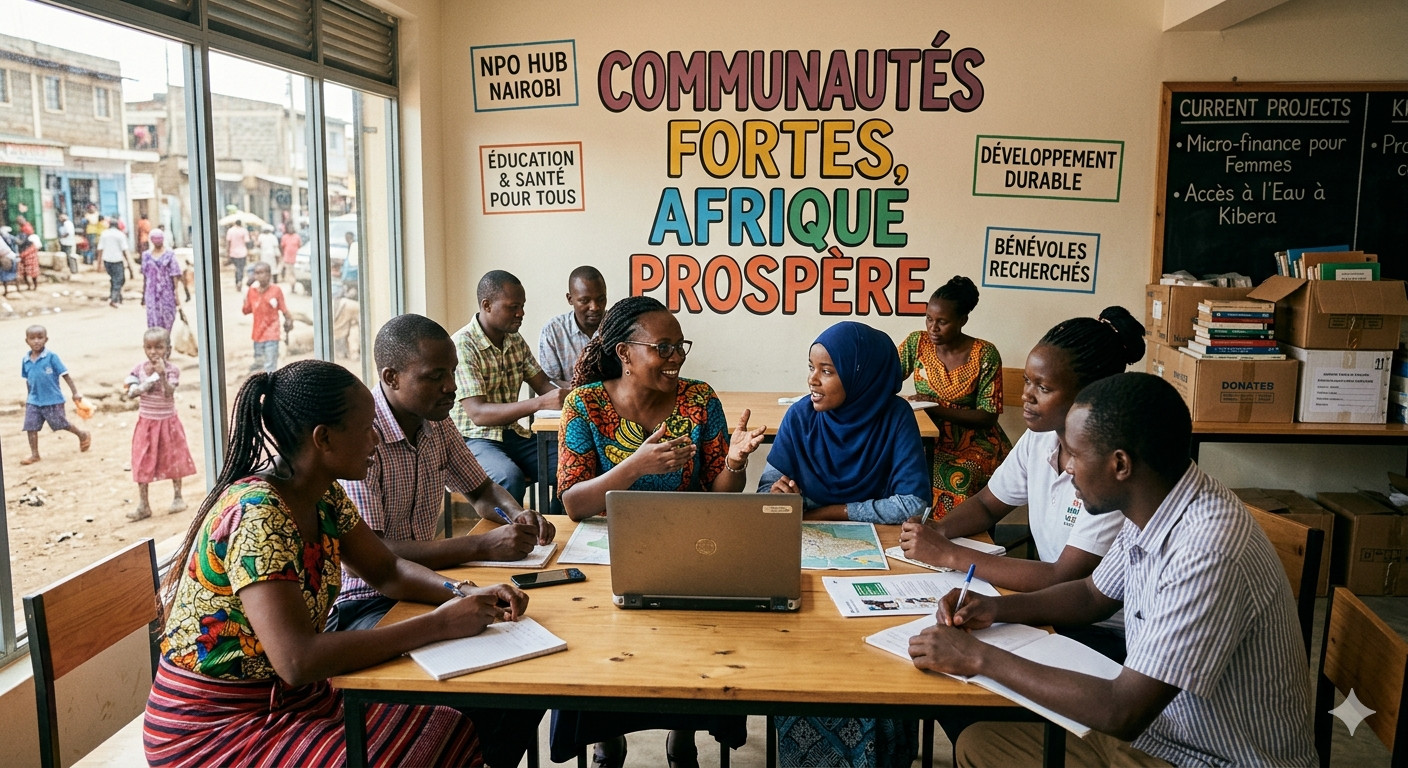
Employment in Africa: the non-profit sector, an opportunity for young people
The Center on Philanthropy and Social Investment in Africa (Capsi), in partnership with the Mastercard Foundation, organized a workshop on Friday in Dakar to validate its research carried out on the contribution of the non-profit sector to job creation in Africa. Covering seventeen African countries, including Senegal, the study shows the crucial role of this sector in creating opportunities for young people.
At a time when the issue of youth employment remains a major challenge in Africa, the role of the non-profit sector “in the creation of dignified and fulfilling professional opportunities” appears to be a lever to consolidate. This is one of the key takeaways from the study carried out by the Center on Philanthropy and Social Investment in Africa (Capsi) at Wits Business School based in South Africa.
The validation workshop organized over the last two days in Dakar, in partnership with the Mastercard Foundation, allowed the institution to unveil the conclusions of its survey carried out in 17 countries on the continent. These countries are: Burkina Faso, Democratic Republic of Congo, Ivory Coast, Egypt, Ethiopia, Ghana, Kenya, Morocco, Mozambique, Nigeria, Rwanda, Senegal, South Africa, Tanzania, Uganda, Zambia and Zimbabwe.
Also read: Technical validation of the national employment policy: The State sets the course for the new strategy
Presenting the results of the survey, Ntando Hoza, specialist in digital communication at the University of the Witwatersrand (South Africa) reveals the effectiveness of the voluntary sector in contributing to the employment and inclusion of young people.
“The non-profit sector contributes to the creation of decent jobs for young people by providing direct employment opportunities, vocational training and integration programs often inaccessible through traditional channels,” he said.
According to him, the non-profit sector employs around 30% of the young people surveyed, particularly women, rural people and those excluded from the formal market, via temporary projects which serve as a springboard,” he insists. Beyond that, adds Ntando Hoza, non-profit organizations contribute to the training and entrepreneurship of young people.
A major role
“They offer training, educational support and entrepreneurial initiatives, promoting “dignified” work: reliable income, respect, skills development and a feeling of usefulness,” he says.
However, despite the lack of data to truly indicate their footprint, the expert emphasizes that “the non-state sector appears to be a major employer, particularly in Senegal and South Africa”. He therefore called for better political recognition “to enable them to better fulfill their role through stable partnerships”.
While welcoming the contribution of the non-profit sector in job creation, Professor Bhekinkosi Moyo, director of Capsi, returned to the disparities in opportunities revealed by the study. According to him, urban young people are more favored than those in rural areas in the jobs offered by organizations.
Then 25-35 year olds benefit from more opportunities than 20-24 year olds. And finally, in several countries, young women have easier access to jobs offered by NGOs than men.
Souleymane WANE
