
Securitization, an alternative to the burden of debt January 20, 2026
In Senegal, the financing of public policies is a real issue with the debt rate which has reached 119% of GDP. Faced with this situation, specialists identify securitization as one of the most innovative mechanisms for mobilizing funds without necessarily increasing debt service.
“Securitization and development financing: opportunities, challenges and perspectives”. This is the theme of the first edition of “Dakar Business Connect” organized on January 17, 2026, by the economic and financial magazine Le Marché.
For the general director of Kf securitization, Mouhamadou Moustapha Faye, “the forum is organized in a context where our States face a complex equation between the mobilization of long-term financial resources and the controlled management of the debt burden”.
Faced with this situation, he believes that securitization makes perfect sense. According to his analysis, it is “an instrument that is still under-exploited in West Africa, but which can provide a concrete solution to current financing challenges”. For him, this mechanism must become a real market infrastructure for the State and the private sector.
“State budgets, with debt ratios sometimes approaching 119%, complicate things. Bank balance sheets face prudential constraints with the Basel II and Basel III regulations,” analyzes Mouhamadou Moustapha Faye.
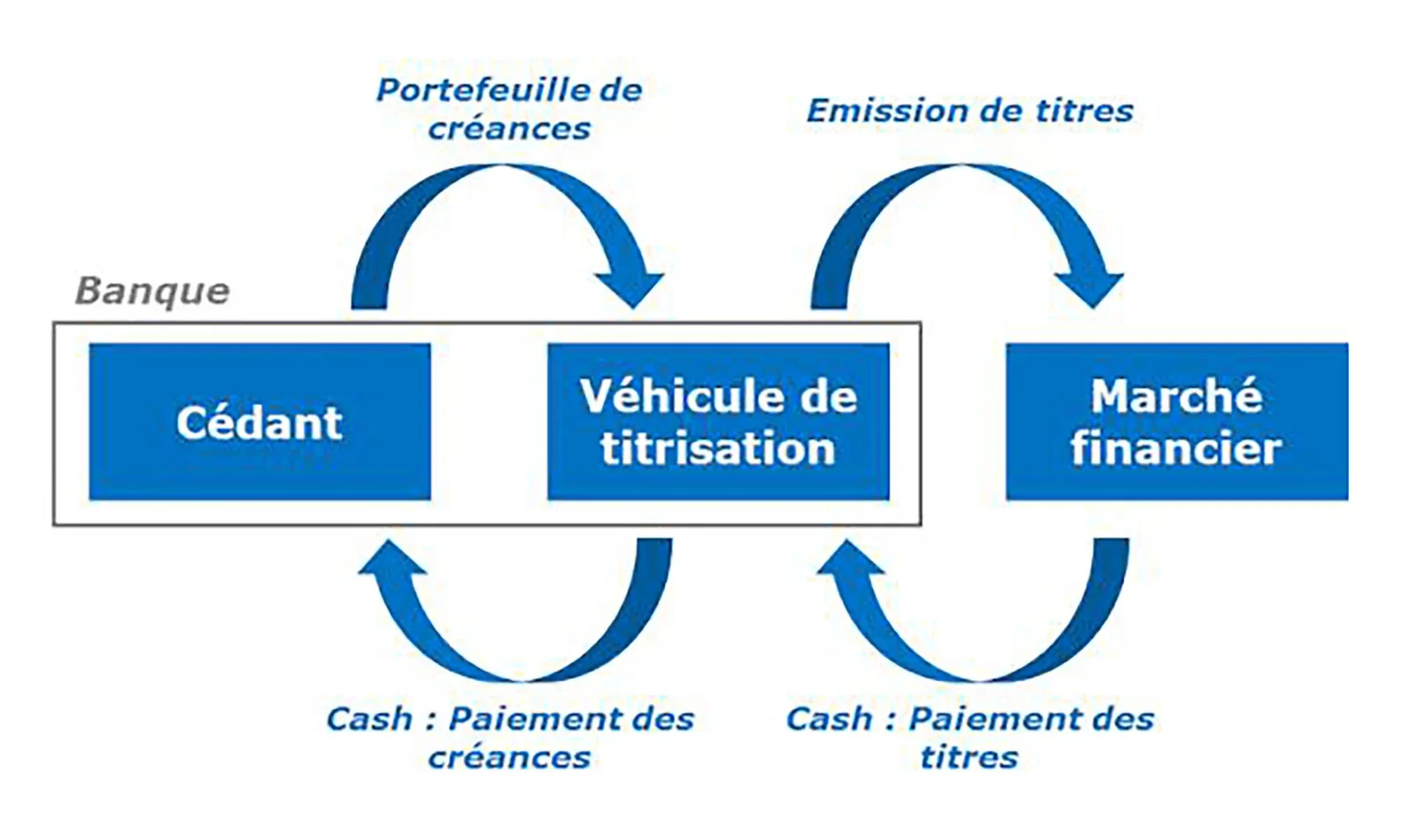
A situation which, according to him, requires better use of securitization by States and companies, because, in his eyes, “this mechanism makes it possible to mobilize resources on the basis of a well-identified heritage or asset of the State (or a private company)”.
“If it is well structured, it makes it possible to finance development without increasing the overall debt burden. Thus, instead of looking only at the overall solvency of the borrower (the liabilities), the investor focuses on the ability of the asset to generate future financial flows,” explains the general director of Kf securitization.
According to him, “securitization is not a replacement product for traditional debt, but a complementary tool”. He adds that “it is a necessary arbitration. Indeed, when an entity reaches a situation of saturation of its debt, it can use securitization to obtain additional resources and continue its development,” adds Mr. Faye.
Taking part in the panel, the general director of Boad securitization, Adji Sokhna Mbaye, agreed. According to him, this mechanism finds its relevance in the current economic and financial context. In his opinion, it is a credible alternative for States and businesses.
“This is an important mechanism which, if fully exploited, can help facilitate mobilization by States in order to implement public policies,” explained Ms. Mbaye.
It also focused on the innovative operations of its structure, notably involving an envelope of 150 billion FCFA in April 2023, without forgetting the other securitization operation amounting to 160 billion FCFA carried out in August 2024.
Facilitating the practical workshop on recent securitization operations, Ameth Fall, Director of Operations at Impaxis Securities, underlined that this tool “allows, today, companies to mobilize funds while cleaning up their financial framework”.
He cited the case of Senelec which recently launched a securitization operation worth 120 billion FCFA with Impaxis Securities and Cgf Bourse as arrangers. The operation aims to strengthen universal access to electricity and promote the gradual reduction of the carbon intensity of the Senegalese network.
At the end of the work, the initiator of “Dakar Business Connect”, Abdou Diaw, underlined the meaning of the concept. According to him, “the major challenge is to promote financial education and spark debate around economic and financial issues”.
Continuing, he indicated that “this is a platform that brings together all the players in the financial ecosystem. We thought it would be useful today to reflect on important themes. We said to ourselves, for example, that securitization, which has become an extremely important subject, but little known to the general public, was the ideal subject.”
Bada MBATHIE
