
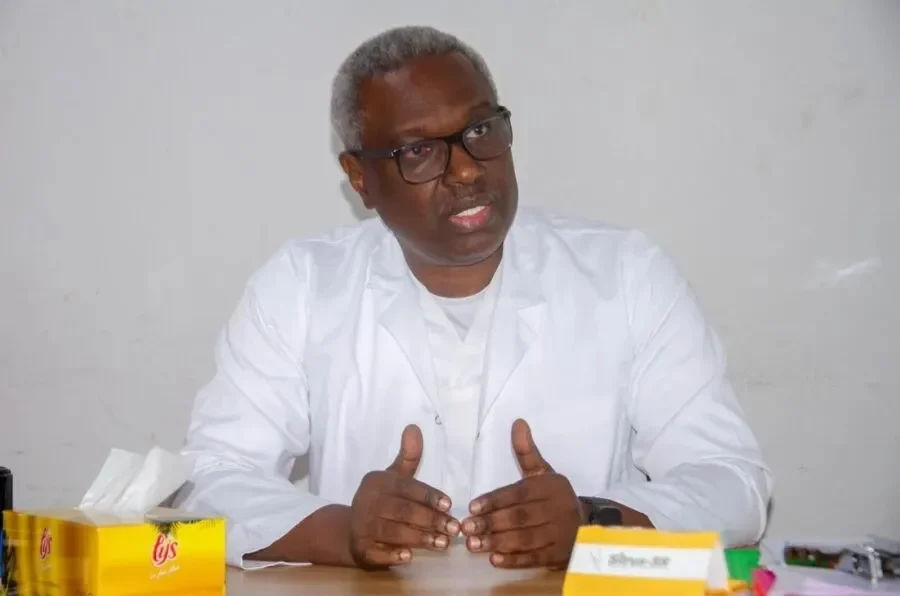
Professor Oumar Kane, head of the anesthesia-resuscitation department at Fann hospital: “Fatigue increases the risk of medical errors” Working in the emergency room at night is particularly trying. Between fatigue and reduced concentration, its effects on doctors are numerous. Professor Oumar Kane, head of the anesthesia-resuscitation department and emergency coordinator at Fann hospital, returned to the essentials of the work…
Working in the emergency room at night is particularly demanding. Between fatigue and reduced concentration, its effects on doctors are numerous. Professor Oumar Kane, head of the anesthesia-resuscitation department and emergency coordinator at Fann hospital, discussed the essentials of night work in the emergency room and the real impact it has on medical staff, both physically and mentally.
What types of cases do you usually face at night?
In the Fann emergency room, the most frequent reasons for consultation are dominated by vital situations requiring immediate treatment, in particular respiratory distress, serious discomfort and disturbances of consciousness, while trauma remains rare. Neurovascular emergencies occupy a central place, with ischemic and hemorrhagic strokes representing nearly 45% of the bed occupancy rate. They are followed by respiratory emergencies, then by infectious pathologies. Cardiovascular emergencies, such as myocardial infarction, are also common. Finally, surgical emergencies pass through the department before being referred to specialized services.
At night, do emergencies really operate with the same means and the same efficiency as during the day?
Hospital emergency rooms operate at night, but with often reduced resources compared to the day, which can impact efficiency. The healthcare workforce is generally smaller and access to certain specialists is limited. At night, teams often have fewer nurses and caregivers than during the day, with no additional staff to provide breaks. The organization adapts with more flexibility, but the lack of beds and transfers to other services creates bottlenecks. Delays for initial assessment decrease at night due to lower crowds, but medical care may be shortened or delayed for non-urgent diagnoses. Spending a night on a stretcher in the emergency room increases the risk of mortality by almost 40% in patients aged over 75.
How do we actually decide on priorities when several emergencies arise at the same time?
During several simultaneous emergencies, priorities are defined using triage, a medical process aimed at classifying patients according to severity, urgency and available resources. Carried out upon arrival by a trained reception and orientation nurse, it is based on rapid assessment of reasons for consultation, vital signs and pain. Standardized scales distinguish five levels, from level 1 (immediate life-threatening emergency) to level 5 (non-urgent). Triage allows patients to be directed to suitable areas, prevents loss of luck and optimizes organization. It requires calm, communication and continuous reassessment.
In your opinion, can staff fatigue influence certain medical decisions?
Yes, emergency room staff fatigue can influence medical decisions by increasing the risk of errors and impairing clinical judgment. Burnout and emotional exhaustion affect up to 62% of emergency workers, with high levels of exhaustion among 47%, according to an international survey. This manifests itself in depersonalization and reduced personal accomplishment, compounded by understaffing and irregular schedules. Fatigue increases the risk of medical errors and degrades the overall quality of care, as shown in several studies on emergency physicians. Note that lack of staff increases the risk of burnout tenfold, while night work disrupts biological rhythms and increases psychological disorders. Among the less experienced, exhaustion is even more pronounced.
Did any event particularly stand out to you while you were on duty overnight?
Yes, one night particularly struck me. There was no longer a single place available: all the beds were occupied, and the firefighters continued to bring in patients one after the other. I was called around 1 a.m. to try to bring some order to this chaos. Ultimately, the only viable solution was to improvise, despite complaints from those accompanying them: we installed patients on transfer carts lined up in the corridors. Some, too weak to be moved, remained seated in their wheelchairs for the remaining night, under constant supervision by the team.
What do you think would be the first step to take to improve nighttime emergencies?
The first priority to improve emergency care would be to immediately strengthen human resources by massively recruiting and training dedicated paramedical and medical staff. This would reduce waiting times while providing relief to current exhausted teams. Sorting on arrival should also be reinforced by reception organizer nurses (IOA) trained in advanced protocols, which would streamline flows. Better pooling of beds and coordination with downstream would avoid blockages at exits. Emergency rooms are far from a dream world. They don’t make you dream. It is a universe where, between life and death, there is sometimes only one step. A place that is scary, even more so when you are forced there at night. Every night, doctors wage a fierce battle, sacrificing their rest and family life to save others. In the emergency room, lives are turned upside down, then put back together again. Patients, sometimes closer to death than to life, arrive in a fragile state and leave with this precious opportunity: to extend their journey on earth, to continue living.
Interview conducted by Yaya SOW
