
Industrialization: The State wants to establish 45 agro-industrial zones across the country
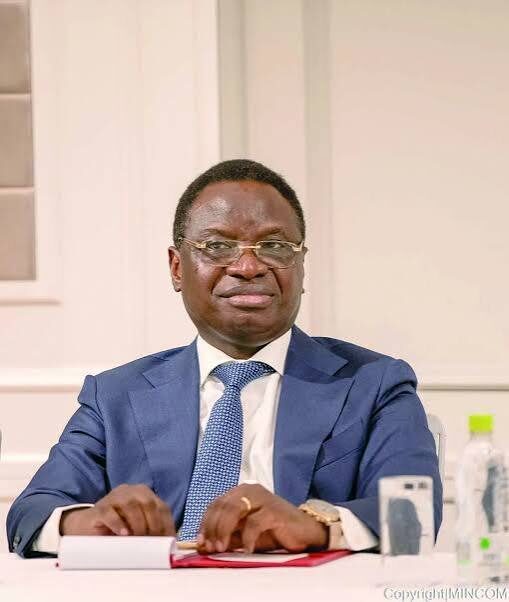
Serigne Guèye Diop, Minister of Industry and Commerce, chaired, Monday February 2, in Diamniadio, the work of the bill on the promotion of industrialization. During this occasion, he insisted on the government’s wish to accelerate its industrialization strategy. Through agropoles and the Agency for the Development and Promotion of Industrial Sites (APROSI), the State plans the creation of at least 45 industrial zones throughout the territory, with a budget increased to 350 billion FCFA, in order to make industry a central lever of economic development and economic patriotism.
Senegal intends to change dimension in terms of industrialization. “We will, with the agropoles, already create 30 agro-industrial zones throughout the territory,” announced the Minister of Industry and Commerce. To support this ambition, the budget allocated to the sector has increased significantly, from 50 billion to 350 billion FCFA, while “the calls for tenders have already been launched”.
According to the minister, this policy aims for a better territorial distribution of productive infrastructure. “Each department of Senegal will have its own industrial zone,” he assured. Added to this are the projects carried out by the Agency for the Development and Promotion of Industrial Sites (APROSI), which plans “10 industrial zones in the field of phosphate and agri-food, in Touba, Matam and throughout Senegal”. In total, “we will have at least 45 industrial sites,” he said.
The minister recalled that the country currently only has three special economic zones, located in Diass, Diamniadio and Saint-Gérard, thus highlighting the need for a change of scale. This initiative, he explained, reflects “the desire of the authorities to make industrialization a central lever of economic and social development”.
The other pillar of this strategy is based on economic patriotism. “Senegal has an extroverted economy. Between 46 and 50% of our economy is in the hands of foreigners,” admitted the minister, specifying however that this is not a rejection of foreign investment. “We have nothing against foreigners. We just want there to be economic patriotism,” he insisted.
From this perspective, he pleads for more balanced partnerships: “This means that people who come to invest in Senegal can associate with Senegalese, with the State, so that the country can also benefit.” The financing of industry, the simplification of regulatory procedures, compliance with technical and environmental standards as well as coordination between public and private actors are also among the major areas of reflection.
Serigne Guèye Diop also identified several structural challenges, starting with the lack of dedicated industrial sites. “One of the big problems in Senegal is that we do not have industrial sites dedicated to these activities,” he lamented. Another central issue: financing. “For the industry, it’s expensive. We cannot leave it only to the private sector. It must be financed, subsidized and supported,” he insisted.
Finally, he insisted on the need to protect emerging sectors. “It is out of the question to leave our small emerging industries and our emerging agriculture without protection,” declared the minister, thus justifying the convergence of industrial and commercial policies within the same department. “With this bill, the country is laying the foundations for a strong, competitive industry and engine of national development,” he concluded.
YEAR
