
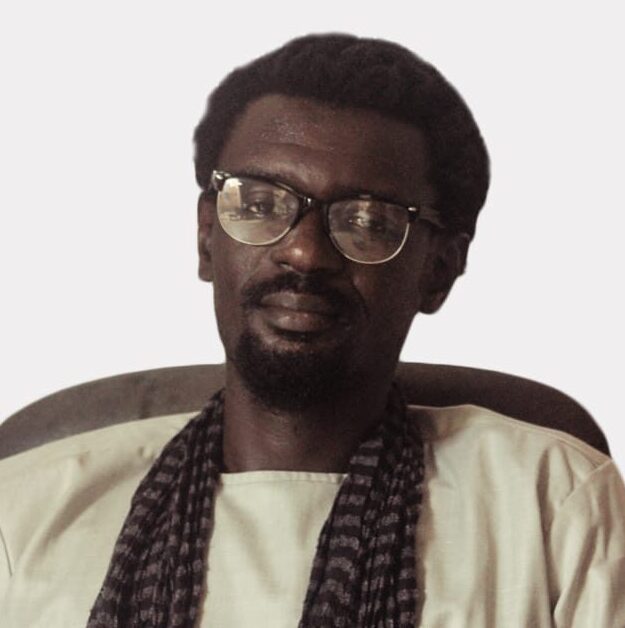
Ibrahima Abou Samb: Between faith, writing and transmission
Ibrahima Abou Samb is a man of writing and faith. Both administrative director of a Franco-Islamic school and trainer in professional communication in addition to being a writer, he wears several hats, revealing a personality where the personal, the professional and the passionate come together in the same quest for meaning.
“My pen follows me everywhere and this is reflected in the diversity of areas that I invoke and evoke,” he confides. Since his first childhood readings, influenced by his father who became Layène when he was only three years old, Abou Samb has been interested in spiritual and religious questions. His curiosity led him to explore the teaching of Seydina Limamou Lahi (PSL), a central figure in his thinking. Two key works marked his intellectual approach: The Teachings of Seydina Limamou Lahi by Professor Ababacar Laye Basse and The Seal of the Paraclete by Mâdi Macalou Cissé.
Ten works to make Limamou known
Writing is a vocation for him that came to fruition in 2016, with the publication of his first self-published work, despite limited material conditions. “The quality of the paper format wasn’t great, but I was proud that I didn’t give up,” he recalls. Today, he has ten works to his credit. From the fourth, the intervention of the publishing house La Comète, directed by Professor Baytir Ka, made it possible to improve the editorial quality while maintaining the rigor of its approach.
“I think it was the disinformation and misinformation that made me write more. Indeed there are many in the community. False information about the Layene creed and the history of the guide is frequently found. Some do it in good faith, others in bad faith, sometimes due to a lack of rigor. This is how it has long been conveyed that the real name of Seydina Limamou is Libasse Thiaw while the history of the name Limamou is commonplace information in the Layène community,” he says.
Being in a family where his father was the only layène, he quickly realized that Seydina Limamou was one of the least known, and often poorly known, figures in this country.
So the objective is clear: collect the right information and make it very accessible, both for layenes and for others.
Limamou, beyond the Mahdi
Unlike an approach centered on the Mahdi, Abou Samb insists on the importance of understanding Seydina Limamou as a whole. “The main object of our research and production is the prophecy of Seydina Limamou. His status as Mahdi is incidental information,” he explains. His works, often linked together, can however be read independently. The most recent, a triptych on Limamou, guides the reader in a precise order, from Limamou, source of absolute and relative knowledge to Limamou of worlds within worlds, to Limamou, aggregate of the universe.
His approach evolves over time. If the first work aimed to convince people of Limamou’s prophecy, the second, Toward the Light, Obstacles and Obstructions, focuses on identifying the constraints that prevent some people from believing in it, comparing its approach to that of a doctor: identifying the blockages to prescribe the remedy, here the wisdom and teaching of the Mahdi.
Write to be useful
For Abou Samb, writing means making information accessible, rigorous and useful: “When a non-Layène tells me that he accepted the prophecy thanks to my books, I give thanks to God. My goal has been achieved: to write a useful book. » Today, its commitment goes beyond the simple transmission of knowledge. Faced with excesses and disinformation, he pleads for rigor, patience and good faith, both in writing and in the media’s treatment of religious issues.
Ibrahima Abou Samb embodies a bridge between spiritual heritage, intellectual rigor and civic commitment. Through his pen, he combines memory, faith and pedagogy, offering his readers a key to understanding the prophecy of Seydina Limamou and, beyond that, the existential questions that cross each of us.
Ndeye Fatou Diery DIAGNE
