
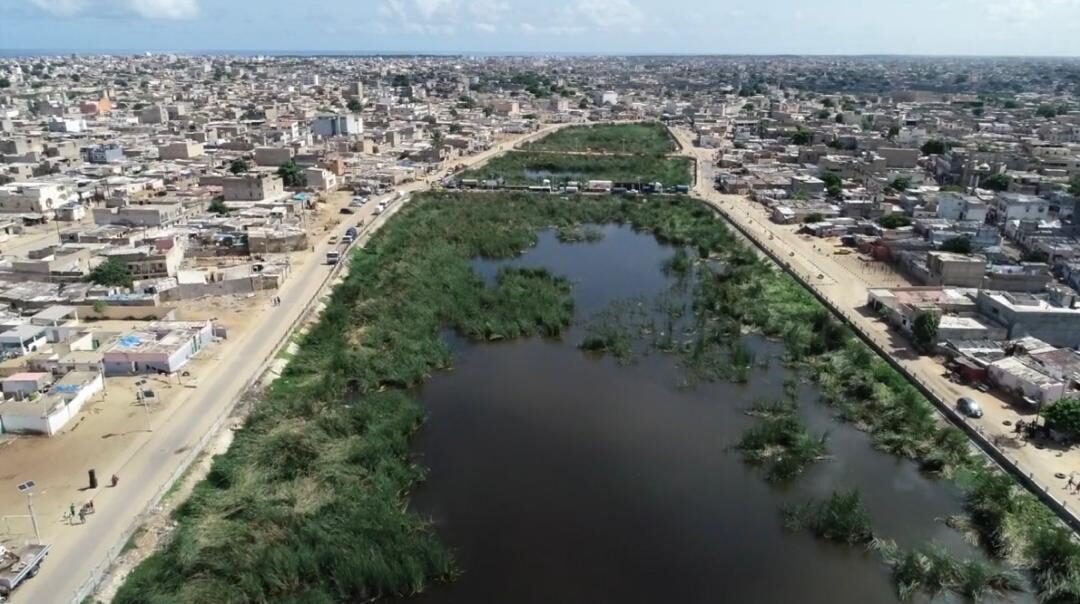
Flood management in Dakar: more than 175 billion CFA francs mobilized by the World Bank
An envelope of more than 175 billion CFA francs was mobilized by the World Bank. This funding will make it possible to deploy climate-resilient drainage infrastructure and strengthen urban planning in the most vulnerable areas of Dakar.
The State of Senegal has demonstrated, according to the regional vice-president for West and Central Africa of the World Bank, Ousmane Diagana, a “resolute commitment to protecting its populations” against recurrent floods. Which threaten the peri-urban areas of Dakar.
Speaking during Thursday’s visit to the infrastructure of the Rainwater Management and Adaptation to Climate Change Phase II Project (PROGEP II), Mr. Diagana indicated that this initiative is fully part of this national dynamic.
Also read: Senegal launches the AgriConnect Pact to transform its agricultural sector
Thus, he stressed that the World Bank, through the International Development Association (IDA), supports this ambition as a strong partner, alongside the Nordic Development Fund and the government of Senegal.
“The total funding mobilized amounts to approximately $318 million, or more than 175 billion CFA francs, making it possible to deploy climate-resilient drainage infrastructure and strengthen urban planning in the most vulnerable areas of Dakar,” he said.
In the Dakar suburbs, particularly in Keur Massar, this figure, according to the regional vice-president for West and Central Africa of the WB, materializes in roads which, until recently, were impassable for months. It also comes to life through a retention basin which, during the last rainy season, did exactly what it was designed to do: absorb, retain, protect.
Around 1,330 hectares protected against recurring floods
In fact, according to World Bank figures, since the start of the project, more than 50 kilometers of primary and secondary drainage networks have been put in place in the municipalities of Keur Massar Nord, Keur Massar Sud and Jaxaay-Parcelles. More than 30 kilometers of roads have been paved. Around 1,330 hectares have been protected against recurring floods, benefiting 220,000 people in the Dakar region.
“The community management approach, anchored in the local rainwater management committees (Coligeps), is at the heart of the sustainability of these investments. These local committees are in the process of being formalized into municipal service cooperatives,” added Mr. Diagana.
For him, by creating these structures, they also create employment opportunities for the young people of Keur Massar; jobs in maintenance, in management, in social mobilization. And a football field was inaugurated on this occasion.
Strengthen the capacities of Onas
To achieve the development objectives of PROGEP II, Mr. Diagana emphasizes that state and local authorities, as well as their partners, must now focus on several priorities.
This particularly involves extending the coverage of drainage infrastructure and strengthening institutional capacities. This will consist of supporting municipalities and the National Sanitation Office of Senegal (Onas) in the management and operation of infrastructure.
They must also consolidate community ownership, integrate urban planning and resilience to environmental shocks. Finally, improve living conditions in vulnerable neighborhoods. Beyond drainage, the project will continue to invest in the development of public spaces, the rehabilitation of roads, and the improvement of access to basic services.
As a reminder, a delegation from the World Bank led by its vice-president for West and Central Africa, Ousmane Diagana, is in Dakar from February 5 to 13 to discuss with state authorities.
Mariama DIEME
