
Cultural cooperation: French-speaking booksellers chart new perspectives in Dakar
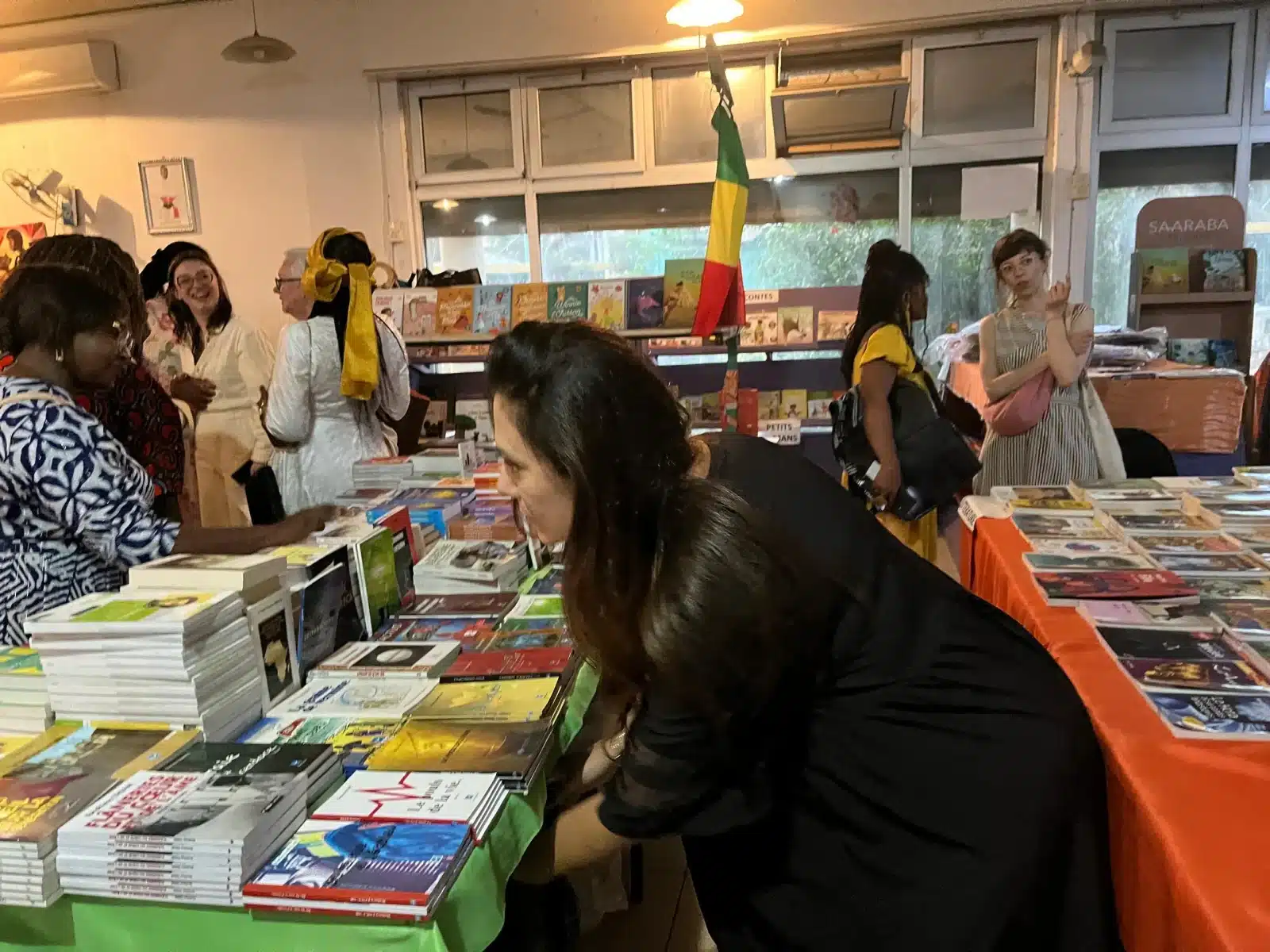
Gathered from June 4 to 6, 2026 in the Senegalese capital on the occasion of the Dakar Meetings, members of the International Association of French-speaking Booksellers (Ailf), booksellers and publishers from several countries reflected on the challenges of the book sector. At the end of three days of discussions, on Saturday June 6, they visited the Clairafrique bookstore, a historic institution in the Senegalese cultural landscape which is celebrating its 75 years of existence, before sharing a friendly dinner.
After three days of reflection on the future of French-speaking books in Africa, participants in the Dakar meetings paid, on Saturday June 6, a visit to the Clairafrique bookstore, located near Cheikh Anta Diop University on the occasion of its 75th anniversary. Organized as part of the activities of the International Association of French-speaking Booksellers (Ailf), this stage allowed book professionals to discover more closely the realities of the profession in Senegal and to discuss the prospects for development of the sector.
The first Ailf meeting organized on the African continent in a decade, the meetings brought together, from June 4 to 6, around twenty African booksellers as well as the association’s administrators from several regions of the world. A symbolic and strategic choice, according to Michel Choueiri, president of Ailf. “We wanted to have a meeting of French-speaking booksellers in Africa and, at the same time, organize our board of directors and our general assembly in Dakar rather than bringing African booksellers to Europe,” he explained.
Through this approach, the association intends to bring its governing bodies closer to the realities on the ground and allow its administrators, from several continents, to better understand the issues facing African booksellers. The visit to Clairafrique, which is celebrating its 75 years of existence, is part of this desire for observation and sharing. “It was a matter of concretely seeing how a bookstore works here, what its choices are, its difficulties and how the association can intervene in terms of training, professionalization or even the importation of books,” explained Mr. Choueiri.
According to him, during the three days of work, discussions focused on several major issues in the book chain. Relaunch of the book caravan The participants notably addressed the relations between publishers and African booksellers, the difficulties of transporting works, as well as the mechanisms likely to strengthen professional cooperation. One of the main projects mentioned concerns the establishment of a charter intended to govern relations between publishers and booksellers.
Participants also reflected on the relaunch of the Book Caravan, a traveling program planned for 2028. This initiative will allow booksellers to travel to the regions with authors and publishers in order to bring books closer to populations. For the president of Ailf, the role of the bookseller goes far beyond the commercial act. “We are culture transmitters,” he insisted.
In his eyes, the mission of booksellers also consists of promoting French-speaking authors and publishers, encouraging reading and contributing to the circulation of works across borders. This ambition is consistent with the concerns expressed at the start of the work by the Senegalese authorities in the sector. The Book and Reading Department, represented at the inaugural ceremony, reaffirmed its commitment to the development of the sector and its professionalization.
Beyond technical questions, discussions also focused on the place of Africa in the French-speaking world. Mr. Choueiri pleads for relations more based on reciprocity. “We didn’t come to help. We came to share,” he stressed. From his point of view, African professionals have expertise and know-how capable of enriching the entire French-speaking network. This desire to strengthen South-South, but also South-North, exchanges was one of the main threads of the meeting.
Administrators from Chile, the United States, Canada, Lebanon, the United Arab Emirates and several European countries were thus able to discover new realities and forge links likely to promote better visibility of African editorial productions in their own bookstores. For Loubna Joheir Fawaz, bookseller in Mauritania and participant in the work, bookstores occupy a central place in the development of societies.
“The development of bookstores is fundamental in the development of education and in the promotion of books and reading,” she recalled. Before adding: “Without bookstores today, there are no books, there is no learning to read. »
Adama NDIAYE
