
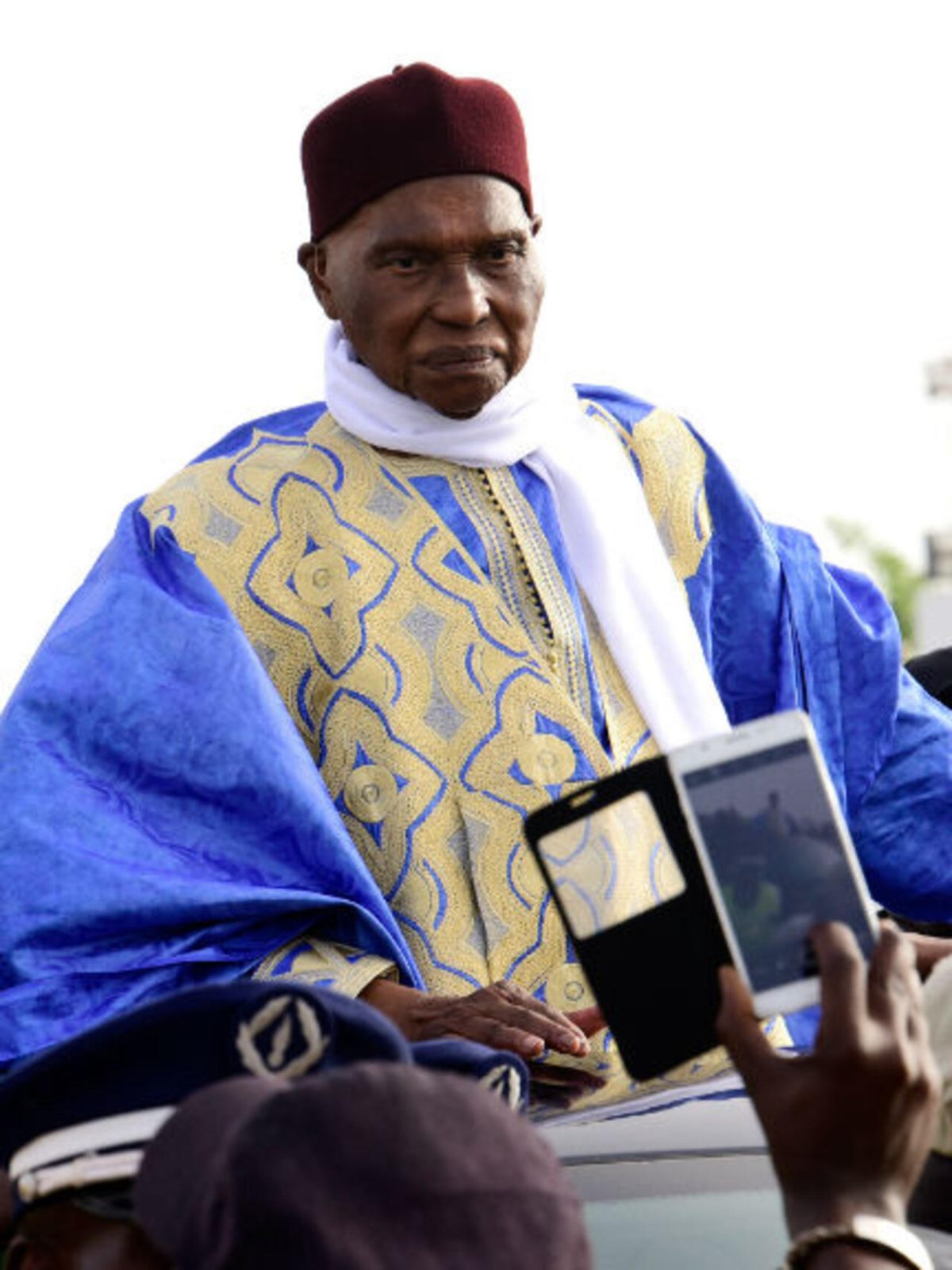
Abdoulaye Wade, a century standing
He wanted change and he ultimately became the story. One hundred years after his birth in Kébémer, the “Pope of Sopi” contemplates a century that he, to a large extent, shaped. He went through colonization, independence, single parties and the African springs. On May 29, 2026, Abdoulaye Wade celebrates his hundredth birthday and this event marks the century of an idea according to which Africa can change without tearing itself apart..
Kébémer, 1926. Senegal does not yet exist as a nation. It is a French colony, a piece on the chessboard of French West Africa. In the town of the Louga region, a child was born who would be called Abdoulaye. Abdoulaye means servant of the Most High. A name that it will bear like a program. The intellectual trajectory of the future president is, in itself, dizzying. While most of his African contemporaries saw their horizons limited by the colonial system, the young Wade passed through the doors of the William-Ponty Federal Normal School, the nursery of black African elites, before joining Europe, driven by an insatiable thirst for knowledge. In Paris, Besançon or Grenoble, he accumulated diplomas like others wealth: mathematics, law, economics, psychology, philosophy. An extraordinary career, crowned in 1959 with a doctorate in law and economic sciences (very good distinction and thesis prize).
Moreover, Iba Der Thiam nicknamed him: “the most educated man from Cape Town to Cairo”.
But that’s not all. He became a lawyer in Besançon, Grenoble, then in Dakar. And professor and then dean at the law faculty of Cheikh Anta Diop University in Dakar. France, which wanted to train auxiliaries, had in reality trained a rebel.
1974, the birth certificate of another Africa
The year is 1974. In Dakar, Léopold Sédar Senghor’s Socialist Party reigns. Postcolonial Africa has, almost everywhere, closed in on itself: single parties, military regimes, corporalization of civil society. In this stifling political landscape, a 48-year-old lawyer does something extraordinarily simple and extraordinarily dangerous. He creates a legal opposition party.
The Senegalese Democratic Party (PDS) was thus born in an era that did not do it any favors. Arrests, imprisonments, intimidations, Master Wade will suffer more than one. But he holds on. He refuses clandestinity, refuses exile, refuses the maquis. His program will be his weapon. His vision, his strength. And the ballot boxes, like the ballot papers, witnesses to history. He embodies democracy in all its splendor.
In a political landscape then dominated by the Socialist Party of President Léopold Sédar Senghor, Wade created the Senegalese Democratic Party in 1974. He chose peaceful obstinacy and the ballot rather than going underground. Western media nicknamed him: Africa’s first opponent. In total, he spent twenty-six years in opposition before achieving victory.
The opposition marathon
There is something Homeric in Wade’s opposing trajectory. For more than two decades, Master Abdoulaye crisscrossed Senegal to all its corners, galvanizing the populations, presenting his program and his vision. He opts for the proximity policy. Nothing could stop him from reaching his goal. Not even the successive disillusionments because Wade lost the presidential election in 1978 (17.38%), in 1983 (14.79%), in 1988 (nearly 25%), in 1993 (32.03%). With each defeat, the commentators bury the character. At each election, like a phoenix, the “Goorgui” rises from its ashes.
He said: “I joined the opposition to die there”. His perseverance made him an essential figure on the national political scene. His rising popularity has become a mystery to those in power. How does an intellectual, a lawyer, manage to reach the most modest layers of Senegalese society, some wondered? The answer was in Master Wade’s shoes: he walks. He goes out to meet people. He speaks Wolof with the peasants and French with the academicians. He is, according to his supporters, “the same man in a royal court and in a suburban concession”.
Between April 1991 and October 1992, in the government of national unity, Abdoulaye Wade was appointed minister of state to President Abdou Diouf.
Then, from 1995 to 1997, Wade returned to the role of Minister of State in the government of Habib Thiam. But, refusing to be “domesticated”, Abdoulaye Wade enters and leaves. He resigned freely, an extremely rare occurrence on the continent. Moreover, in 1992, he declined an offer of vice-presidency, preferring to present his candidacy for the 1993 election. It is the act of a man who does not want power by half. It is not insignificant that the first president of Senegal, Léopold Sédar Senghor, gave it the name “Ndiombor” (which means “hare” in Wolof). This nickname emphasized Wade’s political intelligence, strategy and ability to subtly circumvent political obstacles.
March 2000, when Senegal learned to change
On March 19, 2000, on the evening of the second round of the presidential election, something unprecedented happened on the African continent: an outgoing president recognized his defeat and handed power to his opponent. Abdou Diouf concedes. Abdoulaye Wade won with 58.50% of the votes. Senegal has just completed its first peaceful democratic change. At 74, Abdoulaye Wade becomes the third president of the Republic of Senegal. Thus, his supporters nickname him: the Pope of “Sopi”, which means “change” in Wolof. This alternation of 2000 will be cited for years as a model throughout Africa. Wade had, in fact, made it clear that pluralism could triumph through the ballot box.
The builder: the stones and the controversies
President Wade has marked the city of Dakar with architectural projects with an ambition reminiscent of the pharaohs. The African Renaissance monument, inaugurated in 2010, dominates the Dakar peninsula with its 52 meters: a bronze colossus representing a man, a woman and a child looking toward the future. Controversial in its design, contested in its costs, the monument nevertheless remains a powerful symbol. The first pan-African monument of such scale. “This monument is so that Africa finally faces itself,” the president justified himself. Today, this masterpiece has become the showcase of Senegal, an attraction for thousands of tourists all over the world.
Added to this are the toll highway (Dakar-Diamniadio), the launch of the Blaise Diagne International Airport (AIBD) project, the construction of multiple bridges and roads, the creation of the University of Thiès (named Université Iba Der Thiam de Thiès) and that of Bambey, the Grand Théâtre national Doudou Ndiaye Coumba Rose… Wade dreamed of an Africa which tells its own story, which erects its own statues, which builds its own temples of culture. He literally changed the face of the Senegalese capital.
The third president of the Republic of Senegal also left his mark on profound institutional reforms. Indeed, a year after his arrival, Wade submitted a new fundamental text to the people. The 2001 Constitution, adopted by referendum, redesigned the institutional architecture: the presidential term reduced to five years, the limitation to two terms, among others… This reform symbolized the desire to break with the old system and place Senegal in institutional modernity. In 2008, faced with the global crisis, Wade launched the Great Agricultural Offensive for Food and Abundance (GOANA). An initiative that aimed to increase agricultural production and achieve food self-sufficiency. On the Pan-African level, Abdoulaye Wade is one of the founding fathers of NEPAD (New Partnership for Africa’s Development), thanks to his Omega Plan. He also introduced the bill establishing “absolute parity” between men and women in elected office.
After 12 years at the head of the country, Wade eventually left power in 2012, defeated by Macky Sall in the second round. A defeat that he will recognize; once again, Senegalese democracy proving that it knew how to sanction even its founding fathers.
The current President of the Republic of Senegal, Bassirou Diomaye Faye, affirmed that: “You must have occupied the presidential chair to fully appreciate the dimension and historical weight of Me Abdoulaye Wade”.
An international intellectual figure
We sometimes forget, beneath the flamboyant politician, the density of the intellectual. Wade has published on the African economy since 1962. He theorized the development of West Africa, advocated for a reform of the international monetary system with the OAU and the AfDB, drafted the African Charter of Cooperation adopted by the summit of heads of state in Addis Ababa in 1973. He taught at the University of Dakar, in Paris-Assas. His work “A Destiny for Africa” remains a reference.
Eight universities awarded him honorary doctorates, from Bordeaux to Minneapolis, from Naples to Besançon. The Stockholm Academy of Comparative Law welcomes him as a member. Harvard, Johns Hopkins, HEC Paris awarded him honorary diplomas. UNESCO Houphouët-Boigny Peace Prize in 2006. UNESCO Confucius Medal. NDI Washington Democracy Prize.
A recognition that says a lot about the man. Abdoulaye Wade is a figure of African thought of the 20th and 21st centuries.
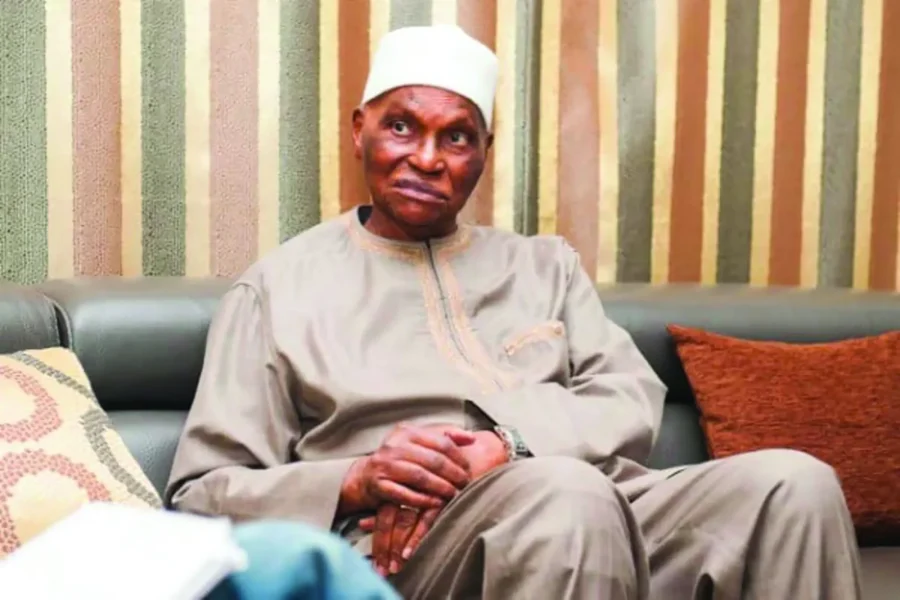
100 years, Wade becomes memory
Centennial. 100 lives. A living monument. The words seem light to define “Goorgui”. In a country where life expectancy barely exceeds 68 years, Abdoulaye Wade is himself a statistical anomaly. But perhaps men who carry an idea greater than themselves have a special longevity. There is something in this robustness of nation builders that resembles biological obstinacy.
So here he is, a centenarian, Grand Master of the National Order of the Lion, Grand Officer of the Legion of Honor, patron of the Liberal International, founder of a party which has survived its hours of glory and its journeys through the desert. This May 29, 2026, is a century of Africa remembering itself, its hindered dreams, its imperfect independence, its dearly won democracies.
Under the patronage of the President of the Republic, Bassirou Diomaye Faye, a national ceremony is planned for June 4, to celebrate “Goorgui”.
Djibril DIAO
