
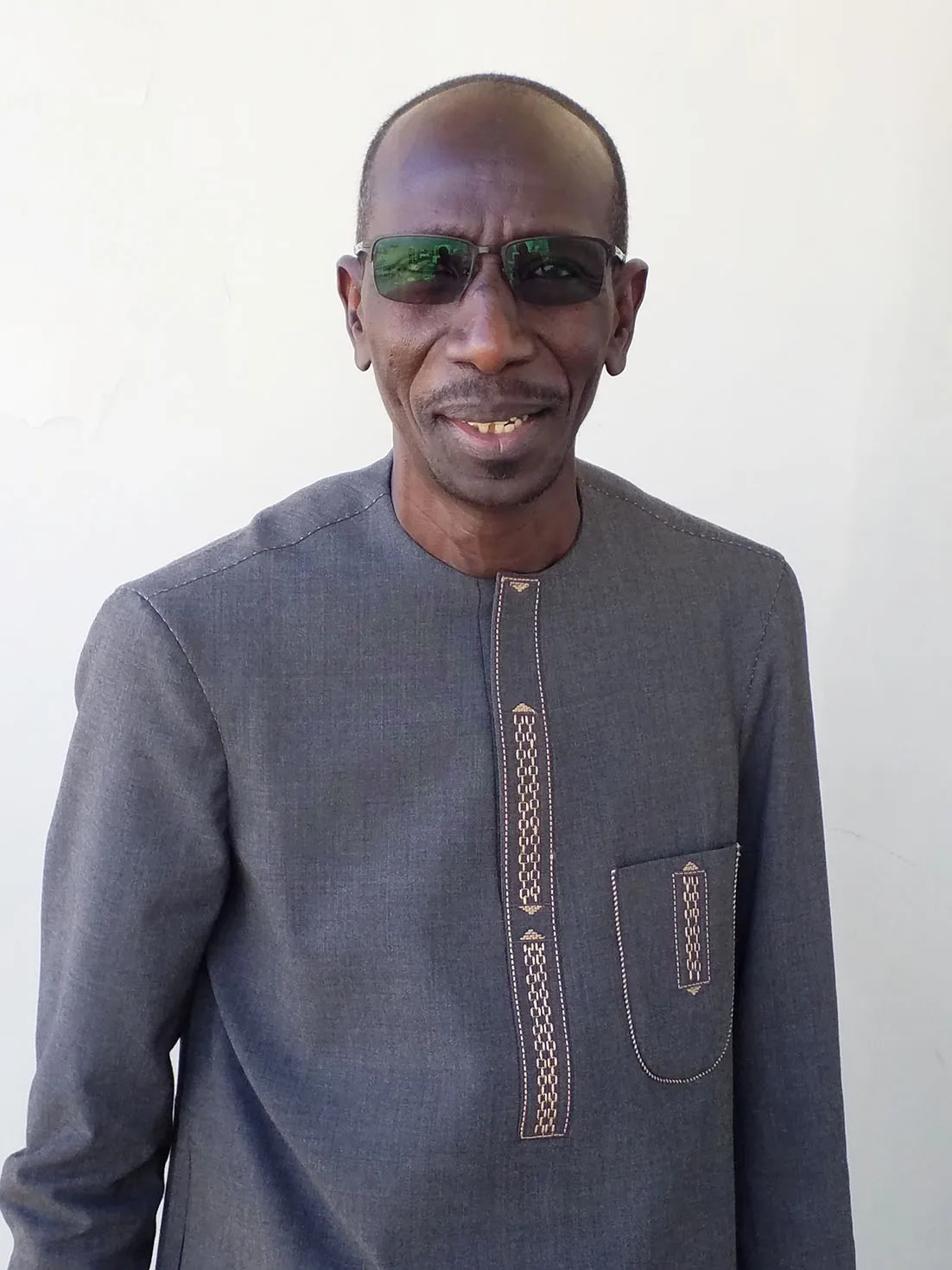
Abdoulaye Diatta: “The balance between democratic legitimacy and operational efficiency must be essential” May 27, 2026
Abdoulaye Diatta, mayor of the commune of Keur Madiabel (Kaolack), discusses the governance of the future Territorial Poles. For effective and efficient management, it recommends a tripartite administration composed of local elected officials, an administrative authority and an executive direction to ensure the operationalization of political decisions.
A Territorial Pole can bring together different actors in the decision-making sphere, including the administrative authority and the local authority. Who should lead it?
Starting from the hypothesis that the Territorial Pole is a space of convergence, decision-making and action in the service of local development, we can agree that its functioning requires modern governance. It must be based on responsibility, performance and proximity to populations. As such, the Cluster must position itself as a system for strengthening local authorities and rely on intelligent and decentralized governance, which protects our territories from any disguised recentralization. To be effective and efficient, the governance of this entity must be based on a balance between democratic legitimacy and operational efficiency. For these reasons, I recommend that the management of the Center not be entrusted to a single authority, whether administrative or political. Thus, the organizational plan will fall under a tripolar hybrid governance model. It will be structured around a political presidency which ensures democratic legitimacy, strategic coordination for institutional coherence and an executive direction which enables operational performance to be achieved. This architecture makes it possible to reconcile vision, regulation and efficiency in an integrated territorial framework. To do this, it would be more judicious to entrust the political presidency of the Pole to an elected official from the territory, guarantor of vision, accountability and democratic anchoring. To strengthen the effectiveness of the presidency’s work, strategic coordination will be established involving decentralized services. It would ensure coherence, legal certainty and alignment between public interventions and national policies.
Should the director of the Territorial Pole be appointed or elected?
If territorial legitimacy is a determining factor of success, the political direction of the Territorial Pole must not result from an appointment. It must rather come from a choice made by elected members in order to promote the support of local actors and the stability of governance. On the other hand, technical functions obey a logic of competence and performance. They may relate to recruitment or professional appointment. This designation must be accompanied by precise objectives, monitoring indicators and regular evaluations. On the risks, experience shows that a political appointment carries within itself the seeds of a legitimacy deficit, capable of weakening the appropriation of the Pole by local actors.
Do you think that the Territorial Pole should be a territorial public establishment?
Yes, why not? In fact, a public establishment is an autonomous public management tool designed to act with more flexibility than traditional administration while remaining within the scope of public action. In Senegal, we have examples of public establishments which have proven their ability to reconcile flexibility, efficiency and performance, as evidenced by structures such as Apix, Fonsis and Ageroute, which have been able to implement public policies with tangible results.
In this context, the option of a Territorial Pole established as a public establishment appears relevant, provided that it is designed as an operational instrument serving local authorities and capable of mobilizing resources, coordinating stakeholders and piloting structuring projects, without replacing local political legitimacy.
There are often conflicts of competence between local and decentralized executives. What is the best approach to make relationships more fluid?
It is clearly established that local authorities ensure the design, decision-making and implementation of local policies falling within the powers transferred to them. Moreover, I think that these skills must be further expanded with the transfer of the related resources. Still in the clarification approach, we know that decentralized State services carry out regulatory missions, legality control, technical support and consistency with national policies. This articulation must be respected and formalized by operational frameworks through protocols, territorial contracts and coordination mechanisms. These frameworks must guarantee that the State does not intervene to replace local decisions and that communities do not encroach on sovereign functions with the aim of legally and operationally securing public action. Once adopted in a spirit of co-construction, it will be necessary to favor a permanent framework of territorial dialogue which will bring together elected officials, administration, private sector and civil society. In this dynamic, we must support the governance of the Cluster through territorial intelligence, with shared information systems. Decisions must be based on relevant information derived from the analysis of reliable data. We must also generalize territorial contracts specifying commitments, resources and results.
Is the protection of elected officials important for the development of territories?
I think that the protection of local elected officials constitutes a fundamental democratic requirement. It must provide him with a minimum functional “immunity”, so that he can calmly exercise his responsibilities, protected from pressure and intimidation linked to his management decisions. Like parliamentarians, the State must provide them with a retirement plan including a local elected official’s pension.
To succeed in Act 4, it is imperative to reposition the mayor as a true conductor of territorial development. We must trust the territories and invest in strengthening the capacities of their leaders. This is how we will create the conditions for sustainable local performance.
Comments collected by Bada MBATHIE
