
“Endogenous conservation is a sovereignty…”, according to Cécile Mendy February 27, 2026
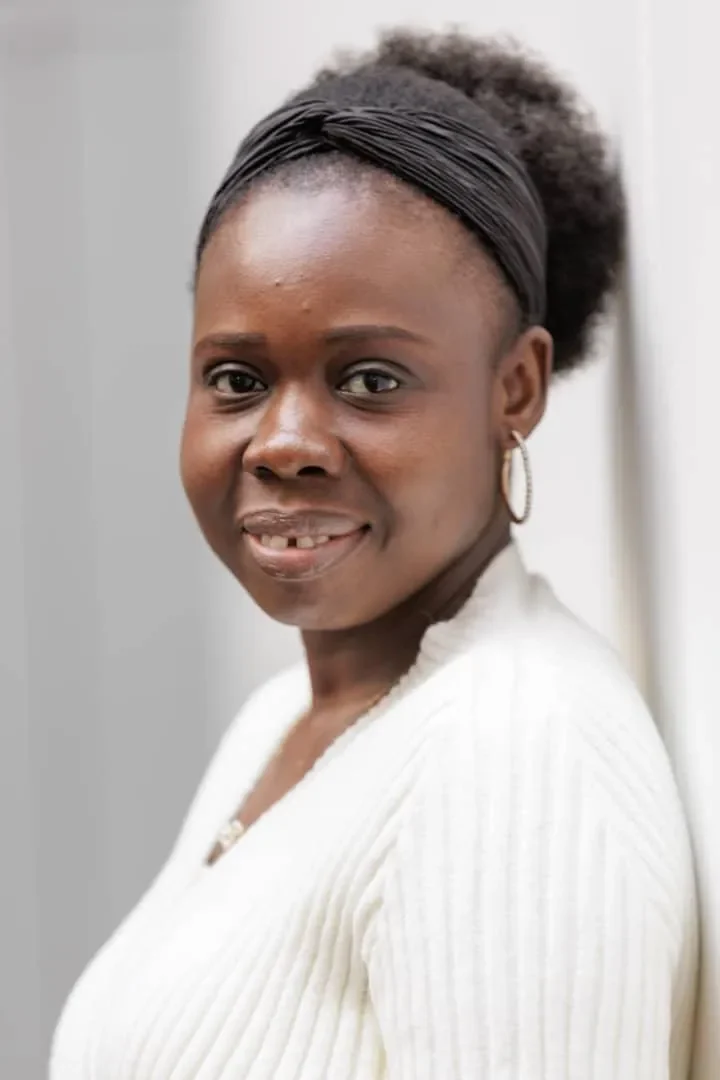
Senegalese researcher Cécile Mendy spoke at the international conference on sovereignty and the restitution of African cultural property on Tuesday February 24. A doctoral student at the Faculty Center for Transdisciplinary Historical and Cultural Studies at the University of Vienna (Austria), she defended an approach that is still marginalized in institutions: endogenous conservation, her research theme which she considers a major lever for redefining the cultural sovereignty of contemporary African museums.
At the Théodore Monod Museum, on Tuesday February 24, in the room where the international conference devoted to African sovereignty and cultural property was held, the debate left the diplomatic register for a moment: restitution agreements, international legal frameworks, to descend into the museum reserves.
Where concrete choices come into play: humidity, light, storage. Where the material future of objects is decided, silently. It is at this precise location that Cécile Mendy’s intervention took on its full significance.
A doctoral student at the Faculty Center for Transdisciplinary Historical and Cultural Studies at the University of Vienna (Austria), trained at Gaston Berger University, she knows Senegalese museums from the inside.
Internships at IFAN, work in the audiovisual archives, visits to the Gorée Historical Museum, participation in the design of a permanent exhibition on Transmission as part of a partnership between UNESCO and Italian Cooperation: his career is not theoretical. It is anchored.
His research topic is “The challenges of conservation in museums in Africa: endogenous conservation, ancestral know-how”. His question is direct: how to preserve objects in African museums by integrating local know-how with classic methods inherited from colonization? And above all, what impact can this integration have on the very definition of cultural sovereignty?
Because behind the restitution of works lies another dependence: that of standards. In many African museums, conservation protocols follow standards developed in Europe. Strict hygrometric control, specific materials for packaging, standardized chemical treatments, international technical standards. These methods are effective. They are based on decades of scientific research.
Endogenous conservations
But according to the researcher, they require stable infrastructures, regular budgets, constant maintenance and continuous access to often imported products. In contexts marked by strong financial and climatic constraints, their full application sometimes becomes a challenge.
Power outages compromise humidity regulation. Specialized equipment is expensive. Spare parts difficult to obtain. The question is therefore not to reject these methods. It is to know if they can constitute the only horizon.
Thus, Cécile Mendy suggests shifting the focus towards endogenous conservation practices. Ancient gestures, passed down in families, in workshops, in communities. Techniques which made it possible, well before the museum institution, to preserve ritual objects, textiles, instruments, wooden or leather artifacts.
The example of “niim” leaves often comes up in his work. Dried and placed in chests, they protect fabrics from insects thanks to their natural repellent properties. “This empirical knowledge is not recorded in international preventive conservation manuals. Yet it works. It is adapted to local climatic realities. It is economically accessible,” she explains.
His research treats conservation from two angles, that which takes place in the processes of creation/manufacturing of works of art or elements of heritage such as textiles, and the conservation of what already exists and which is subject to attacks of deterioration.
This type of practice raises a question of scientific legitimacy: at what point does knowledge become recognized as a method? For Ms. Mendy, modern museum conservation has been constructed within a Western academic framework which has long ignored, or even disqualified, local knowledge: “By promoting these endogenous practices, it is not a question of heritage idealism or nostalgia. It’s about producing a methodical dialogue. Test these techniques, document them, measure their effectiveness, identify their limits. Integrate them when relevant into hybrid strategies. “.
In other words: compose rather than copy.
The central place of women
By repositioning local know-how at the heart of museum thinking, the Senegalese researcher is making a profound political shift. It gives communities back the status of actors. The objects displayed in the display cases were not born in the neutral space of the museum. They were produced, used, maintained according to precise cultural logics.
Recognizing these logics in conservation practices means recognizing that tangible heritage cannot be dissociated from intangible heritage. Women occupy a central place in this chain of transmission: domestic conservation of textiles, control of plants, artisanal techniques.
This knowledge, she says, long relegated to the register of everyday life, nevertheless constitutes a solid technical base, resulting from long environmental experience.
However, integrating these practices does not mean renouncing international standards. “On the contrary, this requires demanding scientific work: experimental protocols, comparisons, documentation, publications. It is not a question of substituting one model for another, but of producing a plural framework,” specifies the doctoral student.
This approach also meets an imperative of sustainability. In museums faced with limited resources, developing solutions adapted to the local context can strengthen institutional autonomy. Reducing dependence on imported products, promoting resources available on site, training teams in combined techniques: so many concrete avenues.
For Ms. Mendy, the archaeological and ethnographic collections on display bear witness to ancient stories. But their future depends on contemporary choices. Restitution, if it happens, will not be the end of the process. She will be the beginning. Because we will then have to fully assume responsibility for conservation.
Adama NDIAYE
