
Zakat Al-maal: the lever of social redistribution
Ramadan is often the time chosen by the Senegalese to pay Zakat (legal alms). What is it actually about?
Zakat is, let us remember, the third pillar of Islam after the attestation of testimony (sahada) and prayer (salat), followed by fasting during the month of Ramadan and the pilgrimage to Mecca. Zakat is mentioned concomitantly with prayer more than 23 times in the Quran, and a greater number of times in the prophetic teachings. This shows the fundamental importance it must have for Muslims.
It turns out that many Muslims neglect it for all sorts of reasons, none of which can be accepted. Zakat is not only to be calculated and given to specific beneficiaries, it is a vision of the world, in addition to other Islamic fundamentals. She is generous and shares in order to maintain strong social bonds.
It carries concerns, concerns of the weakest, because the rich and strong will find solutions using their means. It is a look and a disinterested relationship with the other. It is also a vertical and horizontal circulation of wealth (“taking your wealth and giving it to your poor” ((Bouhari (1496))) so that “wealth does not remain in the hands of the rich among you” (Coran 59/7).
Also read: “The Sukuk makes it possible to finance new infrastructure” (2/2)
It is effectively taken care of by the community for its basic needs in the presence or absence of the central authority with regard to the weakest among them. We thus see that we are at the antipodes of current hegemonic capitalism which is not only economic principles, but has become political systems, legal laws, social rules, a societal vision stupefying the masses, alienating them from the material thing which has become divinity and the only standard of comparison, in defiance of humanity, of its limited resources, in defiance of poverty which is a social indignity not to be accepted.
Zakat, for more than 14 centuries, has been built on this supreme objective of combating the precariousness of the weakest, of those in social distress. It is a “tax” applied by the sole force of belonging to a faith, and not by brigades of state inspectors. If the average Senegalese simply understood it this way, we could hope for a better tomorrow for the most vulnerable groups.
The State could also make Zakât a real social lever, by rigorously organizing its collection and distribution in order to maximize its impact. Well managed, it could become a powerful instrument of redistribution and social justice. Let us hope that this vision comes to fruition, because time remains the best revealer of the truth.
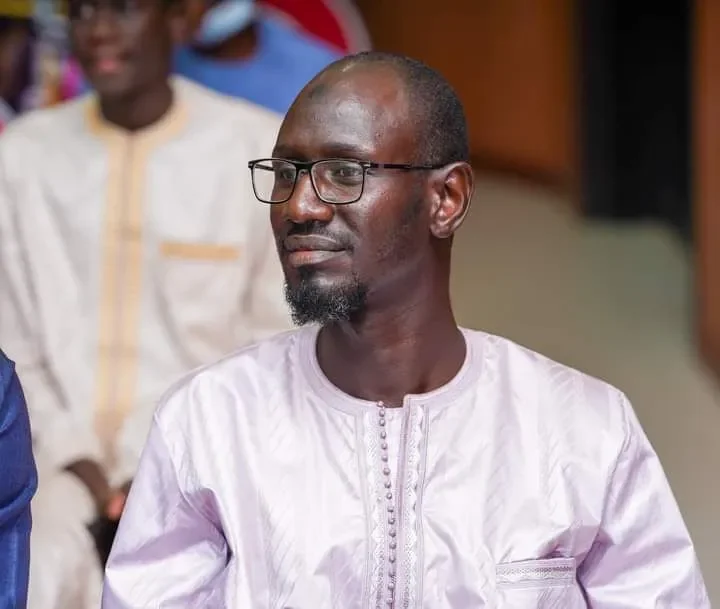
Ibrahima Ndiaye, economist and specialist in Islamic finance
