
(Video) Ndureuh, the body as an instrument February 22, 2026
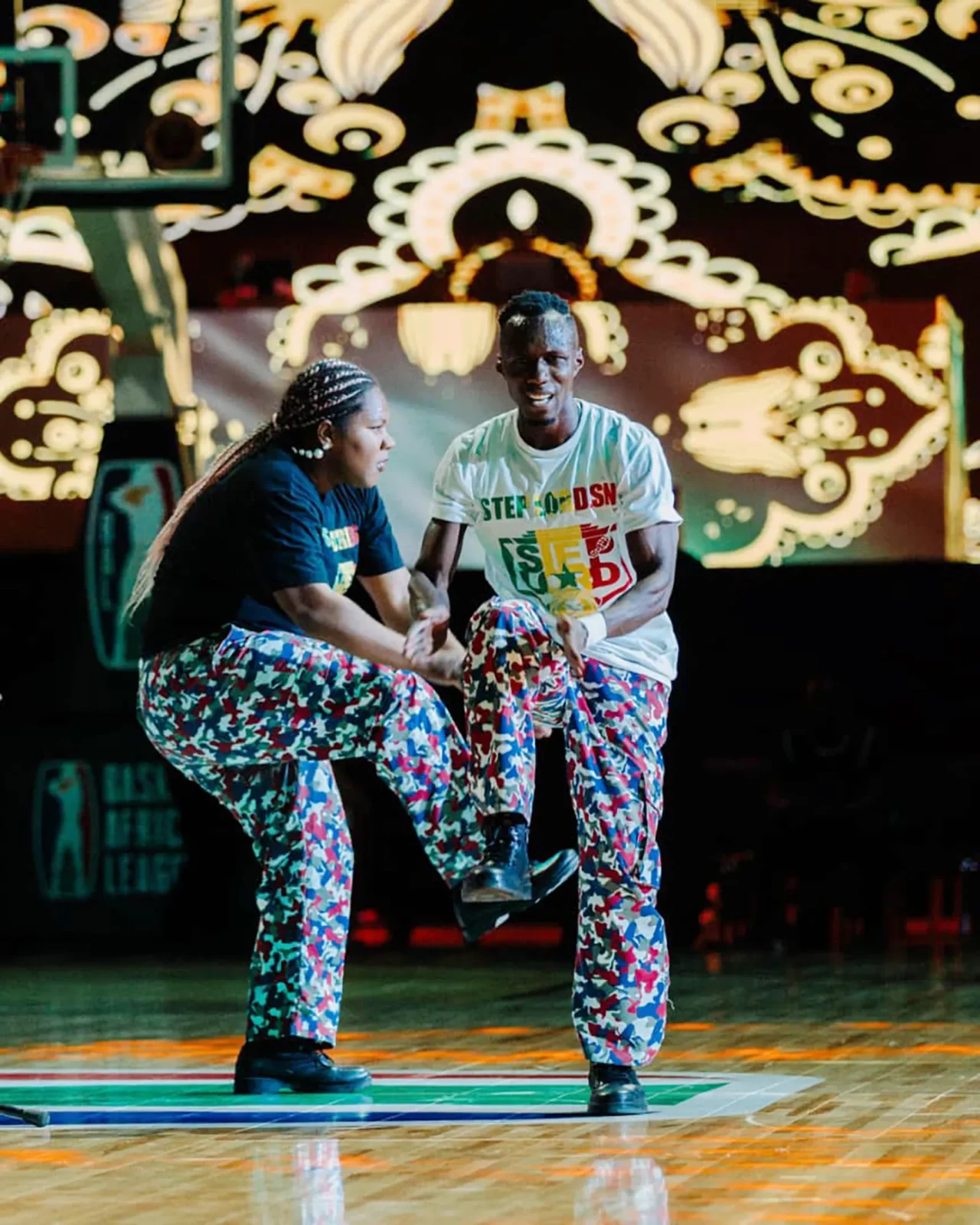
Senegal is full of artists and arts, some known to the general public, others less so, who are, however, no less important. “Step”, a form of dance imported from the United States, is beginning to make its way to fame in our region. He does not need equipment to create a sound like in “sabar”, or even music to find a rhythm. Here, only the body serves as a tool. Pape Samba Ndour, alias Ndureuh, is a master of the “step”. He creates vocations and allows his art to prosper.
Artists draw inspiration from everything to create their works. Feelings, inner emptiness, social facts, and also noise. The latter gave birth to a form of African-American percussive dance. In this type of artistic expression, the instrument is unconventional: it involves the entire body. This is used to take steps, claps, and chants to produce complex rhythms. Thus, the “step dance” or “steppin” is, above all, a beat before being a movement. It is the sound of the body which dialogues with silence, of the feet which sculpt the rhythm, and a group which becomes a unique breath.
In the vibration of the ground, a poetry without words is born, a choreography where each strike tells a memory, a legacy not through voice, but through echo. Doing “step” means making time dance, transforming energy into vibration, unity into force. It is a way of creating a “we” by striking the earth as if to awaken what is still sleeping. And in the heart of Dakar, a group is trying to preserve this legacy, to make bodies and hearts vibrate in unison.
Passion and becoming
This is “Step Lord”. This group, which resonates with its art at the Blaise Senghor cultural center, is led by Ndureuh. Average height, body sculpted by effort, the man moves like a tightrope walker who does not fear heights. It does not walk, it floats, moved by the grace of those who have chosen their path, against wind and tide.
Holder of a degree in English (American and Caribbean studies) from Cheikh Anta Diop University, Pape Samba Ndour chose “step dance” very early on. He started in 2018 when he was a high school student, and founded his own group: “Step Lord”. “I started in high school (Blaise Diagne). I was in the English club where we organized a lot of activities with theater, dance… One day, wanting to innovate on the occasion of cultural days, we said to ourselves: why not do step that we discovered through the film “Stomp the Yard”? That’s how I started, then we created “Step Lord” after high school, to pursue our passion and become professional steppers,” he confides, enthusiastically. Its ambition: to promote this art not only in Senegal, but also in Africa.
At the Blaise Senghor Center, on this February afternoon, several types of artistic expressions come together. While runners are dripping with sweat at the entrance after minutes of racing, inside, faces shine with passion. Slammers, drummers, graffiti artists, everyone is in their own corner, trying to capture the slightest dose of inspiration to express their creative gift. A few steps later, the steppers are already hot. They clap their hands, stamp their feet, shout like warriors in the face of triumph, and smile in pure satisfaction. Ndureuh leads the dance, guiding his students, some of whom manage to keep up with the rhythm, while others still try to put one step in front of the other like fawns.
Promote step everywhere in Africa
Ndureuh, who has already traveled to the United States several times thanks to his dance, first as a student then as a professional for performances, still recognizes some pitfalls in the practice of his profession. Unfortunately, he regrets, society does not value dance very much. “The proof: when you decide to be a dancing artist, it is your own family that discourages you in this path and denigrates your art. Some people thought, when we started, that it was a waste of time,” laments the 30-year-old. However, he adds, dance is a culture, and culture is an engine of development. In his eyes, you must have a form of artistic expression to convey your cultural values. To achieve this, we need support, particularly financial, to tour the regions and promote our art form,” regrets the thirty-year-old. He continues: “People don’t really know about “step”, even if we are gaining a bit of notoriety thanks to “Step Lord”.
We have done quite a few shows, workshops… However, the general public does not yet know “step”. »
However, this does not discourage him in any way. Indeed, he says he has immense ambitions. “Already, we are the pioneers of “steppin” in Senegal. From now on, the objective is to create “steppin” companies in Ivory Coast, Mali, Ghana… so that in Africa, we can organize international competitions,” underlines the artist.
Momentum, ambitions
Like every pioneer, Ndureuh had to face certain walls. “Unfortunately, some criticize us by saying that we were only copying what the Americans do,” he regrets.
However, this does not discourage, quite the contrary. “Steppin’ is an art form that doesn’t belong to anyone. For example, if we take “sabar”, it is true that it originates from Senegal, however everyone can make it in their own way. Our “steppin” is made in the traditional way. We use the “mbalax” rhythm to do “step”. So we didn’t copy, but we created something,” he proclaims.
In the midst of the beats, steps and vibrations of the body, Ndureuh stands as guardian of the rhythm, but also as a transmitter of flames. Initiator of “Step Lord”, he advances like one traces a furrow, “step by step”, convinced that the Senegalese soil can also vibrate to the sound of his dance, that the whole of Africa can follow the rhythm. For Pape Samba Ndour, “step” is not only an art, it is a promise: that of giving birth to a movement greater than itself. Because, deep down, when we share it, rhythm becomes a territory.
By Oumar Boubacar NDONGO
