
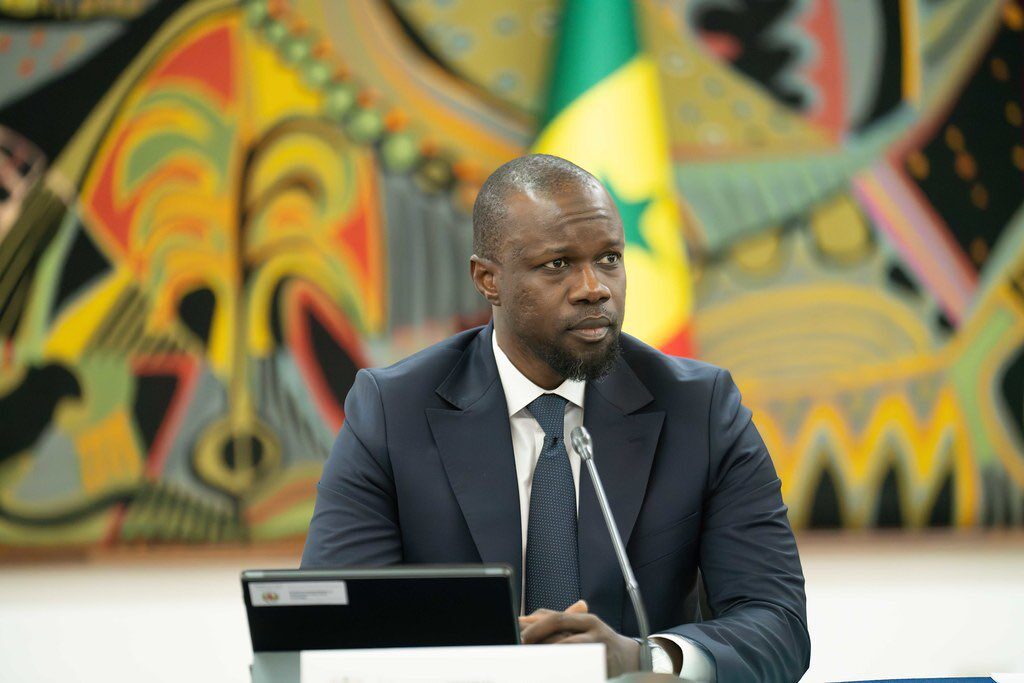
Ousmane Sonko bets on the salt sector, sets an ultimatum for Air Senegal and calls for the pacification of universities February 11, 2026
During the Council of Ministers on Wednesday February 11, 2026, Prime Minister Ousmane Sonko structured his communication around three major issues: the strategic development of the salt sector, the worrying situation of Air Senegal and tensions in universities, particularly in Dakar.
An intervention marked by structuring economic orientations, recovery requirements and a call for responsibility.
Salt sector: a strategic industrial lever with high potential
The Prime Minister first highlighted the strategic potential of the salt sector. Recalling that Senegal is among the main African producers and remains the first significant producer in West Africa, with more than 500,000 tonnes per year, he however underlined the weakness of its economic contribution, estimated at only 0.3% of GDP.
According to him, exports that are predominantly raw or poorly processed reduce the value captured by the national economy and maintain dependence on imports of refined products and chemical derivatives.
For Ousmane Sonko, the structured development of the sector constitutes a major opportunity to strengthen the industrial base, improve the trade balance and stimulate local economies. By 2034, the sector could generate more than 30,000 formal jobs and reach a turnover of 350 billion FCFA.
In this dynamic, the Prime Minister indicated that the Pôle-Territoire Center aims to become the industrial heart of Senegalese salt. The stated ambition is to build, by 2050, an integrated ecosystem covering the entire value chain, from modernized production to industrial processing, including logistics and storage. The ultimate objective: to make “Senegal Salt” a competitive quality label on regional and international markets.
Air Senegal: 30 days to materialize the recovery plan
Then addressing the situation of Air Senegal, the Prime Minister made a worrying observation. Beyond the financial difficulties, he stressed that the future of the company involves the image of Senegal, its strategic connectivity, its tourist and economic attractiveness as well as the vital link with the diaspora.
Faced with this situation, Ousmane Sonko set a deadline of 30 days for the Minister of Land and Air Transport to materialize the key measures resulting from the Interministerial Council devoted to the sector.
This involves finalizing and accelerating the implementation of the operational recovery plan, launching the refinancing operation, presenting a detailed proposal for definitive recapitalization and carrying out a rationalization audit accompanied by a corrective plan.
Furthermore, he instructed the Minister of Finance to urgently mobilize the necessary resources in order to clear, via exceptional budgetary redeployment, the commitments due to essential suppliers. The objective is clear: guarantee the continuity of public air service.
Universities: sadness, justice and continued reforms
Referring to the situation in universities, particularly in Dakar, the Prime Minister expressed his deep sadness after the tragic death of student Abdoulaye Ba. He presented his condolences to the family of the deceased, the university community and the entire Senegalese people.
Deploring the use of violence, he invited the Minister of Justice to monitor the legal consequences in order to establish all responsibilities and shed light on the circumstances of the death.
At the same time, he insisted on the need to continue the reforms initiated in higher education and encouraged the minister in charge of the sector to stay the course. He also asked the Minister of the Interior to continue to work for the security and complete pacification of university spaces.
Sheikh Gora DIOP
