
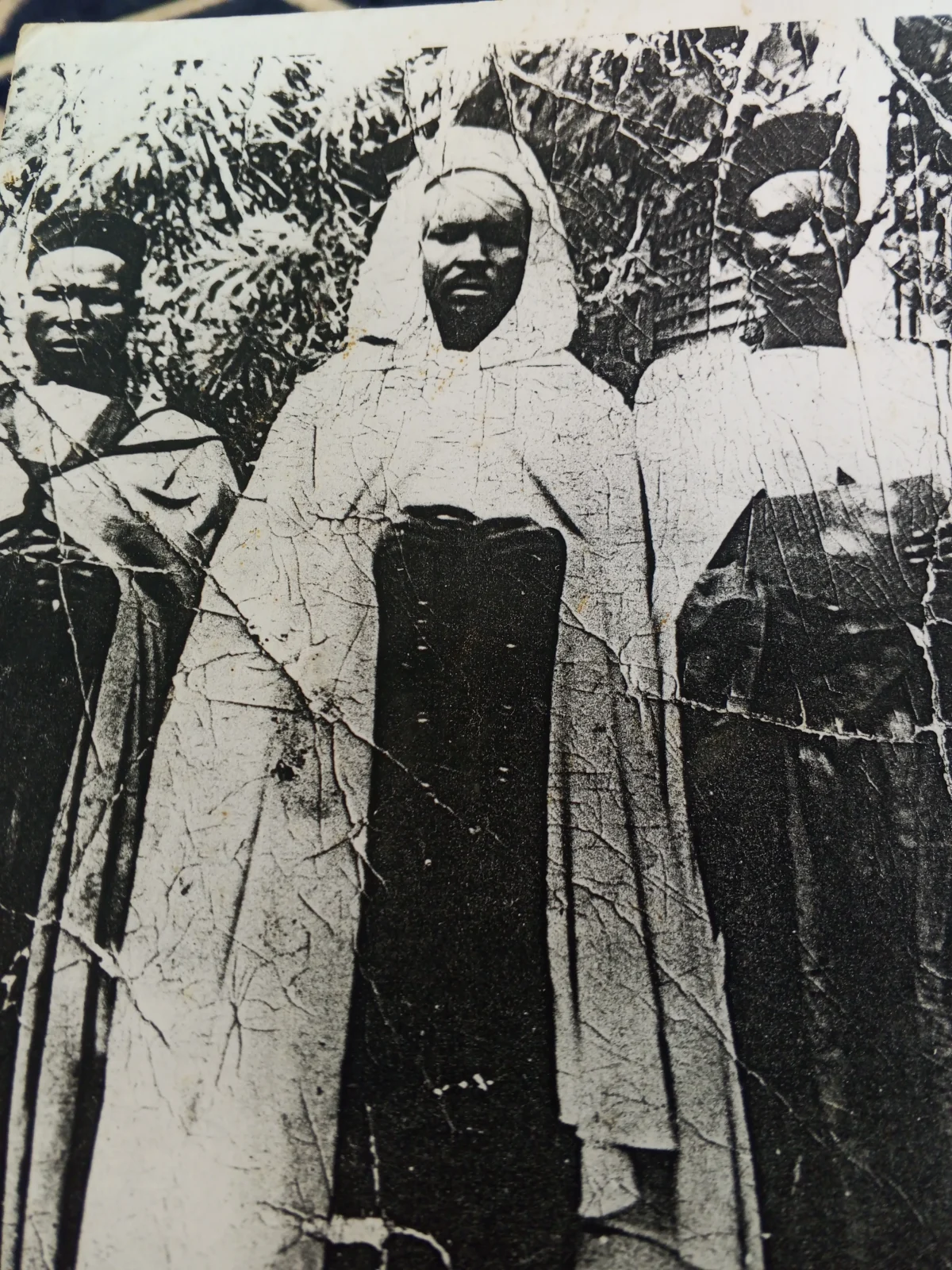
Diyahou Nayiraïni by El Hadji Amadou Dème: the living legacy of a master of knowledge
El Hadji Amadou Dème de Sokone is renowned for having had a profound impact on Islamic thought in West Africa through his writing. This through a work that spans the ages: Diyahou nayiraïni.
In Sokone (commune in the department of Foundiougne), the name of El Hadji Amadou Dème is pronounced with respect. The elders speak of a scholar of rare humility, a master who divided his time between teaching the Holy Quran, agricultural work and writing manuscripts.
In this city of the Saloum Delta, everyone has an anecdote about the man who devoted more than twenty years to writing the monumental Diyahou Nayiraïni, a Koranic exegesis in twenty volumes which is today a reference. The older ones say that El Hadji Amadou Dème often wrote until the middle of the night, by the light of a hurricane lamp.
After the lessons given to his talibés and the work in the fields, he retired in silence to continue writing his commentary on the Koran. This discipline still impresses researchers. Between 1938 and 1959, he produced a monumental work which was not limited to explaining the Koranic verses.
The Diyahou Nayiraïni also deals with Muslim jurisprudence, theology, Arabic grammar, history, morality and social issues. The whole testifies to a perfect mastery of the great classical sources of Islamic thought.
A book of great intellectual density, considered by many specialists as one of the most important scholarly works written by a Senegalese scholar in the 20th century. For Seydina Ousmane Dia, one of the custodians of the memory of the great scholar of Sokone, Diyahou Nayiraïni goes far beyond the national framework.
Also read: Serigne Aliou Cissé: First designated caliph of Sheikh Al Islam
“El Hadji Amadou Dème wrote around twenty works, but the one who really made him known beyond his circle of scholars was Diyahou Nayiraïni. It is his final work and, without doubt, the one which revealed to the general public the full extent of his intellectual depth,” informs this son of Bocar Dia, half-brother of El Hadji Amadou Dème.
Indeed, unlike a classic exegesis, El Hadji Amadou Dème confronts the interpretations of great Muslim scholars, before proposing his own reading, always supported by the founding texts. The work quotes extensively from the Koran, hadiths, ancient commentaries and references from legal schools. This method makes Diyahou Nayiraïni a research tool as well as a popular work, intended for students of Islamic sciences.
According to Patriarch Seydina Ousmane Dia, several generations of learners continue to draw lessons from it, particularly on spirituality, ethics, social justice and living together. For the heirs of El Hadji Amadou Dème, the Diyahou Nayiraïni is not only a spiritual meeting. It also constitutes a moment of cultural transmission.
The master’s descendants welcome visitors who come to discover the history of this work and its author. “Through these exchanges, Sokone reminds us that Senegalese religious centers have long also been centers of intellectual production where major works in the Arabic language were written,” informs Seydina Ousmane Dia.
The conservation challenge
For several decades, the original manuscripts were jealously guarded by the scholar’s family. Faced with time, the major challenge lies in the conservation of the work. And thanks to extensive editing work, the thousands of pages are printed and distributed to several libraries, universities and research institutes.
“This work has an international dimension. It is one of the greatest legacies that it is up to us to preserve. Even today, it is studied by researchers and consulted by many people in search of knowledge,” says Seydina Ousmane Dia.
Beyond this work, El Hadji Amadou Dème left a method. To posterity, he bequeathed a school based on scientific rigor, mastery of the Arabic language, openness to different legal schools and the permanent search for knowledge.
“He was someone who had a high sense of justice, a simple man and very attached to work. His rich heritage reminds us that the great Senegalese religious figures were also intellectuals capable of producing original thought, deeply rooted in the sources of Islam, while responding to the concerns of their time,” insists Patriarch Seydina Ousmane Dia.
