
German-Senegalese Economic Forum: 158 billion FCFA at stake October 9, 2026
The economic question occupied a central place during the visit of President Bassirou Diomaye Faye to Germany with the German-Senegalese Economic Forum which was sanctioned by agreements and commitments of 240 million euros, or nearly 158 billion FCFA, in several sectors considered priorities by Senegal.
Over time, the partnership between Berlin and Dakar has gradually changed in nature. Long focused on development cooperation, it now extends to more strategic issues for Senegal: energy transition, employment, development of the private sector, governance and transformation of the economy. The Senegalese-German Economic Forum organized during the visit of President Bassirou Diomaye Faye to Germany in June 2026 illustrates this new trajectory.
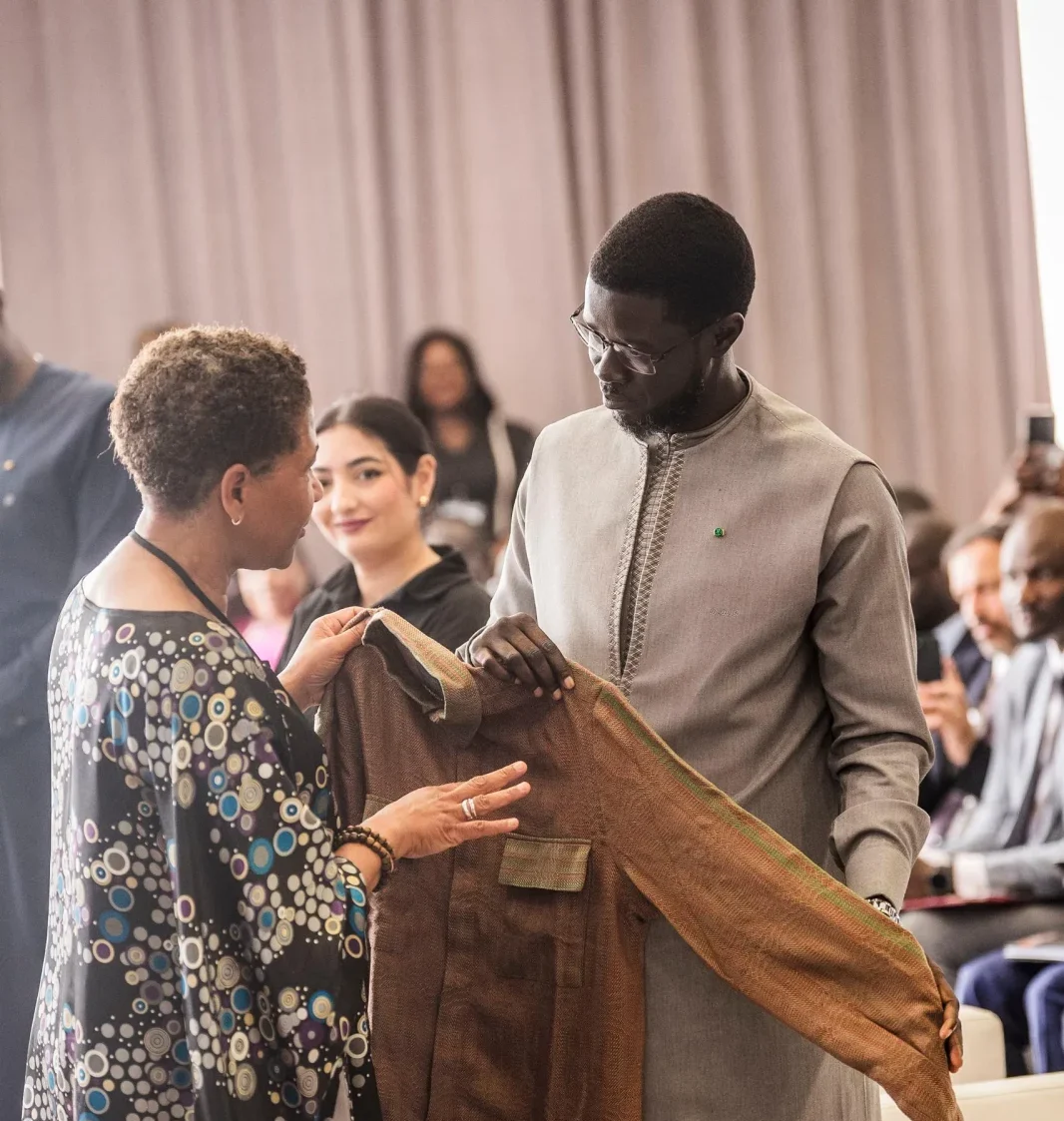
This event took place on June 22, the day after the arrival of the Senegalese head of state on German soil. He participated alongside Reem Alabali Radovan, German Federal Minister for Economic Cooperation and Development (BMZ). Around 250 representatives of public institutions, German and Senegalese companies, economic organizations, financial institutions and development partners took part in the work. The challenge was to bring Senegal’s development priorities closer to German instruments of cooperation, financing and economic promotion. An approach which is part of Dakar’s desire to strengthen its economic, industrial, energy, food and health sovereignty.
The German-African Business Association (Afrika-Verein) played a major role in organizing this forum alongside the BMZ. Thanks to its excellent network on the continent, this association, which has existed for 90 years and has 350 to 400 members, or 85% of German companies present in Africa, has the role of promoting dialogue between German and African economic and political actors. According to Nicoletta Maier, Manager for French-speaking Africa, the presence of the Senegalese President and the German Federal Minister for Cooperation gave a special character to this forum.
The Forum was mainly structured around three sectors: agriculture and mechanization, renewable energies as well as health and pharmacy. Areas in which both countries identify significant opportunities for cooperation and investment.
Three sectors at the heart of trade
In agriculture, discussions focused in particular on mechanization, improving productivity and the development of value chains. The objective is to promote more modernized agriculture, capable of meeting market needs while providing opportunities for businesses and investors.
Concerning renewable energies, discussions focused on the possibilities of developing projects, but also on the conditions allowing more private financing and technologies to be mobilized.
For the health and pharmaceutical sectors, discussions highlighted the possibilities of developing local production, strengthening skills and establishing lasting industrial partnerships. The forum also made it possible to present to German investors Senegal’s investment priorities and the opportunities offered by the national market. APIX and the Ministry of the Economy, Finance and Planning thus presented the prospects for development of the private sector and the possibilities for partnership.
Agreements and projects announced
The meeting was able to discuss the obstacles that can slow down the realization of projects. It should be noted that before the forum, Afrika-Verein organized a round table bringing together the Senegalese authorities and around fifteen German companies present in Senegal. “This informal forum made it possible to have a real dialogue and to discuss the difficulties encountered by our members,” informs Ms. Maier. Likewise, the question of financing occupied an important place. Forum participants insisted on the need to develop mechanisms to facilitate access to resources, particularly through guarantees, blended financing, risk sharing and solutions adapted to the local context. The presence of President Bassirou Diomaye Faye and the German Federal Minister for Economic Cooperation and Development, Reem Alabali Radovan, gave relief to the forum.
Thus, the German minister chaired the signing ceremony of the protocols of understanding and contracts, while President Faye closed the work. “German companies have their place in Senegal. Especially since we appreciate the quality of German products and services,” declared the Senegalese head of state. Several agreements and announcements marked this meeting, among others, the financing of the green line between KfW and the Ministry of Economy, Finance and Planning, with the support of the BMZ.
The NioFar project, supported by the Afrika-Verein, the BVMW, GIZ, APIX and the Ministry of the Economy, Finance and Planning, is also among the initiatives announced. According to Nicoletta Maier, this initiative aims to create a point of contact between German companies present in Senegal or wishing to set up there and Senegalese state structures in order to promote investment.
In total, 240 million euros of agreements and commitments, or nearly 158 billion FCFA, were announced in several priority sectors of Vision Senegal 2050: energy, health, agro-industry, industry, infrastructure and training. “There is enthusiasm, a real movement among German companies for the Senegalese market,” notes Ms. Maier, who hails “a great success.” She hopes that this forum will serve as a trigger to transform the level of trust between the two countries at the institutional level into concrete projects on the economic level.
Elhadj Ibrahima THIAM
