
TrustAfrica for restorative justice October 9, 2026
Discrimination inherited from slavery and based on work or ancestry persists in Africa. Gathered on Thursday in Dakar at the initiative of TrustAfrica and the African Network of Communities Discriminated on the Basis of Work, Descent and Against Slavery, human rights defenders pleaded for the formal recognition of these injustices and the establishment of reparation measures.
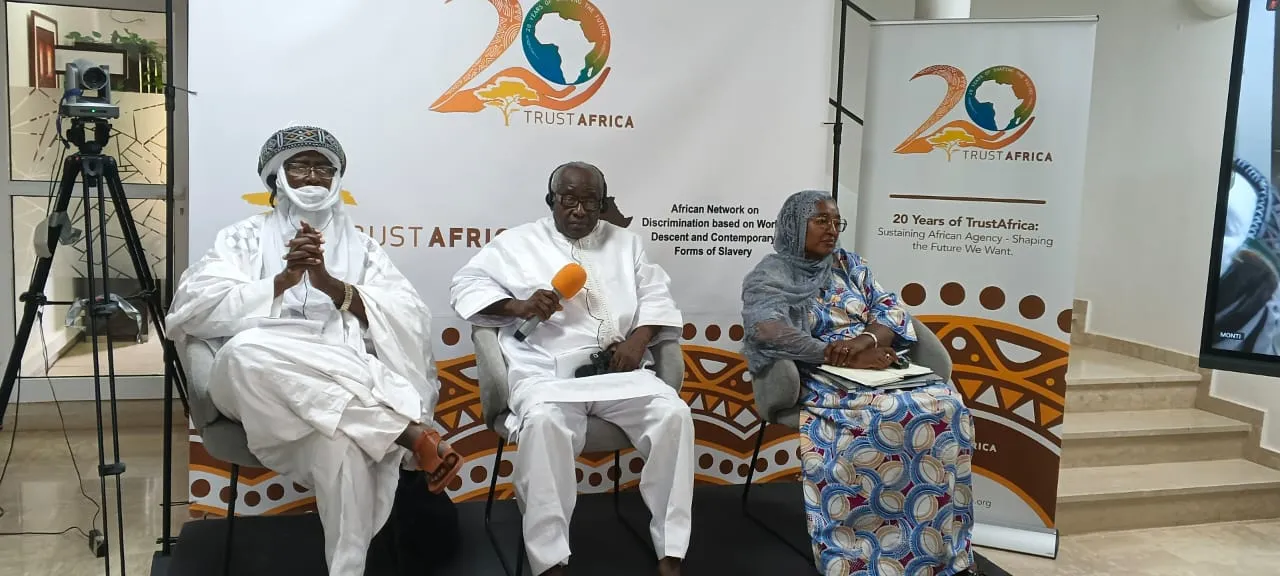
The after-effects of slavery do not stop in the past: they persist today through discrimination based on ancestry, work, social status or caste. This issue was at the heart of the panel “Reparations and community rights: advancing a common agenda for restorative justice”, organized yesterday in Dakar by TrustAfrica. Organized as a prelude to the NGO Forum on Reparations, this meeting brought together human rights defenders, civil society actors as well as representatives of communities victims of discrimination linked to work and ancestry. All the participants agree on one point: the formal recognition of past injustices constitutes an essential prerequisite for any reparation process. According to Coumba Touré, president of the board of directors of TrustAfrica, this event offers committed organizations a space to exchange experiences and take stock of their struggles. It is also part of the 20th anniversary of the organization, which wishes to pay tribute to the journey of the people dedicated to this fight. For Coumba Touré, any reparation process necessarily involves recognition. It is considered unacceptable that in 2026, individuals still suffer from a social status inherited from slavery. This discrimination leads to intergenerational economic repercussions, blocking the access of certain communities to the resources essential to their development. A situation described as “aberrant, inhumane and unacceptable”. It directly calls on African States, reminding them of their obligation to protect all of their citizens, in particular by adopting legislative frameworks recognizing this discrimination and guaranteeing effective access to justice. This formal recognition must lead to concrete actions. Entire families having been robbed of the fruits of their labor for the benefit of dominant families, this past largely explains the current precariousness of their descendants.
Two-tier citizenship
“They have the right to compensation,” says Coumba Touré, while specifying that this is not limited to a financial aspect. It includes public apologies, restoration of economic rights and the establishment of compensatory measures. According to her, the responsibility is shared. “States must repair, the large families who benefited must repair, international organizations must repair,” she said in particular. Part of this international dynamic, Jasmine Mickens, also a panelist, calls for building convergences beyond linguistic and geographical barriers. Believing that reparations encompass economic, legal, political and social dimensions, she emphasizes that “reparations are about reinventing the future”. The objective is therefore not only to right the wrongs of the past, but to fundamentally transform the systems which perpetuate these inequalities. Finally, Dr Ebrima Sall, executive director of TrustAfrica, places the State at the center of the system. He advocates the strengthening of African human rights commissions, the appointment of a dedicated special rapporteur and the creation of legal aid funds for victims. For him, a strong civil society is essential to document abuses and support citizens. Recalling the republican principle of fundamental equality, he concludes that no consideration of caste, tribe, language or class can justify two-tier citizenship.
Daouda DIOUF
