
At the crossroads of the spiritual sign and heritage August 22, 2026
The composition of Taysir corresponds to the birth of Serigne Babacar Sy (in 1885). This simultaneous event is perceived by the Tidiane community as a premonitory sign of blessing (baraka) and the early announcement of a spiritual transmission.
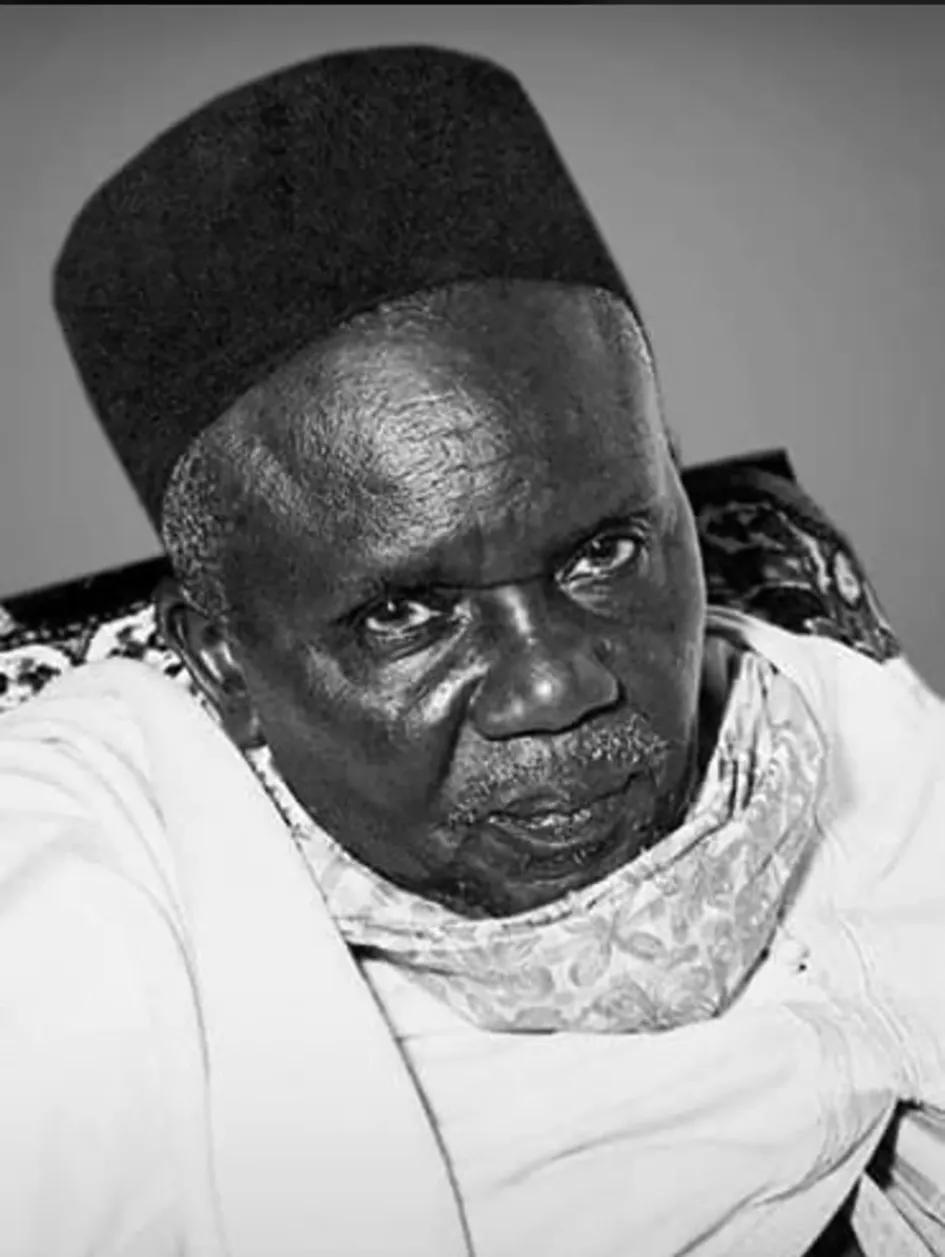
The end of the writing of Wasîlat al-Munâ, better known as Taysir, coincides with the birth of Serigne Babacar Sy, first caliph of Seydi Elhadji Malick Sy. Many perceive this correspondence as a sign of blessing (baraka) and, above all, as a sign of his succession. The writer and English professor Pape Amadou Sall specifies that the Wasîlat al-Munâ is a “spiritual work of great art”. According to him, the writing of this work – small in size, but gigantic in content – was “an opportunity for Maodo to glorify his Lord with his 99 sublime Names and attributes”.
Mouhamadou Mounirou Sy, professor of public law at Iba Der Thiam University in Thiès and member of the Zawiya tidiane Cell of Tivaouane (Cezat), specifies that Elhadji Malick Sy would have written this work in Ndombo Sandjiry, near Richard-Toll.
In 1883, two months after the birth of his second child, Sidy Ahmed Sy, in Saint-Louis, he undertook to visit his mother, Sokhna Fawade Wellé, in her native village in Gaé or Gaya.
On the way, he furtively met a great saint and scholar named Mor Sine Kane, originally from Keur Sine Leye Kane, and promised to come back to see him. Two years later, in 1885, he came to settle in Ndombo Alarba and crossed the river daily to go to Ndombo Sandjiry to exchange with Serigne Mor Sine Kane. It was in this context that he decided to write the Taysir (“The way of intercession or the means of accessing wishes”).
While he was writing the last verse, El Hadji Malick Sy saw in a dream the Prophet, one Tuesday, just before dawn, coming to tell him that his wishes were granted by the Lord. The same morning, an emissary from Saint-Louis informed him of the birth of his son, Serigne Babacar Sy.
For Mouhamadou Mounirou Sy, this link is deep: “If Taysir is the means of accessing wishes, Serigne Babacar Sy is the agent and the viaticum. Far from being a simple coincidence or the fruit of chance, destiny has made the Taysir of Maodo and Serigne Babacar Sy two paths to the granting of all prayers. The professor concludes, convinced, that “Serigne Babacar is himself Taysir, that is to say a grace, a godsend and a providence”.
Dr Cheikh Tidiane Mbaye, sociologist of religions and specialist in Muslim brotherhoods in Senegal, believes that this coincidence goes beyond the simple chronological fact: “In Tidiane collective memory, it symbolizes the continuity between the intellectual work of Maodo and the educational mission of Serigne Babacar Sy. The latter appears to be the heir par excellence of his father and the architect of Tivaouane’s influence in the 20th century.
Mystical depth
For his part, the director of the Timbuktu Institute, Dr. Bakary Samb, is more nuanced, emphasizing that such an reading grid is more about “spiritual hermeneutics than strict event history.” According to him, this poem, structured according to the Sufi tradition of Tawassul (the quest for intercession), is built around the evocation of the divine Names, which gives it a deep mystical significance. In Tidiane thought, Dr Samb explains that the concomitance between the writing of the Taysir and the coming into the world of Serigne Babacar Sy is seen as an omen: “The birth of a spiritual heir occurring at the precise moment when the master composes a text of intercession and protection takes on the value of an announcement, of a transmission already at work even before the disappearance of the Sheikh”. For the researcher, although this interpretation belongs “to the memory and piety of the disciples more than to the documented chronology”, it nevertheless remains essential: “It reflects the way in which the spiritual continuity of Tivaouane is conceived: not as a mechanical succession from father to son, but as a spiritual filiation prefigured by signs”.
Souleymane Diam SY
