
Social Security Code: Towards more inclusive social protection
The government of Senegal is proposing a new Social Security Code with the ambition of building a social protection system that is more inclusive and accessible to all.
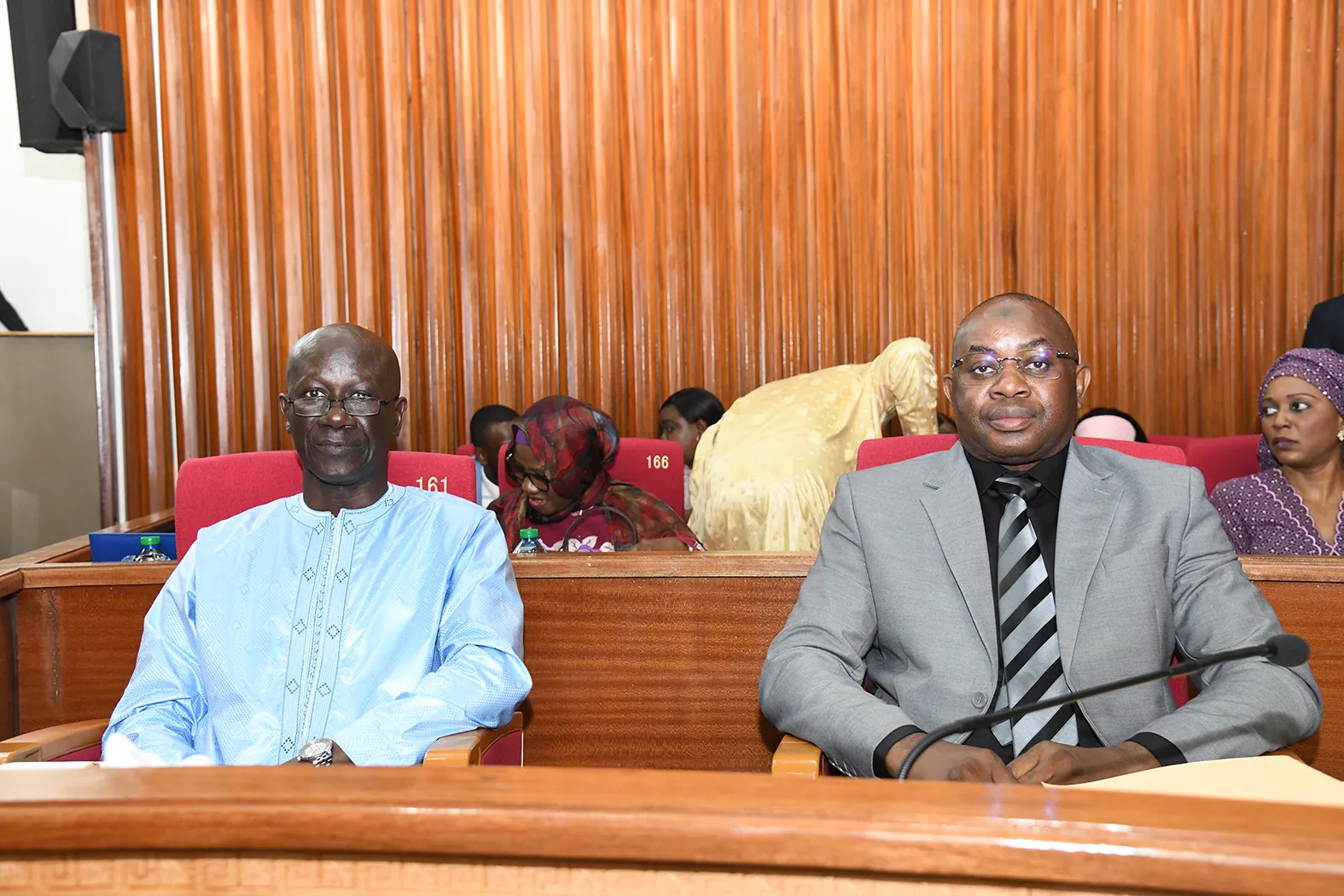
The deputies of the 15th legislature ultimately did not examine, this Monday, the bill establishing the Social Security Code. At the request of the president of the Commission on Laws, Decentralization, Labor and Human Rights, Me Abdoulaye Tall, the text was sent back to the committee for further examination. Before this postponement, the Minister of Civil Service, Labor and Public Service Reform, Mamadou Lamine Dianté, had defended the project before the commissioners. According to him, this reform is part of the State’s desire to thoroughly modernize the national social protection system in order to adapt it to new economic and social challenges. “The reform finds its justification in the need to adapt the legal framework of social security to developments in the national and international context. It is part of the implementation of axis 2 of the National Development Strategy, entitled “Quality human capital and social equity”, which aims to strengthen social inclusion and guarantee better coverage of populations,” explained the minister. Mamadou Lamine Dianté also recalled that this reform is consistent with the recommendations of the International Labor Organization (ILO) regarding the establishment of social protection floors and the transition from the informal economy to the formal economy. He further stressed that the draft Code transposes Directive No. 001/Cm/Cipres of December 12, 2014, establishing a legal social security base applicable to member states of the Inter-African Conference on Social Security (Cipres), particularly in terms of governance and financial management.
The bill, which repeals and replaces Law No. 73-37 of April 3, 1973 on the Social Security Code, introduces several major innovations. It provides in particular for the harmonization of the legal framework for social security as well as the definition of technical terms and guiding principles governing the sector. The text also establishes the introduction, within Social Security Institutions (IPS), of results-based management mechanisms. It also strengthens the role of technical supervision in the governance of these structures and broadens the prerogatives of labor and social security inspectors in the exercise of their control missions. “The text provides for the creation of a body responsible for the orientation and coordination of general social security policy,” added the minister. According to him, the reform also aims to improve the technical management of the different branches and benefits, in particular through the establishment of a disability pension. One of the main axes of the project concerns the expansion of social coverage.
The future Code thus provides for the extension of social protection to workers in very small economic units as well as to self-employed workers, hitherto little covered by existing systems. The text also introduces universal health insurance structured around three components: a compulsory health insurance scheme for workers covered by the Labor Code and the Merchant Navy Code, a compulsory scheme intended for self-employed workers and a medical assistance scheme for the most vulnerable people.
Aliou DIOUF
