
Pncs annual report on the geopolitics of Africa: A work to understand the strategic dynamics of the continent
The Moroccan think tank Policy Center for the New South launched its annual report on the geopolitics of Africa today, Wednesday. This work written by 27 contributors is intended to be a reference document for understanding African geopolitical dynamics.
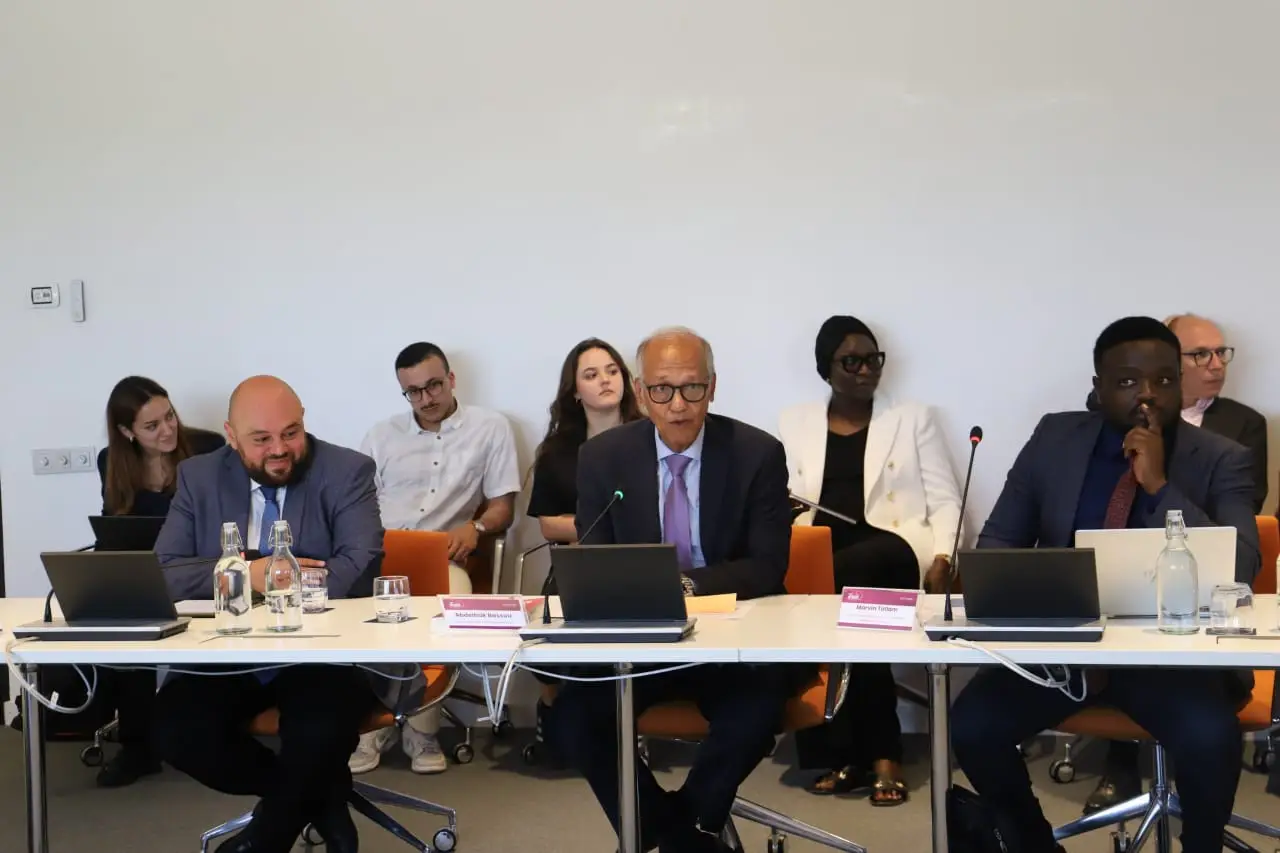
RABAT- As a prelude to the annual African Peace and Security Conference (Apsaco) which is due to open tomorrow, Thursday, June 11 in Rabat, the Policy Center for the New South (Pcns) proceeded today, Wednesday, to the presentation of its annual report on the geopolitics of Africa. This work produced by the Moroccan think tank is in its tenth edition. The presentation of this report was an opportunity for Abdelhak Bassou, researcher at Pcns and publication director of this work, to explain its main points. With twenty-seven contributions from sixteen different African nationalities, this report, according to him, is the mark of the maturity of an editorial project based on the demanding conviction that “Africa must think of itself, from itself, with the analytical instruments that its own children forge in contact with reality”.
“The Africa of 2026 is no longer that of 2017. The past decade has seen the acceleration of dynamics that the first editions of this work had only anticipated: the recomposition of power relations on a global scale, the multiplication of centers of internal conflict, the irruption of technologies in spaces of war and governance, the open contestation of security architectures inherited from the post-colonial period,” affirms Abdelhak Bassou. This tenth edition of the annual report on the geopolitics of Africa is made up of four parts.
The first talks about power rivalries and their impact on African room for maneuver. From the new rush for southern Africa to the restructuring of relations between the European Union and the African Union, including the rise in power of non-Western actors, the authors rigorously examine the conditions in which African states attempt to balance sovereignty and survival in the face of cross-pressures from great powers. The second part is that of wars and conflicts in the era of new technologies. The Sahel, Sudan, the Great Lakes region, Benin, so many areas where, in their most concrete forms, the doctrinal and operational transformations induced by “dronization”, cyber threats and the digitalization of confrontations are playing out.
The contributions gathered in this section do not simply map these mutations. The third part concerns strategic spaces, seas, corridors and projection zones. While the fourth and final part, transversal to all the others, is that of paradigms: how to think about peace, security, development, political participation and governance from an autonomous African perspective? According to Publication Director Abdelhak Bassou, ten years after its first edition, the Annual Report on the Geopolitics of Africa keeps its founding promise: “to be the place of free, rigorous and engaged African thought on the major questions which determine the strategic future of the continent”.
From our special correspondent in Morocco, Oumar NDIAYE
