
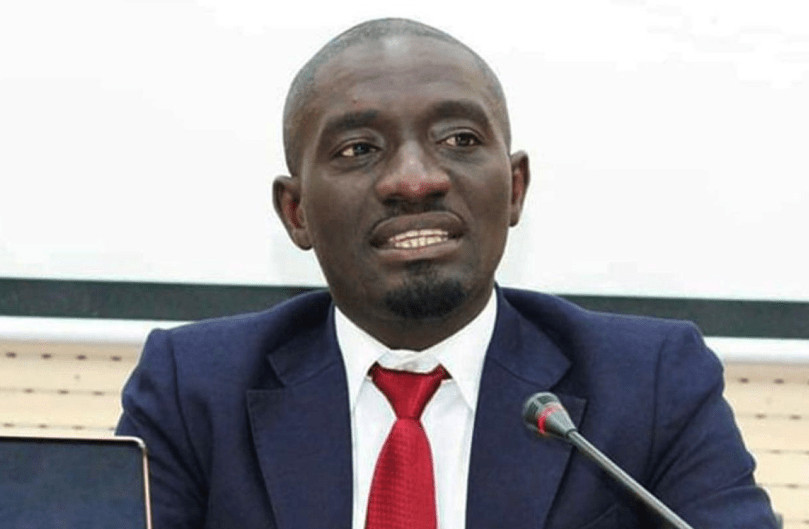
State–Employer–Union commitments: Olivier Boucal takes stock of Year I of the Social Stability Pact
The Minister of Civil Service, Labor and Public Service Reform, Olivier Boucal, took part this Tuesday in the government’s “Kàddu” press conference. He took stock of the first year of implementation of the Social Stability Pact, concluded between the State, trade union organizations and employers.
Returning to the context of its implementation, the minister recalled that this pact was signed on May 1, 2025. It is marked by consultations between the social partners and the government.
“In the search for consensus, the Prime Minister recommended that we work together,” he explained. According to him, the approach adopted was resolutely participatory, involving both workers and employers. “The pact is not unilateral. The government has made commitments, as have the unions and employers. These are common commitments,” he insisted.
In total, 87 commitments were made to trade unions and employers’ organizations. In detail, the government has committed to 10 measures relating to the working environment, 13 relating to economic and social policies, and 21 concerning the improvement of working conditions. Several key sectors are concerned, notably education (5 commitments), higher education (6), as well as health, local authorities, culture and transport. Fifteen commitments also relate to administrative reform.
These commitments, planned over a period of three years, were broken down into 50 concrete activities relating to social dialogue, labor law and social security. “They couldn’t be done immediately. They had to be structured, budgeted and planned over time. Our approach was scientific, with a budget and a precise timetable for each activity,” said the minister.
In terms of implementation, the first year was devoted to the installation of steering mechanisms, with the creation of two bodies: a strategic committee and a technical committee. Furthermore, social dialogue committees will gradually be installed in all departments.
The minister also highlighted several legal reforms already underway. In the education sector, decrees were adopted to correct the inequalities that affected decision-making staff, putting an end to a situation long considered unfavorable. In the field of health, measures have made it possible to reorganize the professional hierarchy, in particular with the reclassification of senior technicians and the clarification of the positions of nurses.
In addition, draft texts relating to the Labor Code and social security were adopted by the Council of Ministers, while the reform of the general status of civil servants – inherited from the era of Léopold Sédar Senghor – is currently in the preliminary draft phase, as it is considered obsolete.
The minister did not fail to underline the scale of the challenges, particularly in terms of social protection. “In Senegal, the informal sector concentrates more than 80% of the active population, the majority without social protection, health coverage or retirement pension,” he recalled.
On the financial level, he indicated that the internal debt, considered significant upon their arrival, had begun to be absorbed. “In just one year of application of the Pact, 800 billion CFA francs have already been cleared,” he said.
Finally, Olivier Boucal welcomed the results obtained in one year, mentioning concrete progress in several sectors. Among these, he cited the reform of justice, with the reclassification of student clerks, as well as significant progress in the field of health, in particular through the reclassification of senior technicians.
Through this Social Stability Pact, the government intends to consolidate social dialogue and sustainably improve the working and living conditions of the Senegalese.
