
Governance and exemplarity: Ousmane Sonko sets the pillars of patriotism
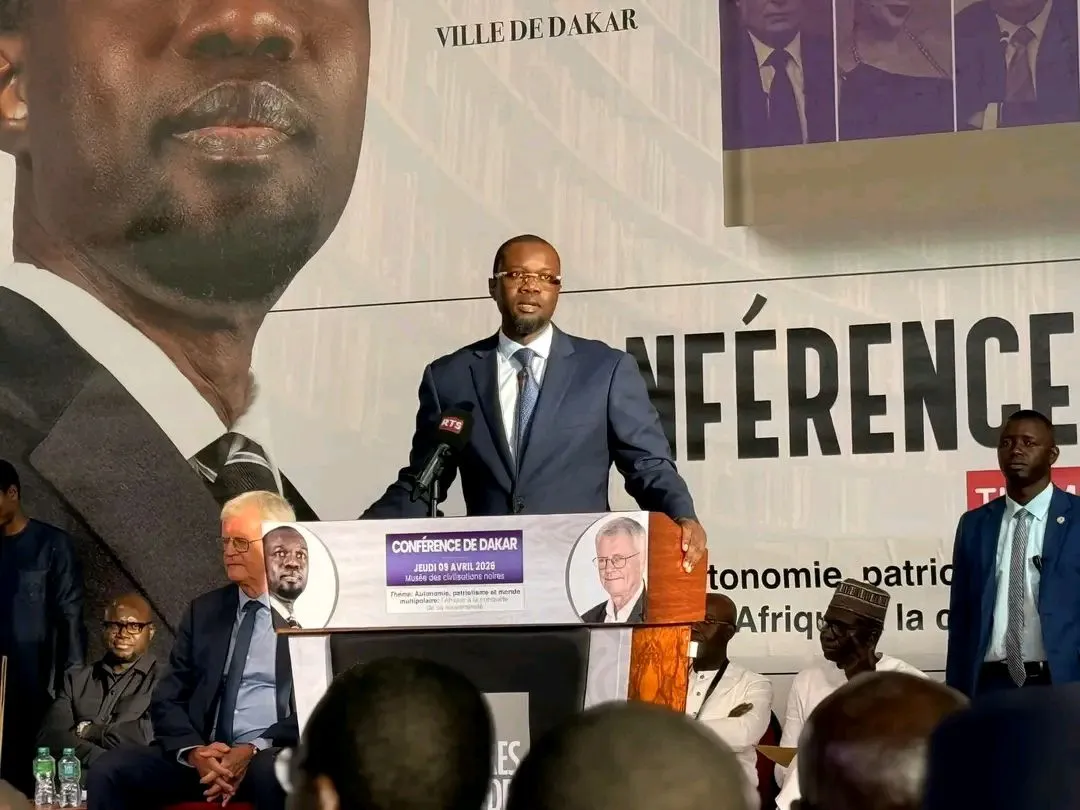
Prime Minister Ousmane Sonko highlighted, Thursday in Dakar, virtuous governance and the exemplary nature of elites as the foundations of “responsible and transformative” patriotism, essential to the consolidation of national sovereignty.
Speaking at a conference moderated by French geopolitologist Pascal Boniface, around the theme “Autonomy, patriotism and the multipolar world: Africa conquering sovereignty”, the head of government insisted on the need to anchor patriotism in concrete practices, far from incantatory speeches.
“Transparency, responsibility and the exemplary nature of elites must be at the heart of our sovereignty project,” declared Ousmane Sonko, rejecting any form of sovereignty “without a social base or popular support.”
According to him, patriotism must no longer be “an empty word” or a simple “exaltation of the flag”, but a demanding commitment linking governments and citizens around shared values and rigorous management of public affairs.
In this regard, the Prime Minister stressed that sovereignty cannot be limited to proclamations. “It is built, financed, organized and defended,” he insisted, calling for a profound transformation of economic and social structures to make the State a true instrument of emancipation.
Economic and institutional levers
In front of a large audience at the Museum of Black Civilizations, Ousmane Sonko outlined the main levers of this sovereignty, notably the promotion of local production, the transformation of extractive resources – oil, gas and phosphates – as well as the control of value chains.
He also warned against “intellectual dependence”, pleading for cognitive sovereignty allowing African states to design their public policies according to their own realities.
Addressing the issue of debt, the head of government called for a global consensus for a moratorium, in order to promote structuring investment on the continent.
In an international context marked by the emergence of a multipolar world, he advocated “strategic realism”, inviting Africa to diversify its partnerships without reproducing the logic of dependence. “Changing partners does not guarantee sovereignty if the logic remains the same,” he warned.
African unity and youth mobilization
The Prime Minister also insisted on the need to strengthen African unity, believing that no State can weigh alone on the international scene. He called for a pooling of forces through instruments such as the AfCFTA, while pleading for a consolidation of ECOWAS through dialogue.
Placing youth at the heart of this dynamic, Ousmane Sonko described them as “a force to be organized”, emphasizing the importance of their training and mobilization to meet demographic and economic challenges.
“The new Senegal does not ask for any permission to be sovereign,” he said, calling for patriotism to be a true compass for public action.
For his part, Pascal Boniface highlighted the emergence of the “global South”, a group of countries aspiring to full sovereignty and more balanced international relations.
SG
