
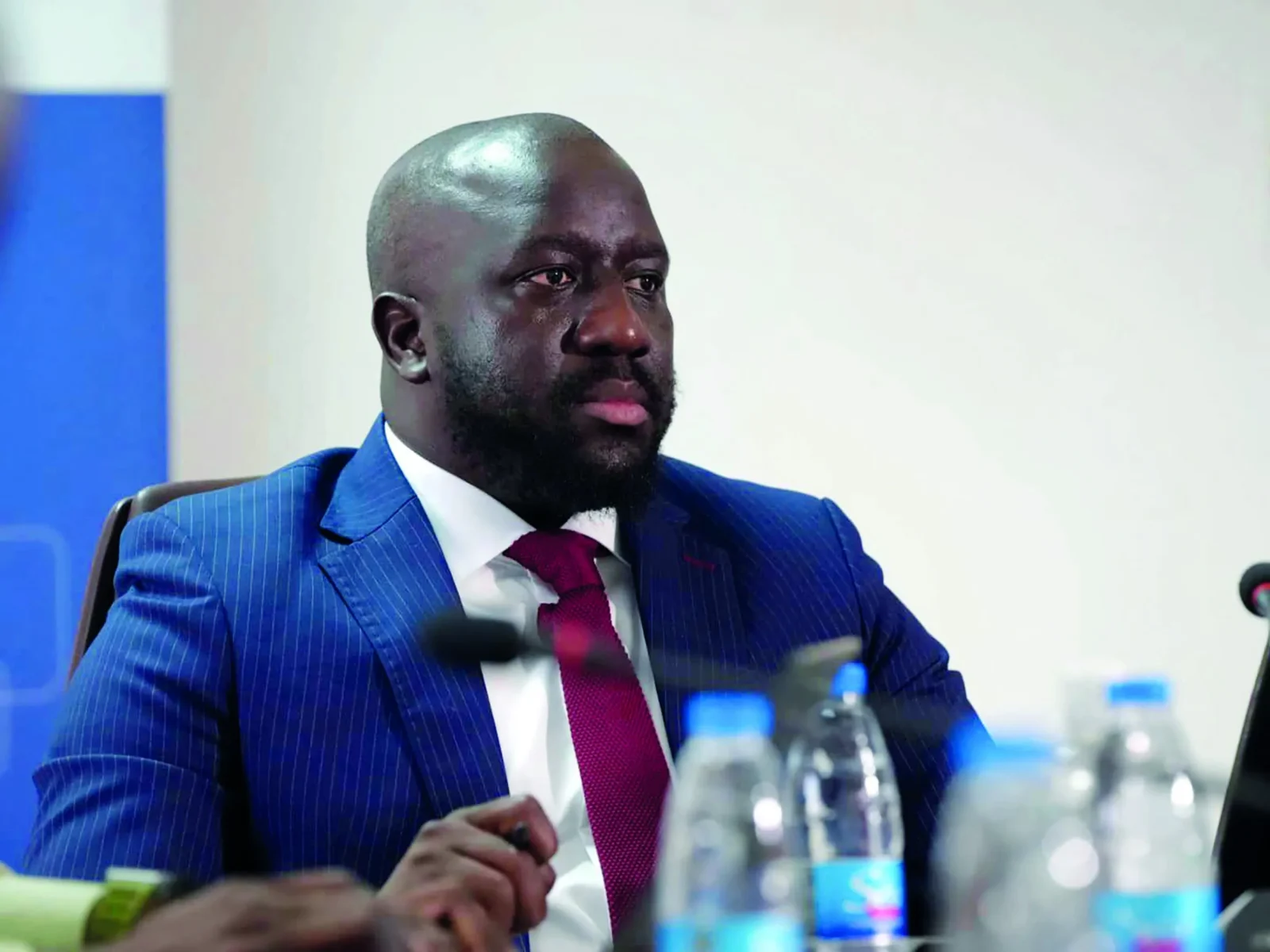
Digital: Kolda’s “shock”
From a humiliating connection cut for 75,000 students, a national ambition was born: satellite sovereignty and broadband for all. Traveling to the Open Digital Space (Eno) in Kolda, the Minister of Communication, Telecommunications and Digital Affairs, Alioune Sall, sealed a campaign promise: no student will ever again be left in the digital dark. Story of an acceleration forced by the social emergency.
The air is heavy in Kolda, but the atmosphere at the Open Digital Space (Eno) is electric. Faced with students, administrative authorities and partners, Alioune Sall does not deliver a simple speech for the occasion. It tells a story of genesis. That of a trigger born in the cozy corridors of the first councils of ministers of the new regime. It all starts with an announcement that sounds like an admission of helplessness.
Also read: Kolda: Fouladou connects his youth
Abdourahmane Diouf, then Minister of Higher Education, revealed the unthinkable: the 75,000 students at the Cheikh Hamidou Kane Digital University (UN-CHK) were disconnected. The reason? A slate of 1.5 billion FCFA unpaid to a private operator.
“This announcement shocked me so much,” confides Alioune Sall, his voice calm but firm. “To think that in 2024, we could deprive the future of this country of connection because the State did not pay…, that was unacceptable.” For these “virtual” students, whose campus is a screen, the cut is not an inconvenience: it is an exclusion from knowledge.
The satellite as a weapon of opening up
This shock served as a catalyst. What was only an idea in the pipeline of the ministry has become a national priority: satellite connectivity. No more dependence on capricious terrestrial infrastructure or exorbitant bills from traditional operators. The State has decided to go to the stars to bring knowledge back to earth.
The objective is clear: by May, the national tour will visit the 18 Enos in the country and all the universities. But ambition doesn’t stop at university. “Digital technology will be a lever for economic and social development, a high-impact accelerator,” the minister insisted to an attentive audience.
2027 in sight: the school of tomorrow
The project displays dizzying figures. If students are first served, National Education follows closely. Of the 6,500 establishments identified, 5,000 are already in the sights of the deployment plan. The 2027 horizon is set as the tipping point: each “learning layer” in Senegal, whether in the fury of Dakar or the calm of Casamance, must have the same broadband as in developed countries.
By leaving the podium, after greeting the governor and the local authorities, Aliou Sall leaves behind more than a technical promise. It establishes the idea of a rediscovered digital sovereignty. In Kolda, the message has been sent: the future of Senegal will never again be “offline” due to non-payment.
