
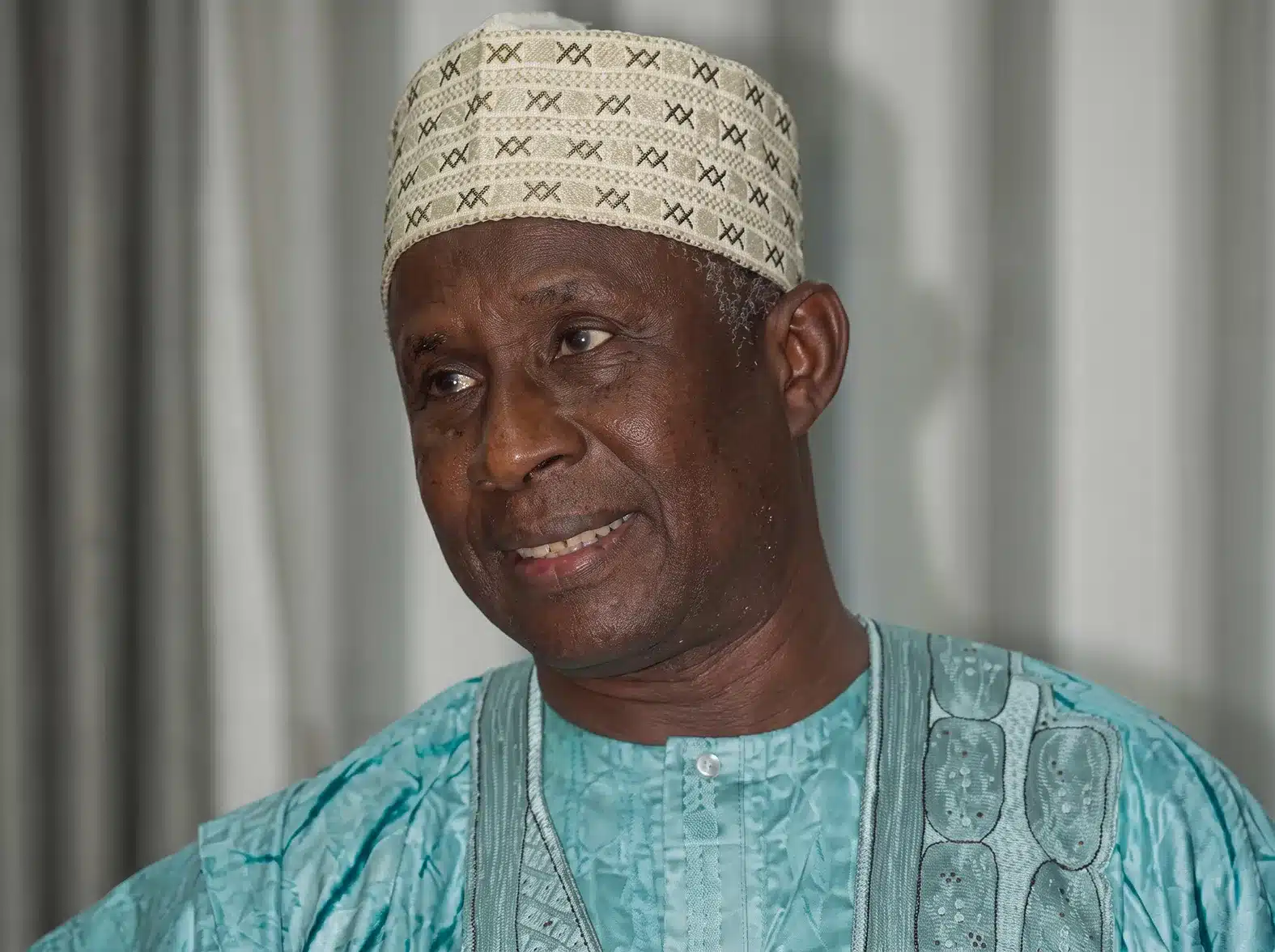
Souty Touré, the “father” of regionalization July 7, 2026
Mayor of the commune of Tambacounda from 1997 to 2009, Souty Touré is not only known for being the one who served the longest term after his predecessor, Moussa Diallo. Above all, he remains a key player in decentralization, widely recognized as the “father” of Act 2 launched in 1996.
TAMBACOUNDA – “Born in 1947 in Bantantinting, in the commune of Néttéboulou, Souty Touré marked the history of Tambacounda through his commitment, his integrity and his vision of the common good. Mayor of the commune of Tambacounda, he exercised his mandate with a deep conviction in public service. Throughout his teaching, he placed people at the heart of his municipal action,” confides Seydou Nourou Cissokho, one of his former students and today special advisor to the governor of Tambacounda.
Souty Touré spent 12 years at the head of the municipality of Tambacounda. Elected for the first time in 1997, replacing Moussa Diallo, this man of dialogue and fine connoisseur of local realities has gone through political mutations and social transformations. He finally handed over the town hall to Oury Bâ in 2009.
His school career began in 1953 at the French school of Néttéboulou. In 1959, he obtained his Certificate of Studies and passed the entrance exam for sixth form in Tambacounda. Subsequently, he was sent to the technical college of Saint-Louis, in the sixth industrial class, where he studied until 1963. It was there that he took the Brevet d’études du premier cycle (Bepc) exam and obtained it despite his studies in the technical sector.
In 1976, he passed the entrance exam to the National School of Administration (Ena). After his training, he began his career at the Ministry of Equipment alongside Adrien Senghor, before being assigned to the Air Navigation Safety Agency (Asecna).
From Néttéboulou to ministerial functions
The year 1993 was particularly intense for Souty Touré. He was appointed Minister Delegate in charge of Decentralization with the promise of obtaining a full ministry if he succeeded in his mission. This promotion took place in a tense political context, where the power in place had just lost two or three large cities, including Dakar.
Enthusiastic and determined, the child of Bantantinting will write the most beautiful pages of this ministerial department by creating his masterpiece. In 1996, he developed the Local Authorities Code. This text creates the regions as well as the district municipalities of Dakar and Rufisque, a strategy allowing the government to keep control of the Dakar region where the Socialist Party (PS) had become a minority.
This 1996 reform, adopted unanimously by the National Assembly, remains its greatest pride. Countries like Niger, Mali and Burkina Faso were inspired by this Code.
“What they called grassroots development communities are our rural communities,” he emphasizes. According to him, “the Senegalese approach was to combine development and planning for the deployment of dedicated public services in order to satisfy the aspirations of the populations and strengthen the democratic process”.
Now aged 78, Souty Touré has withdrawn from the active political scene to devote himself to his land in his native village. An activity that he carries out with passion.
