
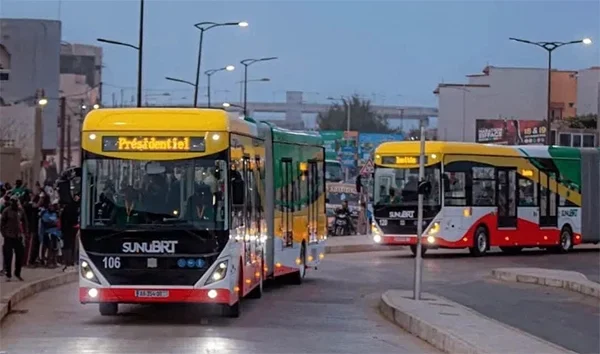
Environment: between 53,000 and 60,000 tonnes of CO2 reduced with BRT
Bus Rapid Transit (BRT) avoids the emission of 53,000 to 60,000 tonnes of CO2 each year, compared to a similar fleet running on fossil fuels. This is what emerges from the new report published on October 6, 2025, by Deep Decarbonization Pathways (DDP) on the occasion of ten years of the Paris Agreement.
In terms of emissions, the BRT’s all-electric fleet is expected to reduce or avoid between 53,000 and 60,000 tonnes of CO2 per year compared to what similar buses running on fossil fuels would emit.
Also read: At the UN, Bassirou Diomaye Faye pleads for a just and equitable climate transition
According to the Deep Decarbonization Pathways (DDP) report released on Monday, the game-changing factors are as follows. This includes a political decision taken at the national and municipal levels to prioritize clean mobility. But also, a public-private partnership structure which mobilized significant international financing in order to reduce financial risk.
The technological availability of high-capacity electric buses (130 buses) and charging infrastructure (23 stations) capable of serving large flows are also measures that have mitigated this emission.
The same goes for regulatory harmonization (reserved lanes, restructuring of the integration of the informal sector; and a strong public discourse on congestion, air pollution and climate impacts.
22,387.43 Gg of CO₂ emitted by Senegal in 2018
“Although BRT does not yet generate all the expected emissions savings, its design and implementation are fully consistent with what is needed for a national transition to carbon neutrality: electrification, modal shift, infrastructure planning, regulatory reform, inclusive access and institutional coordination,” the document states.
Overall, Senegal’s greenhouse gas (GHG) emissions have continued an upward trend over the past decade. This is directly linked to economic growth (+5.3% per year between 2015 and 2024), urbanization (+5% urban population) and the increase in energy demand (+27% over the same period).
Senegal’s BUR (Burden Sharing), published in 2025, estimated total GHG emissions at 22,387.43 Gg CO₂e in 2018.
Yaya Sow
