
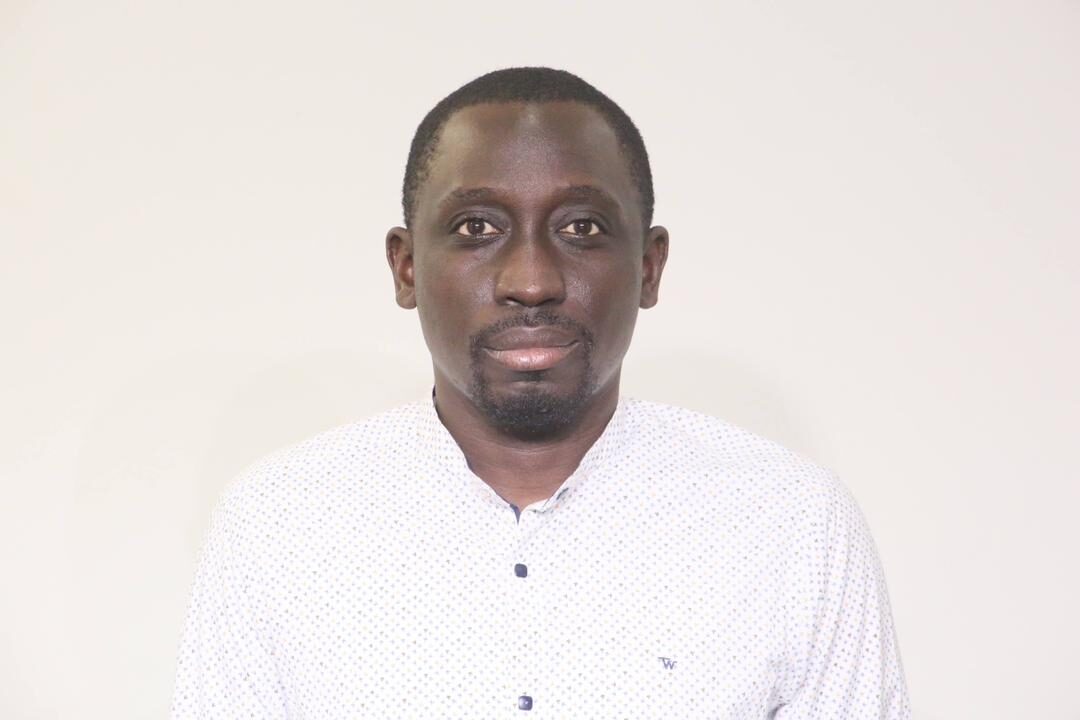
Dr Mamadou Lamine Sarr, teacher-researcher: “With internal opposition, there will, perhaps, be an American policy more anchored on multilateralism”
Teacher-researcher in Political Science at the Cheikh Hamidou Kane Digital University (Unchk), Dr Mamadou Lamine Sarr returns, in this interview, to the new vision of American foreign policy with the military intervention in Venezuela.
Are you surprised by the American military intervention which led to the arrest and exfiltration of Venezuelan President Nicolas Maduro?
The intervention itself perhaps surprised people because we did not necessarily expect an exfiltration of Venezuelan President Nicolas Maduro. In recent months, in recent weeks, we have seen the American military deploy in the Caribbean, sometimes launching missiles. We expected some intervention from the US military either on the ground or remotely, but not an exfiltration like they did with President Maduro.
Does this military intervention by the United States in Venezuela confirm, as the theory of realism teaches, that the world is based on a balance of power?
International relations are analyzed and studied through theories. Each of these theories is only a “prism” of reading. Now, over time, as international relations evolve, a theory can be brought to better reflect the nature of the international system. This was the case during the Cold War, particularly after the Second World War when realism was for a long time the dominant theory. As it explains the conflictual relations, the international system on the balance of power, on the perpetual conflict between countries and the importance of the power of the national interest – terms which are dear to realists – we have, today, a form of resurgence, of updating, of reconnection of realism with the realities of the international system. It must be recognized that in recent years, liberalism, a competing theory, has not been doing well, especially with the upheavals experienced by international law. In this sense, realism allows us to understand, today, what is happening through this example. It is the same with the war in Ukraine, the crisis in the Middle East, with the situation in Gaza, and what is also happening a little in the China Sea. Realism explains how force replaces law, how law loses ground in relation to force. This is one of the characteristics of this period. The big question is whether this will last over time or whether, with a change of regime in the United States, we will have another tendency towards cooperation, as was the case with Barack Obama. Even if under the latter, it must be remembered, there were interventions and things that were done by the United States in the Middle East, in Afghanistan, in Pakistan.
Isn’t this new way of doing things in the United States fraught with danger for the world?
This form of unilateralism or the rejection of multilateralism, this form that Donald Trump and his acolytes of making foreign policy by putting forward the interest of the United States with the use of force, as in Venezuela, can be a threat to peace and international stability. Especially since it is the leading world power which does so and which is the guarantor of several international organizations which are there to guarantee cooperation, peace and international stability. Such acts can only harm cooperation, international law and, by extension, international peace and stability. Currently, it is up to other states, European, Asian, African, Latin American, to take responsibility for this situation. Multilateralism can and must survive this so as not to fall back into a phase that we experienced between the wars and which led to the Second World War. This is the whole challenge today of the international system. It’s also how to ensure that we don’t fall back into the mistakes of the 20s and 30s, which led to the deadliest war to date. In my opinion, this is a challenge that will be difficult to meet and which will depend, in part, on American domestic politics. If Donald Trump has no opposition, as is currently the case with the Democratic Party which is not as strong, this can complicate the task. But, if there is some internal opposition, if Congress plays the role assigned to it, there will, perhaps, be a way out of a calmer, more anchored American policy centered on multilateralism. But, if Donald Trump still has a clear path and can make decisions against Congress or without its approval, as was the case on Venezuela, this could threaten peace and stability. Especially since countries like Russia or China will be able to reproduce the same effect and the justifications will be the same. With the intervention in Venezuela, Russia in Ukraine, China in relation to Taiwan, other countries may, one day, adopt the same approach, have the same policy and also justify themselves in relation to this.
Some have spoken of the return of the Monroe Doctrine which made Latin America a preserve of the United States. What could be the consequences if President Trump brings this doctrine back to the forefront?
The Monroe Doctrine, in my opinion, has never disappeared from American foreign policy. Latin America and the Caribbean have always been an area of American influence, whether after the Second World War with the various military dictatorships that raged in this region, often with the support of the American government. I am thinking in particular of Argentina and Brazil. Panama and Honduras, countries in Central America, have always been extremely important areas of influence of the American government since almost the beginning of the 20th century, and even the 19th century. The Monroe Doctrine has evolved and, at one point, strongly underpinned American international policy in this region. It was sometimes put on the back burner, particularly in the 2000s with the September 11 attacks which caused the United States to turn away a little from this region to concentrate on the Middle East, Iraq… It is no coincidence that it was during this period that China made big advances in this region to compete directly with the United States. Apart from this episode which also needs to be tempered a little, the United States has always perceived Latin America as its zone of influence. The novelty, perhaps, would be that with Donald Trump, it is a return to basics. A return to this vision saying that “we intervene in Latin America when we want”. I think it doesn’t just stop at Latin America. Today, this phenomenon can affect any state in the world, Latin America or not. This is where African countries like ours must have a certain analysis of what has just happened. This means that we must make decisions, have some reflection on our strategies, on our alliances and say to ourselves that the same thing can happen today in an African country which no longer meets the interests of the United States of Donald Trump. Won’t we see an intervention to remove a President or Prime Minister who is in office? This is a reflection that our countries must have, even if, currently, the trend does not show a real African positioning on this issue. Yes, the Monroe Doctrine is making a comeback with President Donald Trump. But the vision of the American president goes even beyond that of Monroe who focused on Latin America and considered that Europeans should take care of their affairs in Europe and leave the Americas to the Americans. In addition, the Americans tell themselves that they can hit anyone, anywhere and at any time. It really is a generalized Monroe Doctrine in relation to the rest of the world.
Interview conducted by Oumar NDIAYE
