
Cannes 2026|“I am proud to be a refugee”: the lesson of “Congo Boy”
Selected in the official “Un certain regard” section, the film “Congo boy” was a huge success and made an impact at the 2026 Cannes Film Festival.
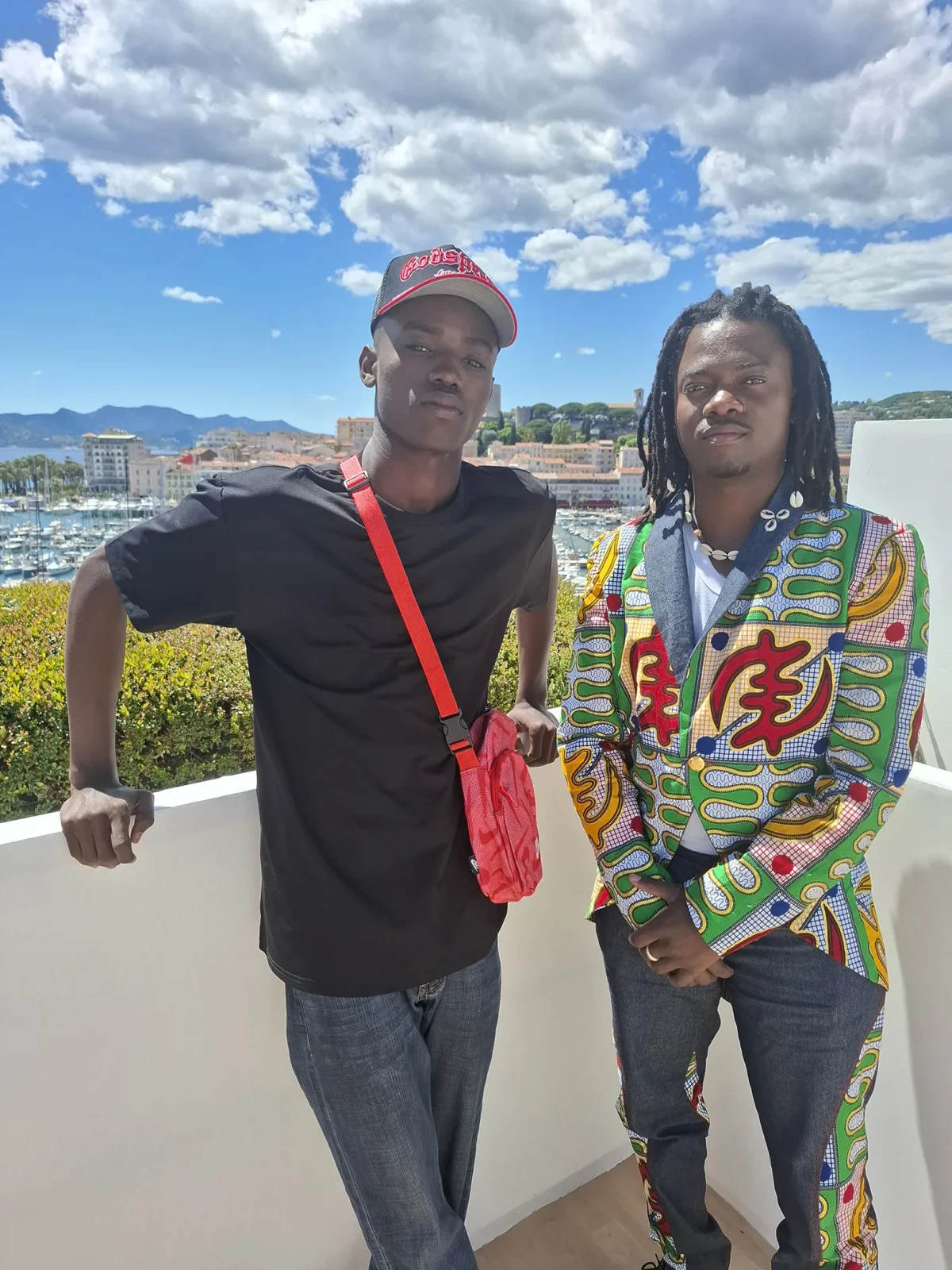
The rapper musician who also became a filmmaker Rafiki Fariala tells his own story in the film “Congo Boy”: born in the east of the Democratic Republic of Congo, he had to flee the war with his parents. They settled in Bangui in the Central African Republic and that’s where he grew up. But he was always considered an outsider. As the title of the film indicates, he claims to be a young person like the others, with the only difference being that he was born in the Congo. The film is gripping, punctuated by the songs written by the director and a thrilling story mixing hardships and resourcefulness. A success, both deeply anchored in reality and autonomous in its approach, beyond any cliché. With its main actor Bradley Fiomona and those of the team who were able to join them despite visa problems, they experienced the screening as a collective consecration. “It’s a source of great pride,” underlines Bradley, recalling the rarity of such a journey for a Central African film.
Rafiki insists on the exemplary dimension of this presence in Cannes: “being young, African, we can dream of arriving in Cannes! “. This journey is also the fruit of a long apprenticeship, begun with documentary workshops in Bangui, then confirmed by his first feature film “We, Students!” », selected in Berlin. The writing of “Congo Boy” was built in close dialogue with the French screenwriter Tommy Baron. Rafiki says: “I wrote in the first person, I just told my life story”. Together, they transformed this raw material into fiction, while preserving its authenticity. This approach is found in Bradley’s playing, nourished both by the scenario and improvisation: “we tried to improvise with a certain freedom”.
This hybridization between writing and spontaneity, inherited from documentary, gives the film its strength and its truth. At the heart of the story is a typical generational conflict: between parental expectations centered on studies and the personal aspirations of the young hero. Rafiki evokes “a confrontation between the new and the old generation”, while pleading for listening to children’s dreams. The film also explores family solidarity, particularly through the relationship between the main character and his sister, as well as everyday scenes mixing humor and modesty, such as that of sanitary napkins, a hilarious scene revealing “shyness, innocence, shame”.
Challenging social reality
But “Congo Boy” above all describes a trying social reality, where “everyone wants to scrape away” from the hero’s meager resources. In this universe, only friendship and music offer support. Despite everything, Rafiki claims a message of hope: “even if there are difficulties, some manage to get through it”. The question of refugees is central. Rafiki recalls: “I did not choose to be a refugee”. He describes a paradoxical condition: “you are free… but you are a prisoner”, hampered by administrative constraints and the absence of recognition. He emphasizes a reality that is often invisible: intra-African movements, which sometimes extend over several decades of precariousness. His own experience, hidden for a long time, was a source of suffering, between stigmatization and threats.
Even today, despite his refugee status in France, he notes that “it’s always the same thing”, but affirms a form of resilience: “I am proud to be a refugee… life is ahead”. The film is intended to be a call to conscience: “no child deserves this”. “Congo Boy” ultimately emerges as much more than a simple film from Bangui. This is striking proof that a young refugee, starting with a mini camera and makeshift workshops, can make his way to Cannes by telling his life story, without smoothing it out or distorting it.
This fiction nourished by documentary, carried by the energy of Bradley Fiomona and the stubborn lucidity of Rafiki Fariala, transforms hardship, fear and exile into a desire for cinema – and a desire to live.
We leave the screening with the feeling that a door has opened: for Central African cinema, for the stories of refugees, but also for all African youth to whom the film whispers, very simply: dreaming is a right, and sometimes, it works.
By Olivier BARLET
