
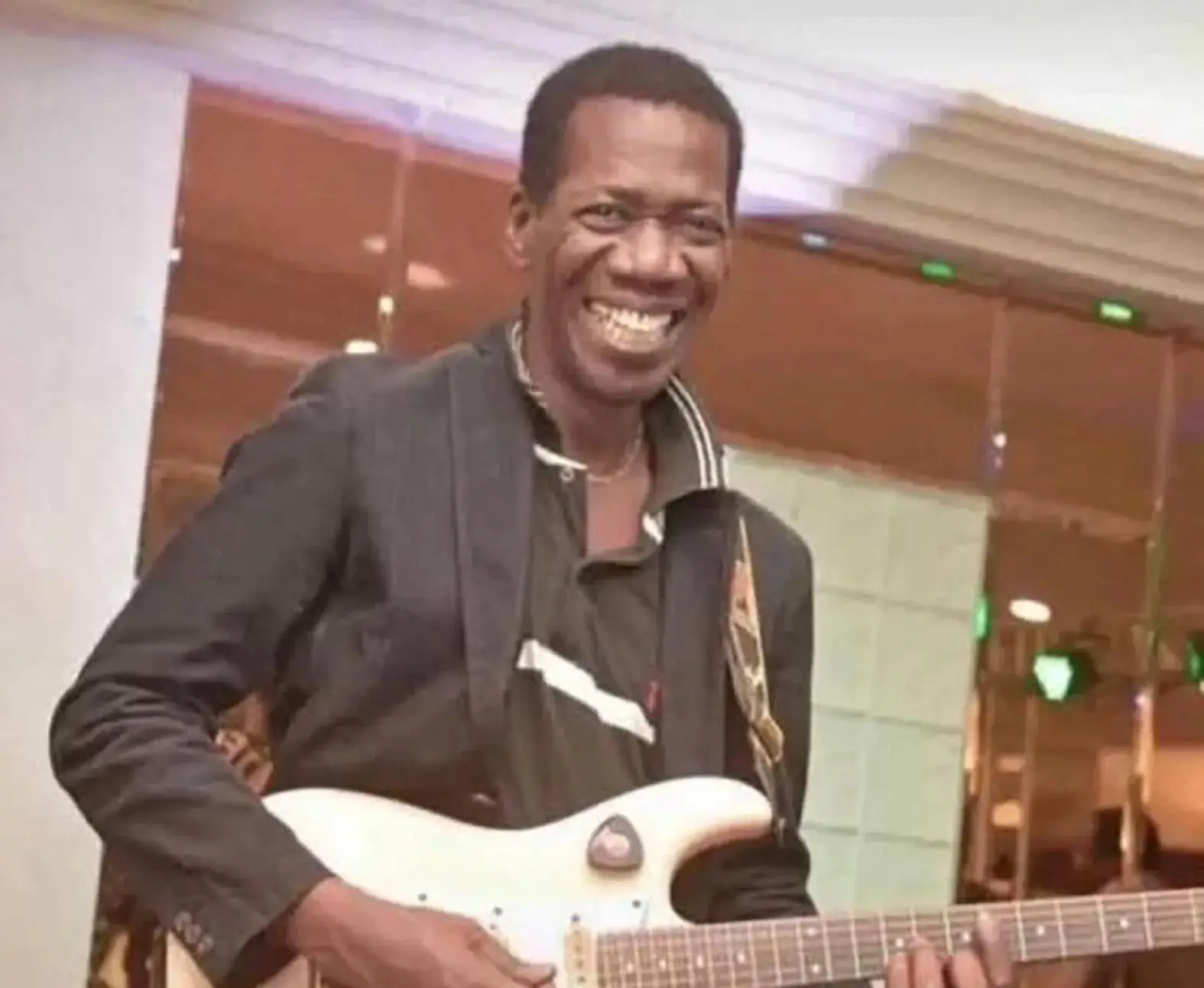
An explosive intro by Assane Ndoye Cissé known as “Dingouss”
The introduction to “Dépense” is one of those musical sequences that fans of Senegalese music recognize from the first notes. Even before Coumba Gawlo’s voice rises, the guitar imposes a particular atmosphere, at once soft, melancholy and catchy. This cult entry bears the signature of an exceptional musician named Assane Ndoye Cissé, better known under the nickname Dingouss.
If the general public especially remembers the vocal performance of Coumba Gawlo, the musicians know that the sonic identity of “Dépense” is also based on this guitar work of rare finesse. Dingouss places there everything that made him strong. In reality, it is a matter of great technical mastery, a keen sense of melody and above all an ability to create musical phrases that remain engraved in the memory. More than twenty-five years after its release, the introduction to “Dépense” remains one of the most famous in contemporary Senegalese music. But to reduce “Dingouss” to this single song would be to forget the magnitude of its legacy. For several decades, he was one of the most sought-after guitarists in Senegal. His guitar has accompanied some of the country’s greatest voices and helped shape the sound of modern mbalax.
Alongside Baaba Maal, he participated in the adventure of “Dandé Leñol” and left his mark on several titles that have become classics, notably through the famous introduction to “Deliya”, often cited among the most beautiful guitar sequences in modern African music. “Dingouss” also works with Viviane Chidid, Wally Seck, Fallou Dieng and many other artists. Everywhere he goes, his guitar brings a special color. Singers change, styles evolve, but his touch remains recognizable between limpid chords, elegant melodic lines and a rare ability to highlight a song without trying to occupy all the space. Musicians often speak of the “Dingouss sound” to designate this unique way of bringing the guitar into dialogue with the percussion of the mbalax. His playing borrowed from several Senegalese musical traditions while remaining profoundly modern.
He knew how to make his instrument sing and give it a central place without overshadowing the main voice. This is where the greatness of “Dingouss” lies. Unlike singers who naturally occupy the front of the stage, he built his reputation in the shadows of studios and orchestras. However, his influence is immense. Generations of Senegalese guitarists have been inspired by his phrasing, his sense of rhythm and his approach to accompaniment.
When he disappears in September 2024, Senegal loses one of the artisans of its contemporary musical heritage. A musician whose name was not always known to the general public, but whose notes continue to resonate in timeless songs. And among all these works, the introduction to “Dépense” remains, without doubt, one of the most beautiful calling cards of “Dingouss”.
A. KÉBÉ
