
Agriculture in Casamance: In Niaguis, Japan and UNDP sow the seeds of the agriculture of the future
Soon drones in the sky, smart sensors in the fields and a huge ultra-modern greenhouse in the middle of the fertile lands of Niaguis. In Casamance, the government of Japan and the United Nations Development Program (UNDP) want to bring Senegalese agriculture into a new era.
ZIGUINCHOR– The discreet whir of a drone sometimes replaces the noise of traditional tools in the fields of Niaguis. In this town located not far from Ziguinchor, agriculture is gradually taking on the appearance of an open-air laboratory. Under stifling heat, young people curiously observe the technological demonstrations organized at the Moustapha Diatta educational farm.
This has become one of the symbols of intelligent agriculture in Casamance. Thanks to funding of 440 million FCFA from Japan and the UNDP, this project relies on new technologies to increase yields, strengthen climate resilience and above all offer young people a reason to believe in the future in their land.
On this farm built on several hectares, nature and technology now advance hand in hand. A vast greenhouse of several square meters sits in the middle of the farm. Indoors, crops grow protected from insects, violent rains and high heat.
Also read: Cashew in Senegal: Enormous potential to be exploited
Smart sensors analyze plant needs and enable more precise management of water and agricultural inputs. It is within this framework that the Government of Japan and the United Nations Development Program presented the results of this ambitious program which intends to revolutionize the agricultural sector in this sector. For the Japanese ambassador to Senegal, Akamatsu Takeshi, this initiative goes far beyond the agricultural framework.
According to him, after the demining efforts carried out in Casamance, the challenge now consists of transforming these secure lands into spaces of production and sustainable economic opportunities.
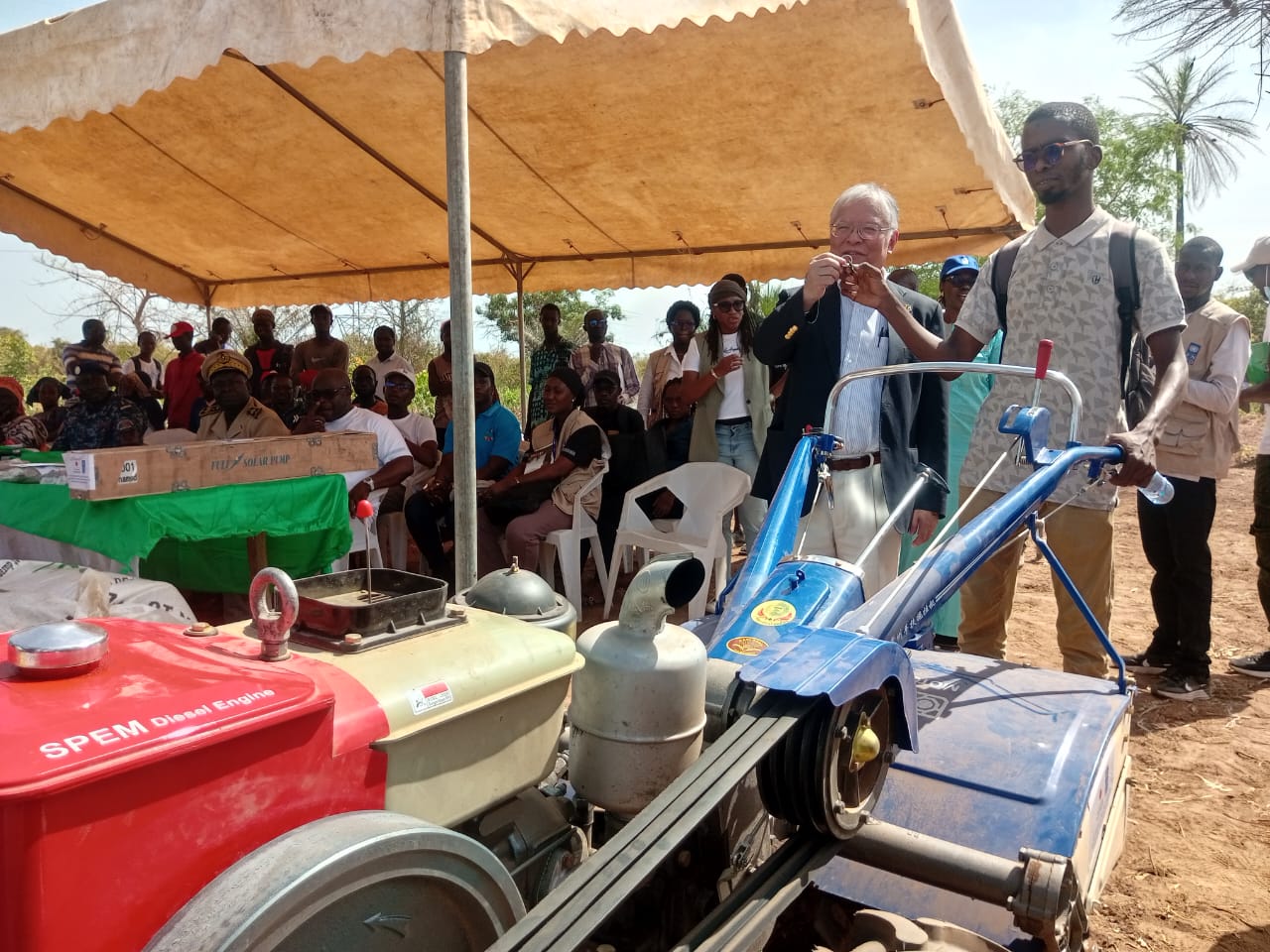
“Japan is already supporting producers through the supply of tractors, tillers and the transfer of rice technologies via JICA in order to improve seed quality and crop management. Thanks to data from Japanese technologies, it becomes possible to provide water and inputs in optimal quantities at the right time,” said Akamatsu Takeshi.
Continuing, the Japanese diplomat recalled that artificial intelligence, drones and digital tools not only improve yields, but also make “agriculture more modern and more viable for younger generations”.
Rethinking the agriculture of tomorrow
At the educational farm, Moustapha Diatta and his family are already measuring the concrete effects of the project. The latter believe that the new greenhouse and intelligent equipment will allow them to “produce more while protecting crops against climatic hazards”. For his part, the sub-prefect of the district of Niaguis, Massamba Mbaye, praised cooperation which he considers “exemplary between Senegal, Japan and UN partners”.
According to him, digital technology and smart technologies today constitute “essential tools for modernizing Senegalese agriculture and better managing natural resources”. Same optimism from the resident representative of the UNDP in Senegal, Njoya Tikum, who considers that the experience of Niaguis could serve as a reference for other regions of the country, in a context where agriculture remains “an essential pillar of African economic development”.
In Niaguis, hope now grows at the pace of technological innovations. In this land of Casamance, long weakened by crises, drones, intelligent greenhouses and new agricultural methods are gradually shaping the face of an agriculture capable of feeding, employing and retaining its youth in their lands.
