
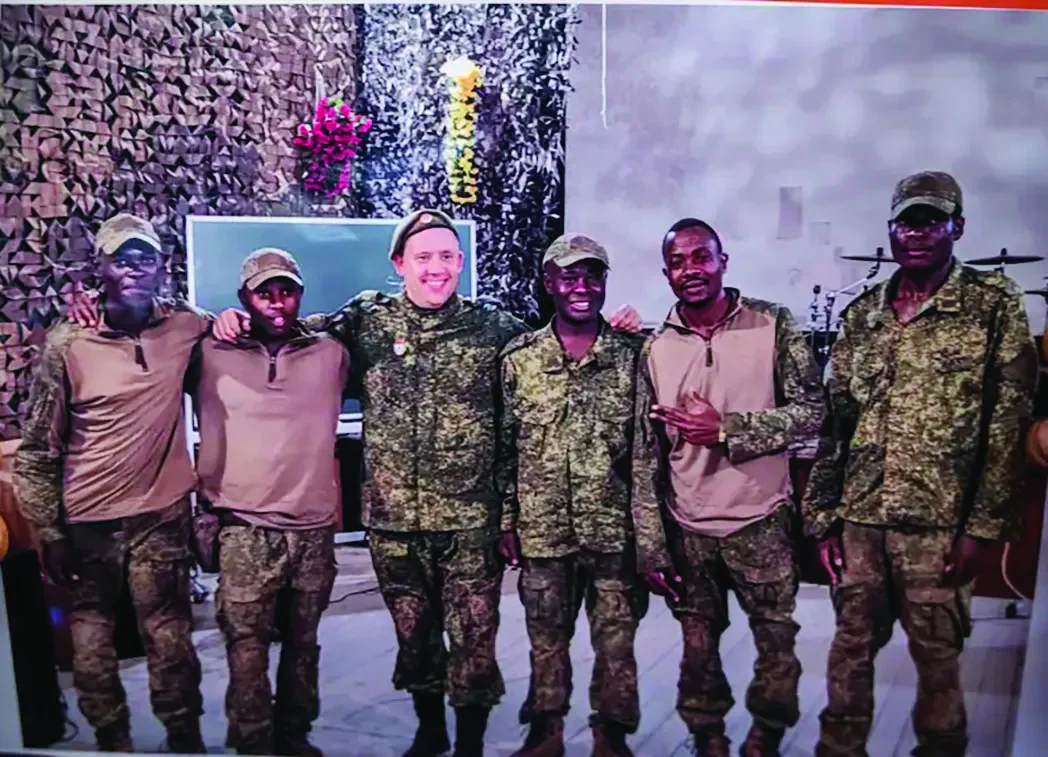
African nationals in Russian forces: An Inpact report lists 1,417 recruits including 14 Senegalese
A report published by Inpact highlights the extent of recruitment of African nationals into the Russian armed forces and associated private military companies. The study, dated February 2026, identifies 1,417 recruits from the African continent and reveals a marked concentration in North and West Africa, while raising questions about the reliability of certain administrative records.
Inpact, a Swiss NGO at the intersection of open source research, traditional investigative journalism, forensics and technical investigation, has just published a report on the recruitment of African nationals within the Russian armed forces and associated private military companies. According to the document entitled “Recruitment typology and chosen profiles”, the largest contingents come from Egypt, Cameroon and Ghana. The report lists 361 Egyptian recruits, 335 Cameroonians and 234 Ghanaians. Behind these three countries are Algeria and Gambia with 56 nationals each, Mali with 51, Kenya 46, Nigeria 36, South Africa 32, Morocco 28, Senegal 14 and Ivory Coast 11. Inpact emphasizes that these data make it possible to identify “significant trends in terms of geographical provenance”, highlighting a strong representation of North and West Africa in the numbers recorded. The report specifies that “the average age observed among African recruits is 31 years”. A notable proportion belongs to the 18-25 age group with 150 nationals recorded in this category. The study indicates that the youngest identified is a Ghanaian aged 18, while the oldest is an Egyptian aged 57. These elements reflect recruitment mainly concentrated on young adults of working age. Beyond the figures, the NGO highlights two particularities in the analysis of the data. Some recruits with Central African-sounding names are declared Algerian nationals. Others appear under Russian-sounding names. The report puts forward a possible explanation for these discrepancies. According to the document, “the most likely hypothesis is that of poor registration of recruits, placing some by default in the first available country starting with the letter A.”
The case of Senegal is also mentioned. Inpact notes that “on one list, there are 14 Senegalese recruits absent on the second list, but visible in the lists of African fighters killed.” An observation which raises questions about the consistency of the databases examined. Through this data, Inpact claims to offer “a detailed overview of the recruitment of African nationals by Russian forces”. While the report highlights distinct geographic patterns and an identifiable demographic profile, it also points to potential flaws in registration procedures. By documenting 1,417 cases, the study sheds quantitative light on a barely visible phenomenon while leaving questions about the administrative mechanisms and the traceability of the recruits identified.
Daouda DIOUF
