
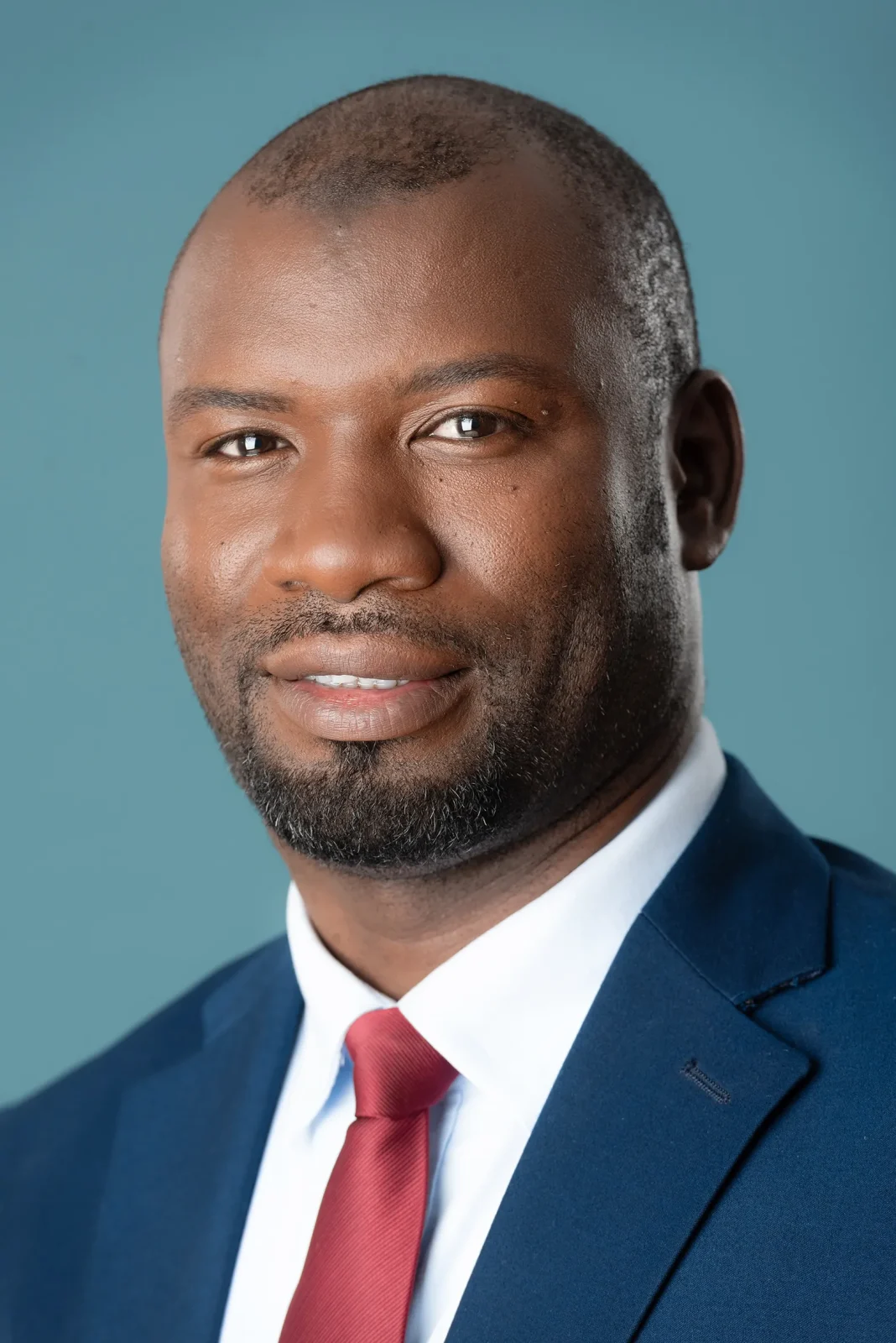
“When we recruit, we give a job…” June 23, 2026
In this interview, the Director of Human Resources at SETER discusses human capital management. According to him, efforts are constantly made through training, strengthening and transfer of skills in order to have optimal exploitation.
At your level, what are the rail operating professions?
At the start of operations, more than 143 professions were listed. But at present, this figure is largely exceeded. So we are perhaps at more than 200 professions.
And the most frequent jobs concern maintenance. It affects everything related to infrastructure, systems and buildings as well as everything related to train maintenance. These are maintenance technician jobs, either for the railway track or for rolling stock in general.
We also have everything that is developing around operating professions, particularly train drivers. In the general context, it is not a new profession, but for the regional express train, with the level of technology, we can consider it as a new profession for us in Senegal. There is no school today where regional express train drivers are trained. So this training is done at our level.
Furthermore, all those who are traffic managers and supervisors are operational professions, which are carried out today at SETER.
These are professions that require fairly specialized expertise. How does SETER work to strengthen its human capital?
You are absolutely right. These are professions that require a good level, a certain technicality. So, jobs for the most part that did not exist here in Senegal.
Moreover, the first to work within the company were rolling stock maintenance technicians. They were, in any case, the first Senegalese recruits. They went to France for six months with the SNCF to be trained because in Senegal, technicians are recruited, but not railway technicians.
As a result, they had to be adapted to railway professions. So, they spent six months in France to be trained and observe, in practice, how rolling stock maintenance is carried out today.
Concerning other professions such as driving, the first to be trained were driving team leaders. Then, they were trained by SNCF experts, who ensured a transfer of skills to trainers, including locally based team leaders. The latter now train train drivers here.
Today there are many professions in which real expertise has been acquired through training, before being passed on to younger generations.
As you said earlier, there are more than 200 new professions. What is certain is that there will be some in the future. Now how does SETER prepare its future talents, its next talents?
At SETER, the particularity is that when you are recruited, already, before even planning for the future, we give you a job, because there are many that are practiced here and, as I said earlier, where there is initial training.
This is the case, for example, of driving, of practically all operating professions at the COF level, in particular that of COF supervisor.
And even for other technical professions, internally, we have what we call the SETER Academie. It’s a training center that equips them and gives them a job.
Even the Traveler Service agents that we supervise follow, upon recruitment, a one-month training course, sometimes less, in order to master the basics of the profession and provide the service.
We constantly plan ahead for jobs in order to anticipate all eventualities. For example, the Joj will soon arrive and we are already anticipating in order to have optimal coverage during this major event.
How are women represented here at SETER?
Currently, we are on a distribution of 40% women against 60% men. That’s a lot of progress, anyway. We are not saying that is enough. We always continue to make efforts.
However, in our recruitments, there is no specific gender choice. For us, it’s talent first. These are the skills that qualify you for the position.
But, at the beginning, the numbers were not at that level. We were on 20, 25%. But there, little by little, we see how women are increasingly embracing the railway profession.
You see, there are quite a few female train drivers. In professions such as equipment maintenance, we now have many women.
They are very brave and bring a lot to SETER. And above all, they combine private and family life with their professional life, which is not easy. Because sometimes our schedules are sometimes restrictive for a mother.
By Demba DIENG
