
“In Moscow, reflection is underway on the future of the Russian presence in Mali” May 14, 2026
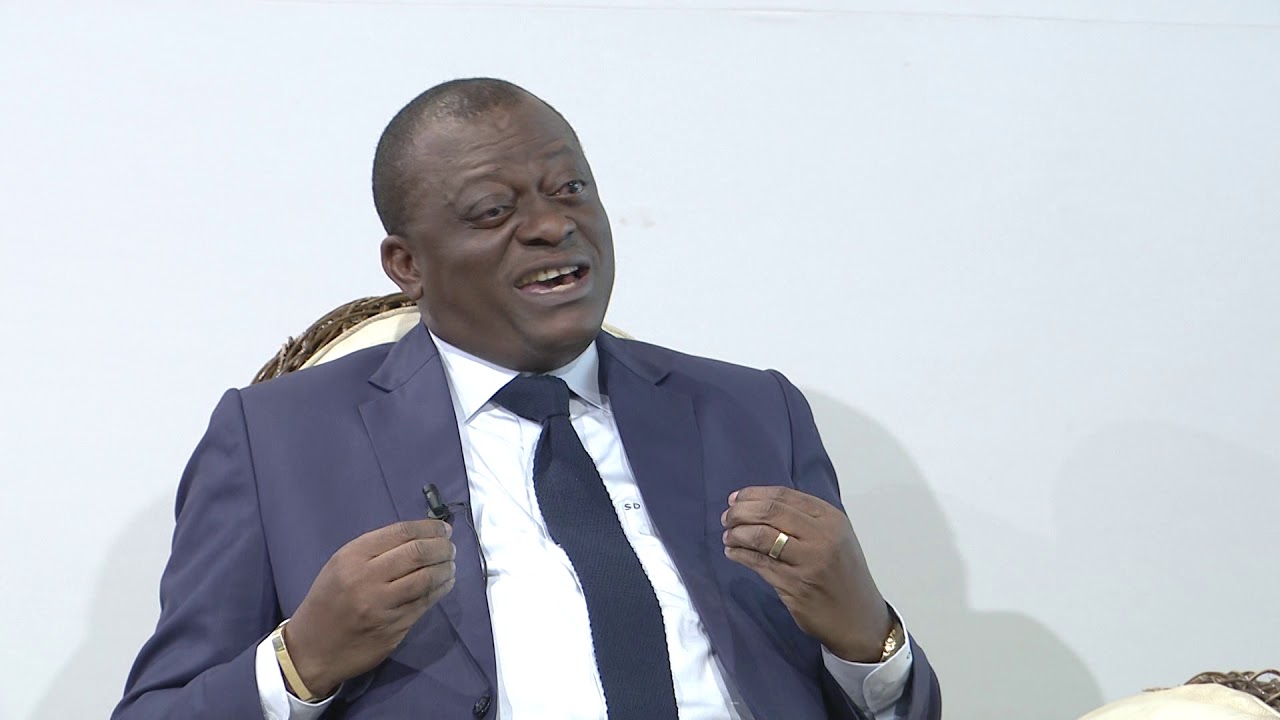
For several decades, Serge Daniel has covered the Sahel region for several media outlets. This makes him a fine connoisseur of the security dynamics underway in this area, mainly Mali. Author of the book “The mafias of Mali: trafficking and terrorism in the Sahel”, he returns, in this interview, to the Malian situation and the future of the Russian military presence in this country.
Since the attack on April 25, there has been a status quo on the military level. Do you believe that the ruling junta has the means to reconquer northern cities like Kidal?
What is certain, barring an evening change, the main objective of the Malian regime is the reconquest of Kidal. In its reference book or breviary, the Malian junta has always presented the capture of Kidal, two years ago, as its main achievement. After leaving Kidal on April 25, without fighting, Russian and Malian troops are today based in Anéfis, about a hundred kilometers from the town. Brigadier General Mamadou Massaoulé Samaké, commander of the Eastern Theater of Operation Dougoukolo, recently visited the site to boost the morale of the troops. It’s clear, the objective is to retake Kidal. I know this region a little. In almost 30 years, I have been there more than 20 times. I have always said that taking Kidal and controlling the city over time are two different things. The city was emptied of its population. I am from a chapel where an ode to dialogue resonates. You have thousands of Malian refugees in Mauritania, in Algeria, for example. You also have thousands of displaced populations. The means to reconquer Kidal can be sought and found. But the real medicine is dialogue. This is my point of view. We need a new breath of fresh air in resolving the crisis. Churchill said that we must not waste the crisis which is an opportunity.
Three years ago, when Russian paramilitary groups arrived in Mali, there was hope in terms of security. What assessment do you draw from the Russian presence?
Russian troops in Mali? The results? I’m speaking to you frankly: it’s perlimpinpin powder! A country that outsources its security does not solve problems, but shifts them. The Malian army is a valiant army. Training her more, acquiring equipment and having a clear vision of what we want to do on the ground would have yielded more results. I have direct testimony from the field. Wagner’s Russian mercenaries committed atrocities on the ground. Some wanted to attribute them to the Malian army. No, it’s not the Malian army, but Wagner. You remember, at the end of July 2024, Russian mercenaries suffered a setback in the Kidal region. A few weeks later, they tiptoed back to recover the bodies of their comrades. They did not for a second think of bringing back those of the Malian soldiers who died at the front. Training assistance and exchanges of intelligence would have enabled the army to deal with the situation. The military in power in Mali have acquired large stocks of military equipment, but drones alone do not solve anything.
Does the partnership with the Russians have a future in view of the latest disappointments on the military level?
Mali is keen on the Russian partnership. That’s for sure. Despite the hiccups, according to my information, there is no breakup at the moment. The president of the transition, General Assimi Goïta, reiterated this recently to an evening visitor. I know that Bamako is eyeing Turkey and China a little, but the strategic partner remains Russia. At least for now. According to the latest news, after the attacks of April 25, Mali even received military equipment and a few dozen men to strengthen the Africa Corps team which took over from Wagner. A concern, because to my knowledge, in Moscow, reflection is underway on the future of its Russian presence in Mali.
General Sadio Camara was presented as one of the pillars of the regime. Could his disappearance weaken the Malian junta?
Big loss for the regime! He played a central role during the 2020 coup d’état. It was he who arrested the presidents of institutions of the old regime, notably the president of the National Assembly at the time. He is one of the actors in the rapprochement with Russia. This is a significant loss for the junta. He is a man with character. I can reveal it now: at the end of 2024, given the differences at the top of the state, he had written a letter of resignation. But in the end, he didn’t present it. He is not a venal man like others. However, at one point, he had lost his influence against General Assimi Goïta. It’s a loss. He had an ascetic side. You notice that the head of the junta also has the title of Minister of Defense. General Sadio Camara was in the National Guard Corps, a component of the army. A bit as if General Assimi Goïta wanted to respect the balance of forces within the great mute, the new chief of staff of the Malian armies comes from the National Guard corps. The jihadists managed to strike in the garrison town of Kati, the most secure place in Mali. There are questions that need to be asked.
Can the alliance between Fla and Jnim hold if we know that the two groups do not have the same objectives?
Your question makes me smile. History repeats itself. The first time in tragedy, the second time in comedy, said the other. In 2012, I remember, two forces were fighting the Malian army: the National Movement for the Liberation of Azawad (Mnla, independence movement) and the Ansardine jihadists. Initially, the international community or at least lobbie groups highlighted the separatists and ignored or pretended to ignore the existence of the jihadists. As a result, the jihadists crushed and ousted the separatists on the ground. And we started by cutting off the hands. There weren’t many of us at the time who said be careful, it’s the jihadists who are the strongest, the most structured on the ground.
Today, with my eyes closed, I tell you, on the ground, the Support Group for Islam and Muslims (Jnim, affiliated with Al-Qaeda) is the main force facing the Malian army. The Azawad Liberation Front (Fla) is the second power. The particularity is that the leaders of those responsible for the two armed movements have family ties. Otherwise the force that has and will have a say in the future is Jnim. Other chapels do not even hesitate to say that between the two armed movements, the dikes were blown up. Let’s wait for the rest…
Arrests of politicians and soldiers have been noted since the attacks of April 25. How do you analyze these imprisonments?
After the April 25 attacks, the public prosecutor at the Bamako military court opened an investigation and announced the arrest of soldiers and civilians involved, according to him, in the design and execution of the attacks. For civilians, many voices were raised to demand their release. Social networks, which are real social sewers, recently published “the confessions” of a retired Malian soldier. He claims that a Malian politician, Me Mountaga Tall, is involved in carrying out the attacks. False, replied the supporters of the well-known lawyer. The process is grotesque. Private accounts which broadcast “confessions” of a repentant arrested by the intelligence services. The string is too thick. I am not close to Mr. Tall, but I know him a little. Let him speak and everyone will be able to form their own religion. It is absolutely necessary to avoid “the night of the long costs”. The arrests take place outside any regulatory framework. Hooded and armed men arrive at a home and leave in unmarked vehicles with the arrested person. It is perhaps necessary to respect the procedure during arrests or questioning.
My feeling? Mali is a great country! If we want to get out of the crisis in Mali, we also need political dialogue. I know there are initiatives underway. Important countries like Morocco are trying to calm the situation. A Malian lawyer, former minister, launches an initiative. On the African level, it seems that heads of state will also launch an initiative… I know from a good source that the President of Congo, Denis Sassou Nguesso, his counterparts from the Ivory Coast and Togo in particular, are working to bring peace back to Mali. Everything military has its limits and “you can do everything with the bayonet except sit on it”. The quote is not from me, but from Talleyrand.
Interview carried out by Oumar NDIAYE
