
Seawater desalination: More than 90% of the work at the Mamelles plant completed
Senegal’s first seawater desalination plant is approaching its final phase. Visiting the site yesterday, Thursday March 12, 2026, in Mamelles, several members of the government noted the progress of this strategic infrastructure intended to strengthen the drinking water supply of Dakar
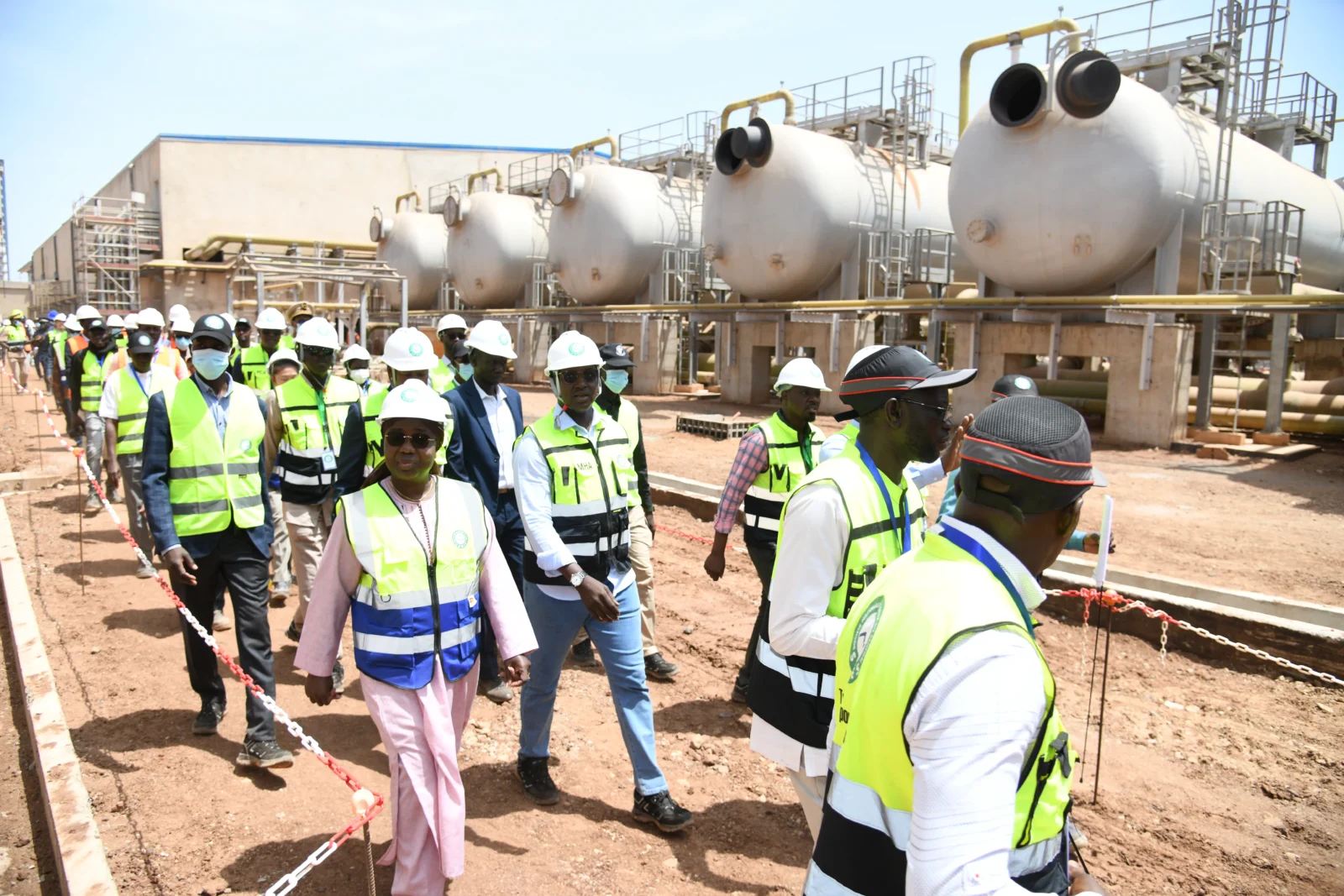
Nestled at the top of the Mamelles cliffs, facing the Atlantic, the seawater desalination plant site is almost in the finishing phase. As soon as we enter the industrial site, the din of the machines is heard, almost drowning out the roar of the waves crashing against the rocks. In a large basin with steep walls, seawater, which has a brownish tint, is sucked up, then transported to facilities where it undergoes the different stages of the desalination process. All around, imposing pipes, pumps and metal structures make up an impressive industrial landscape framed by the rock formations that dominate the Dakar coastline. Thursday March 12, 2026, it is a little after noon.
The heat is slowly settling in this month of Ramadan, while an official delegation tours the facilities. With construction helmets on their heads, fluorescent vests and safety boots on their feet, several authorities went to the site to inquire about the progress of the work. The joint mission was led by the Minister of Hydraulics and Sanitation, Cheikh Tidiane Dièye.
He was accompanied by the Minister of Health and Public Hygiene, Ibrahima Sy, the Minister of Fisheries and Maritime Economy, Fatou Diouf, as well as the Director General of the National Water Company of Senegal, Abdoul Niang. The prefect of Dakar, Chérif Mouhamadou Blondin Ndiaye, and the mayor of Ouakam, Abdoul Aziz Guèye, were also among the personalities present. On site, the Minister of Hydraulics welcomed the progress made on this major project. “Most of the components of the project are, today, completed with a level of progress of between 90 and 98%,” he declared. Cheikh Tidiane Dièye praised the quality of the infrastructure and the cutting-edge technologies implemented.
For him, this installation marks an important step in the national strategy for securing the capital’s drinking water supply. “This is Senegal’s first experience in seawater desalination. It is an innovative and courageous project that we had to dare,” he underlined. Once commissioned, the plant will produce desalinated water in two phases of 50,000 cubic meters per day. This production will be injected into the network in order to meet the growing demand for drinking water in Dakar, an urban area whose population continues to grow rapidly. Largely financed by Japan, to the tune of 137 billion FCFA, with a contribution of around 20 billion from the State of Senegal, the project represents a total investment estimated at 158 billion FCFA. For the Minister of Hydraulics, this achievement now places Senegal among the countries engaged in modern water production technologies. “So far, we are visiting this type of structure in other countries. Tomorrow, others will come here to be inspired by it,” he said.
Babacar Guèye DIOP
