
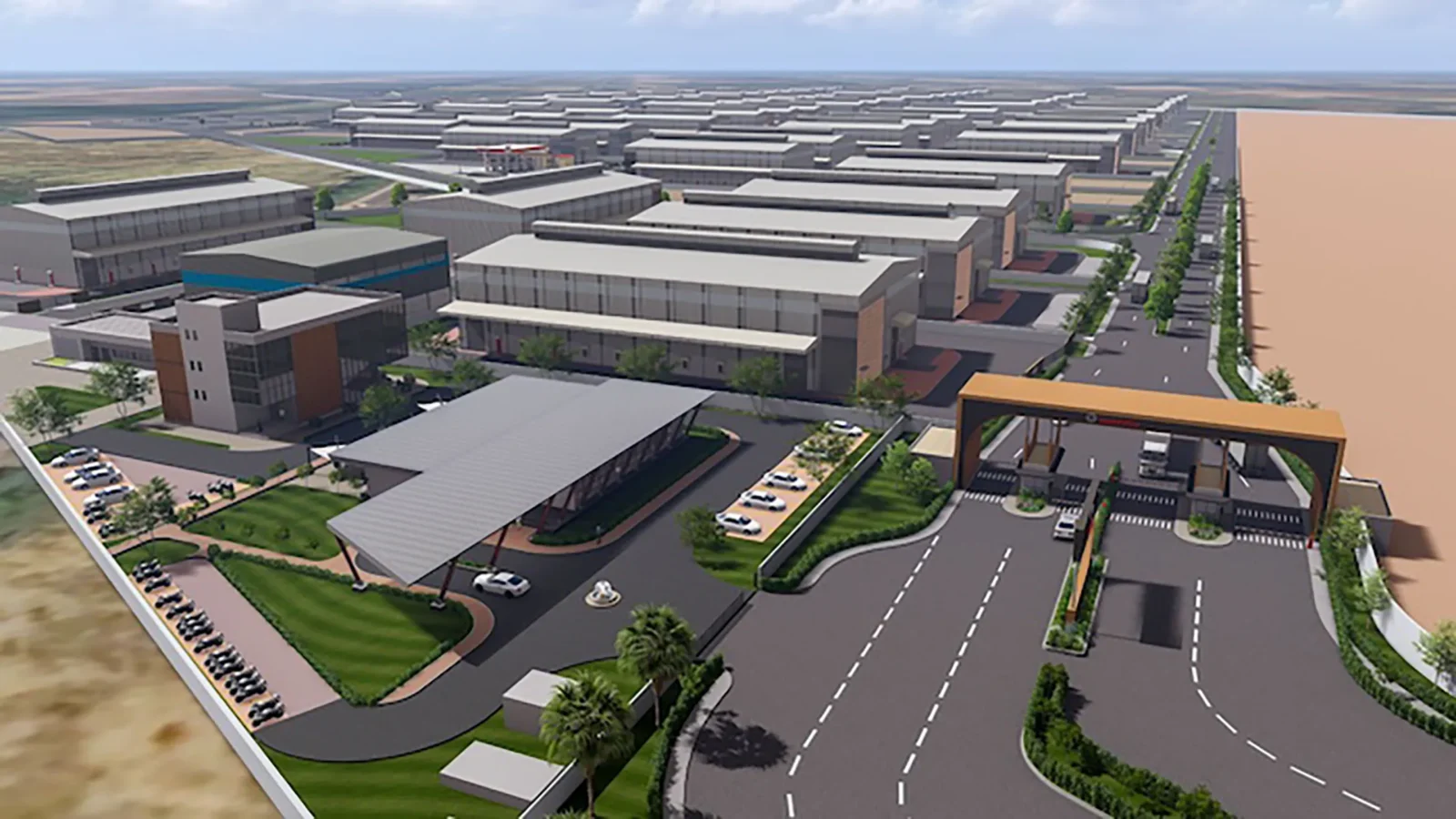
Industrialization of territorial centers: the State of Senegal presents its offer to the private sector
A new stage has been reached in Senegal’s industrial policy. During a strategic meeting chaired yesterday, Thursday, March 12, by Prime Minister Ousmane Sonko, the State presented to the private sector and development partners the policies put in place to facilitate the deployment of industries in the different Territorial Poles of the country.
“Invest massively in territorial centers”. This is the head of government’s appeal to local investors. According to Ousmane Sonko, the State intends to reduce territorial inequalities by making the local private sector a central lever of industrialization to build a more sustainable and competitive economy and by relying on the economic potential of different regions. In this dynamic, around fifty agro-industrial parks are planned by 2030 in the eight Territorial Poles of the country. The objective is to promote the local processing of resources and create more jobs in the territories.
For the Prime Minister, the success of this strategy requires the creation of a stable and attractive environment for investors. Ousmane Sonko thus recalled the advantages of the “Invest in Senegal” program intended to promote the country as a preferred destination for industrial investment. For his part, the general director of the Agency for the development and promotion of industrial sites (Aprosi), Mamadou Lamine Ndiaye, insisted on the incentive measures put in place to attract investors. He indicated that the State has planned several support measures, in particular tax exemptions and the development of modern industrial sites within the country. “The objective is to have, in each development pole, an industrial site by 2029. In the long term, our vision is to install, at least, one industry in each department,” explained Mr. Ndiaye.
Advocacy for a national industrialization council
To succeed in this challenge, the authorities are counting on strong involvement from the private sector and technical and financial partners. “Funds are available to support these initiatives. All the ingredients are there for success. It remains for the private sector to invest,” assured Hélène De Bock, Belgian ambassador to Senegal.
This exchange and communication session is the culmination of a long-considered process between the administration, manufacturers, traders, technical and financial partners, consumer organizations and local producers. After eight months of work (between September 2024 and April 2025), industrialists are banking on the institutionalization of an industrial policy governance body. This new tool will serve as a bridge and a framework for consultation between, on the one hand, the State which formulates its industrial policy, and on the other hand, the industrialists and traders who deploy this policy on the ground.
“This National Industrialization Council would have the main mission, firstly, to provide opinions to the government and Parliament on the bills and public infrastructure projects submitted to it,” said Alla Sène Guèye, member of the National Confederation of Enterprises of Senegal (Cnes) and representative of the private sector. And to add that the council will “declare public choices in terms of industrialization strategy in the face of the opportunities of major energy, ecological, food transitions, etc.”.
Diégane DIOUF
