
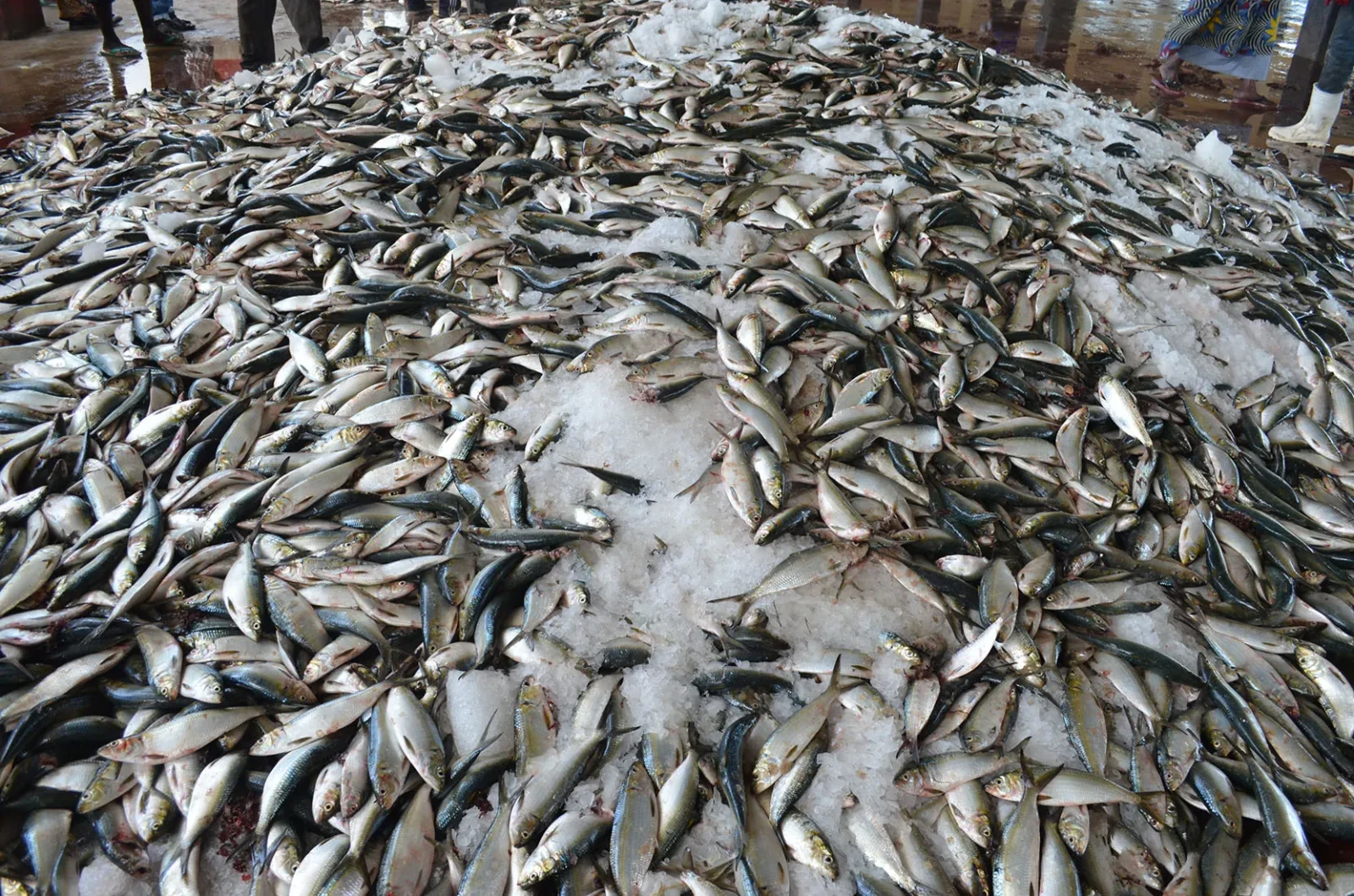
Sub-regional management of small pelagics fisheries: Towards a harmonized sardinella rescue plan
Faced with the threat of a total collapse of sardinella stocks, Mauritania, Senegal, Gambia and Guinea-Bissau are going on the offensive. Gathered yesterday, Thursday, February 12, in Dakar, scientists, managers and professional organizations sealed an emergency pact: impose a coordinated biological rest and protect juveniles to save the “poor man’s fish”, a vital pillar of food security in West Africa.
It is no longer time for simple warnings, but for action. In West Africa, more precisely in the area encompassing Mauritania, Senegal, Gambia and Guinea-Bissau, the “poor man’s fish” (yaboye in Wolof) is becoming rarer. Sardinella, a pillar of food security in the sub-region, is in a state of critical overexploitation. For Dr Fambaye Ngom Sow, researcher at the Dakar-Thiaroye Oceanographic Research Center (Crodt/Isra), this observation is the result of a decade of alerts that remained without sufficient response. “If we don’t change our practices, stocks will collapse,” she warns. “In West Africa, particularly in Mauritania, Senegal, Gambia and Guinea-Bissau, both species of sardinella (round and flat) are in a very critical state of overexploitation.
They are threatened with extinction. Today, fishermen and local populations are seeing it: fish is increasingly rare and prices are increasing; which directly threatens food security in the region,” adds Matthieu Bernardon of the FAO (Food and Agriculture Organization of the United Nations). Sardinellas are “shared stocks” migrating across borders and responding to environmental variations. Each year, the CECAF working group (a consultative body created under the aegis of the FAO) recommends a reduction in fishing effort of up to 60%, an equation that has so far been insoluble for States. How can we ask thousands of canoes to suspend their activity for one or two months without causing a social crisis? To answer this thorny question, scientists, managers and professional organizations from the four countries, meeting from February 11 to 12 in Dakar, under the aegis of the Sub-Regional Fisheries Commission (Csrp) and the FAO, agreed on a concrete strategy.
While these measures are vital for the long-term survival of the species, they hit hard the immediate incomes of fishermen and women processors. “It is essential that these measures be accompanied by socio-economic support,” he insists. Among the avenues mentioned, there is the reorientation of subsidies towards direct aid, the creation of mutual funds or the development of diversification activities to support families during the period of biological rest. These recommendations will be transmitted to the Conference of Ministers of the Sub-Regional Fisheries Commission for regulatory translation. But, as Mr. Bernardon points out, the law will be nothing without increased surveillance, that is to say the strengthening of controls at sea to avoid the extinction of a resource on which millions of lives depend.
Mamadou GUÈYE
