
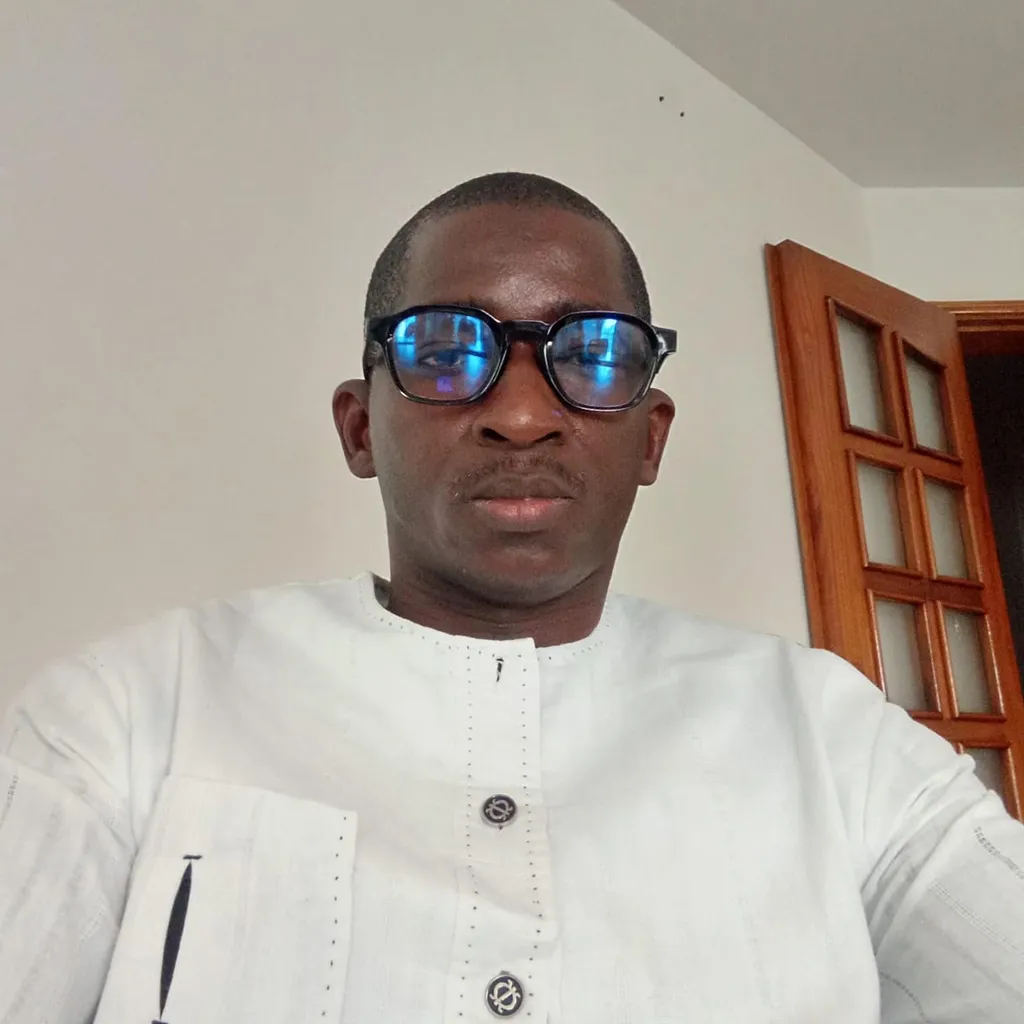
New Sengal-IMF partnership: Economist Mamadou Samba Hane lists the assets and challenges
After more than two years of waiting, Senegal finally concluded a new program with the IMF. If economist Mamadou Samba Hane sees this as a positive signal and an advantageous source of financing, he calls for vigilance regarding the compensation required and the necessary sustainability of a still colossal debt.
This is a relief for many Senegalese. After more than two years of laborious negotiations, marked by repeated postponements and divergences on the budgetary trajectory, Senegal finally obtained a new agreement with the International Monetary Fund (IMF). For Doctor Mamadou Samba Hane, economist and professor at Cheikh Anta Diop University in Dakar, this outcome constitutes above all a real breath of fresh air for a national economy in search of stability and credibility. “I think this is good news for our economy,” he confides, insisting on the fact that “everyone knows that the IMF debt rates are concessional rates.”
The context made this outcome all the more crucial. Indeed, in a climate of financial clarification where the Senegalese debt saw its cost rise on international markets, the arrival of the IMF changes the situation by the very nature of its loans, reputed to be concessional. This is financing granted at rates significantly lower than those that the country could have obtained from private creditors, which constitutes a “significant immediate” advantage.
The advantage is twofold. It is first a question of raising funds on more favorable conditions, in order to meet investment needs without further increasing debt service. For the academic, this alone is enough to qualify the agreement as a good signal, especially since Senegal is going through a period of strong tension on its public finances.
Solving the Debt Equation
However, behind this optimism lies a question that remains without a precise answer. How did Senegal obtain this partnership? As the economist recalls, the signing of the agreement was shortly preceded by an alert from the Moody’s agency, which downgraded the country’s rating. “What will Senegal give in return? This is what we are waiting for, the memorandum of the content of what the IMF will impose on Senegal,” he asks. A question that calls for caution and reminds us that IMF support comes with commitments. It will therefore be necessary to scrutinize the document detailing the conditions of financial support. Structural reforms, budgetary discipline or even transparency in the management of public companies could be among the requirements. Until this text is made public, it remains difficult to precisely assess the extent of the efforts required of the Senegalese state.
In addition to the agreement with the Bretton Woods institution, it is the broader question of debt treatment that is focusing attention. Senegal’s debt rate flirts with 127% of GDP, a level which, even if it has fallen slightly, remains well above the UEMOA community standard, set at 70%. In these proportions, believes Doctor Mamadou Samba Hane, the pursuit of a policy of debt accumulation is not viable. “We cannot continue to go into debt and have such a colossal debt and continue to go into debt,” he insists.
Promote investments
The strategy outlined by the minister, consisting of devoting a fixed share of state revenue to reimbursement, around 25 FCfa out of 100 according to his declarations, is only a first step. So that it is not a simple accounting exercise, this mechanism must be based on a logic of performance. Money borrowed yesterday must be able to generate the resources needed to repay it tomorrow.
For Mamadou Samba Hane, it is essential to find additional resources which not only allow us to pay the debt, but at the same time this debt that we have contracted must be used effectively and efficiently, “investing it in sectors that are today not only promising, but catalytic”, explains the professor.
The latter insists on the need for a tangible return on investment, thanks to projects capable of releasing sufficient resources to meet deadlines while continuing to finance other strategic sectors. It is on this condition that the country will be able, in the medium and long term, to loosen the grip of its financial commitments, bring its debt back towards regional standards and regain budgetary room for maneuver.
A narrow path which also involves optimizing state revenues, refocusing on certain less priority projects and, above all, broadening the tax base. The discovery of new revenue niches and better tax collection thus appear to be pillars of this consolidation. Doctor Mamadou Samba Hane emphasizes that the State must explore hitherto neglected fiscal sources, while ensuring not to stifle economic activity. “There are niches that we must find today on which the State of Senegal must work to be able today to have enough resources not only for investments, but to pay this debt which is colossal and which must be paid,” he adds.
The concrete benefits of the new agreement, however, go beyond the simple arithmetic of interest rates. If the financial advantage is undeniable, the most structuring effect could be psychological and economic. For the professor, the IMF’s intervention acts as a catalyst for confidence. “The International Monetary Fund is a bit like the door that opens the door to certain investors,” he observes.
The agreement can thus reassure other donors and investors about Senegal’s economic trajectory. In a country where social needs remain significant, particularly in health, social spending and the protection of the most vulnerable, the resources mobilized must make it possible to stabilize public finances under pressure while financing essential sectors.
Trust and margins
The Minister of the Economy, Finance and Planning also mentioned targeted investments in health and social spending, without neglecting infrastructure that supports growth. The economist points out, however, that these social expenditures, although necessary, are not all catalytic. It is important to find a balance between protecting the most vulnerable and financing projects with high potential for economic transformation.
According to him, the agreement with the IMF will only take on its full meaning if it is used to initiate the expected structural reforms and sustainably correct the imbalances which weaken public finances. Otherwise, it could only offer a simple respite, without resolving the fundamental difficulties facing the country.
The resources mobilized can ease the financial constraint in the short term, but they do not exempt the State from tackling the root causes of debt. The question is therefore not only how much Senegal will be able to mobilize, but above all how these resources will be used, with what priorities and what guarantees of transparency.
The stakes are all the more important as IMF support is generally accompanied by requirements in terms of budgetary discipline, governance and economic reforms. For Senegal, this new sequence must therefore go beyond the sole logic of financing. It should make it possible to strengthen the control of public expenditure, improve revenue mobilization and better direct investments towards sectors likely to sustainably support economic activity.
By Pathé NIANG
